A working paper prepared for Japan’s Innovation for Cool Earth Forum (ICEF) warns that proposed constellations of space‑based data centers could soon make satellites more visible than stars in many parts of the world. The paper, titled Space‑Based Data Centers Roadmap: The Case for Caution and dated November 2026, was led by David Sandalow, an inaugural fellow at Columbia University’s Center on Global Energy Policy, and co‑authored by scholars from Georgetown, Northwestern, Lawrence Livermore National Laboratory and other institutions.
Scale of the proposed fleets
Today roughly 19,000 satellites orbit Earth. The authors estimate that fully implementing the plans filed by several companies would increase the low‑Earth‑orbit (LEO) population by more than fifty times. SpaceX alone has asked the Federal Communications Commission (FCC) for permission to launch up to one million data‑center satellites. Additional filings from Blue Origin, Starcloud and a firm called Orbital together seek several hundred thousand more, including an 88,000‑satellite Starcloud constellation, a Blue Origin plan for up to 51,600 satellites, and an Orbital request for up to 100,000.
These satellites would be far larger than the current Starlink units. SpaceX’s AI1 prototype already sports a 70‑meter wingspan—more than twice that of a typical Starlink satellite—and some experts anticipate future data‑center satellites reaching 100 meters tip‑to‑tip because of extensive solar arrays and radiators.
Impact on the night sky and other risks
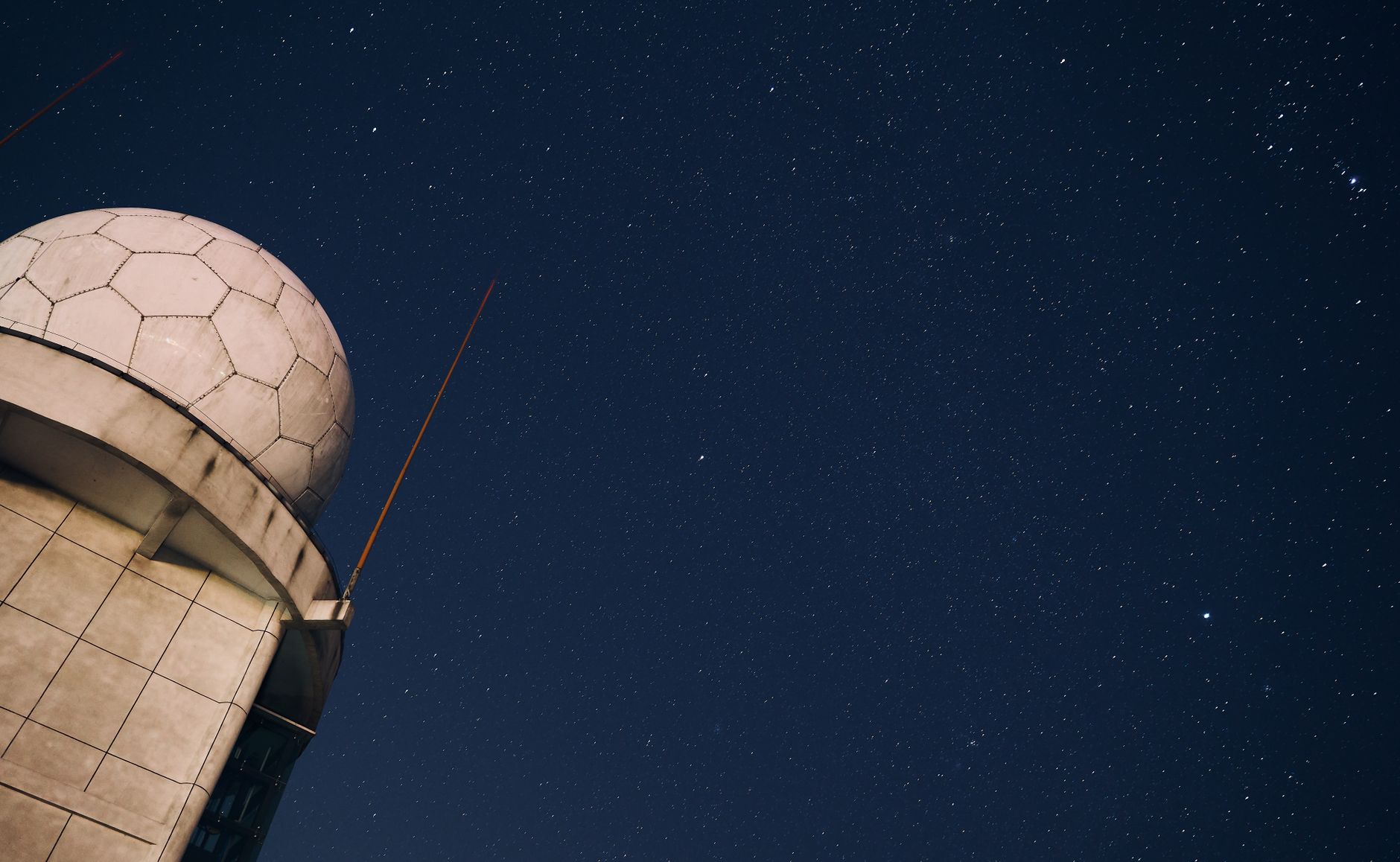
The authors argue that the sheer number and reflective surfaces of the proposed fleet could transform the night sky. They write, “If announced plans for SBDCs are fully implemented, most visible points of light in the sky during much of the night in much of the world could be satellites, not stars.” The American Astronomical Society has already described SpaceX’s January 2026 application as “an unprecedented threat to the visual integrity of the night sky.”
Radiator panels are designed to reflect sunlight, making the satellites bright in visible wavelengths while shedding waste heat as infrared radiation. Darkening a radiator would reduce visual brightness but would also impair thermal performance, raising both economic and engineering costs. The infrared emissions themselves cannot be eliminated because they represent the fundamental waste heat generated by on‑orbit computing.
Beyond visual pollution, the report flags a suite of additional hazards. A massive increase in LEO traffic could generate debris fields that render swaths of orbit unusable for years. Frequent de‑orbiting of tens of thousands of satellites annually raises the risk of property damage and casualties on the ground. Rocket exhaust and re‑entering hardware could deplete stratospheric ozone, add to global warming, and further interfere with astronomical observations.
Economic and launch considerations
SpaceX has suggested that a 100‑kilowatt data‑center satellite could weigh about one tonne, but the authors calculate that the power subsystem alone would likely weigh around 2.2 tonnes. Heavier satellites would require more launch capacity. To sustain a fleet capable of meeting just 10 percent of projected 2030 AI data‑center demand, the paper estimates at least 700 Starship‑class launches per year—roughly two launches every day—for as long as the constellation operates.
Despite these steep costs, the authors contend that early‑stage deployments might still occur because companies could accept short‑term losses to secure market leadership. SpaceX’s own FCC filing notes that “initial operations under this license will be limited to a significantly smaller number of satellites and re‑entries than the maximum authorized,” a principle the authors say should be strictly adhered to.
Regulatory recommendations
Given the magnitude of the projected changes, the authors recommend a cautious, phased rollout. Key suggestions include:
- Annual renewal of operating licenses, with renewal contingent on demonstrated compliance with brightness, de‑orbit and emissions standards.
- A regulatory prohibition on licensing constellations that would be visible from Earth’s surface.
- Removal of the FCC’s categorical exclusion that currently shields satellite launches from National Environmental Policy Act (NEPA) review.
- Creation of an international space‑traffic‑management body to coordinate oversight of mega‑constellations.
The paper stresses that existing governance structures are fragmented and ill‑suited to manage constellations of the proposed scale. It urges policymakers to act before the deployment of data‑center satellites reaches a point where mitigation becomes technically and economically infeasible.
Columbia Climate School publicized the working paper on November 12, noting that it has not undergone peer review. Nonetheless, the authors argue that the analysis draws on publicly available filings, regulatory documents and prior industry reports, providing a timely warning about a potentially transformative—and disruptive—technology.
As the race to place AI‑powered computing platforms in orbit accelerates, the tension between commercial ambition and the preservation of the night sky is poised to become a focal point for regulators, astronomers and the broader public.






Be First to Comment