Justice Department attorney Eric Hamilton countered that there was “substantial violence” in Los Angeles meriting military intervention.
The US government’s unparalleled utilization of National Guard troops in Los Angeles to support President Donald Trump’s immigration crackdown has been uncalled, illegal and should be brought to a halt, was the argument presented by a lawyer for the state of California before a federal judge on August 12.
Meghan Strong, representing the California Attorney General’s Office, stated sufficient evidence from the landmark trial showcased that soldiers violated the 19th-century ‘Posse Comitatus Act‘, which prohibits the military from engaging in civilian law enforcement. According to Meghan Strong, the deployment was meant to display ‘a show of military force so great that any opposition to their agenda was silenced’.
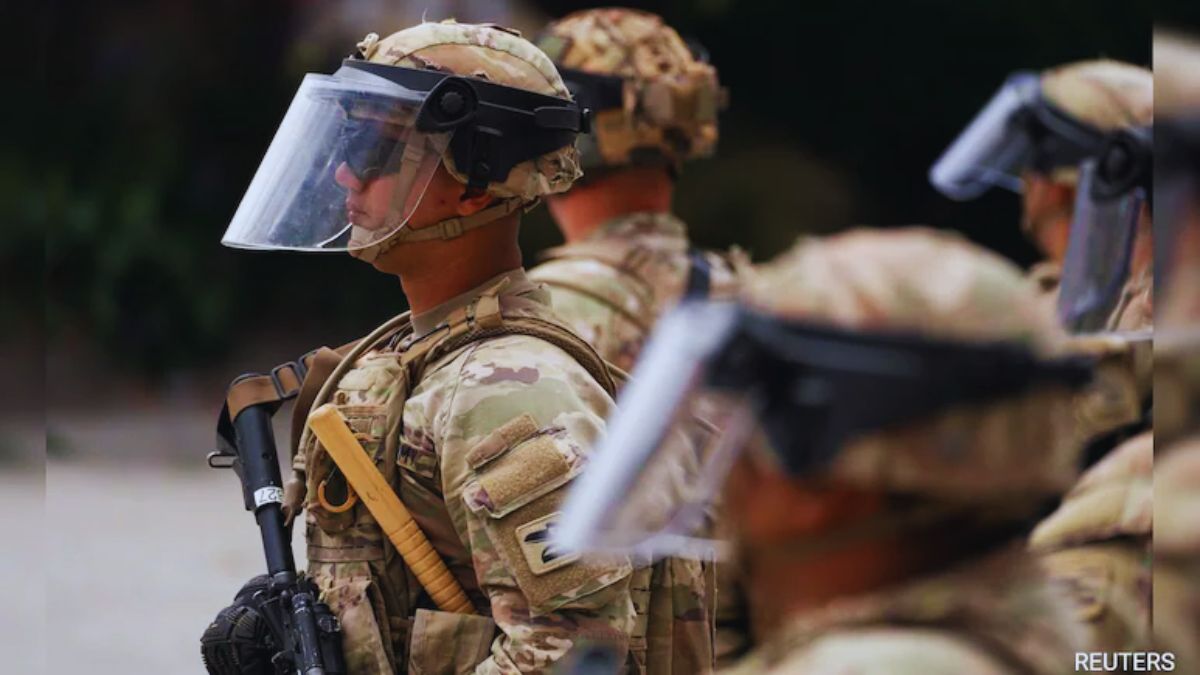
In a counter response, the Justice Department attorney Eric Hamilton claimed there was substantial violence in Los Angeles that justified the applied military intervention. He argued that the troops were deployed only to protect federal agents and property, which falls under exceptions to the Posse Comitatus Act.
In June, Trump ordered 700 Marines and 4,000 National Guard troops to Los Angeles following days of civil unrest and protests triggered by mass immigration raids. California’s Democratic governor, Gavin Newsom, opposed the move and filed a lawsuit, alleging it violated federal laws restricting the use of the military for law enforcement.
US District Judge Charles Breyer in San Francisco is tasked with deciding whether the deployment breached the Posse Comitatus Act. On August 13, Breyer will also hear arguments on whether Newsom has the legal standing to bring the case. While the judge has not indicated when he will rule, the trial comes amid Trump’s announcement that he will deploy the National Guard to the capital city of Washington DC as well to combat crime, and may take similar action in other US cities.
The Trump administration argued during the trial that the military’s role in Los Angeles was limited to guarding federal personnel and property. However, California presented evidence that troops went further — setting up roadblocks, diverting traffic, and making arrests — actions that Strong said are prohibited policing functions. Government witnesses acknowledged that such actions are normally barred, but insisted exceptions apply when federal agents or property face imminent danger. Judge Breyer appeared skeptical of the claim that the president has sole discretion to determine when troops are necessary.
Trump described the protests as a ‘rebellion’ against federal authority, but Breyer questioned whether that designation could be based solely on the president’s opinion. While many troops have since been withdrawn, California Attorney General Rob Bonta noted that as many as 300 National Guard members were currently active and had been participating in immigration raids as per Trump’s instructions.
The outcome of this trial will have limited effect on Trump’s peculiar plan to deploy hundreds of National Guard troops in Washington, but it could set a significant precedent for future disputes over military involvement in civilian law matters.

Helene Elliott is the Lead Science & Space Reporter at News Raise. She reports on aerospace missions, astrophysics discoveries, quantum research, and environmental technology.