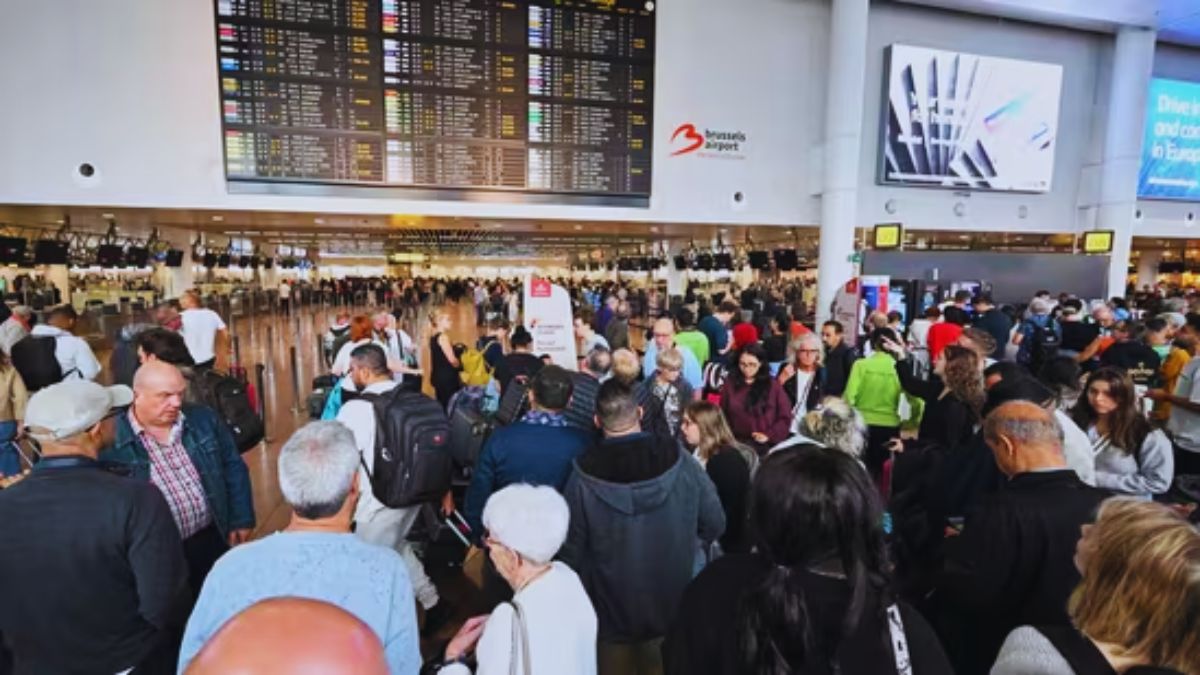
A large-scale cyberattack has hit several of Europe’s busiest airports, disrupting flight schedules and causing widespread delays in passenger check-in and boarding. The attack, which took place on the night of September 19, targeted the systems of a key service provider used across multiple international hubs.
Brussels Airport confirmed in a statement that the cyberattack had forced airlines and staff to switch to manual check-in and boarding procedures, leading to what it described as a ‘large impact‘ on flight schedules. Passengers were advised to check their flight status in advance and expect longer processing times at the airport.
- Authorities at Berlin Brandenburg Airport reported a similar disruption. Officials said a service provider for passenger handling systems had been targeted, prompting operators to cut off digital connections to contain the breach.
- London Heathrow, Europe’s busiest airport, also reported temporary difficulties, describing the issue as a ‘technical problem‘ linked to a third-party provider of check-in and boarding systems.
While the cyberattack affected several European airports, some remained unaffected. Paris-area airports including Roissy, Orly, and Le Bourge confirmed to their foreign press that their operations were running normally with no service interruptions.
The affected service provider was identified as Collins Aerospace, a U.S.-based aviation & defense technology company, which was formerly known as Raytheon Technologies. Collins Aerospace was formed in 2018 and provides advanced aviation technologies used by large-scale operational airports worldwide.
In an official statement to AFP (French News Agency), the company confirmed the cyber-related disruption, explaining that the issue was linked to its MUSE software, which supports electronic passenger check-in, baggage tag printing, and self-service kiosks. Importantly, the system does not handle direct passenger check-in itself but enables automated processes widely used across major airports.
The incident underscores the growing threat of cyberattacks against global aviation infrastructure. With airlines and airports relying heavily on digital systems for passenger services, any disruption can cause significant ripple effects across the travel industry.
Investigations are ongoing, and affected airports are working closely with the service provider to restore normal operations.

Helene Elliott is the Lead Science & Space Reporter at News Raise. She reports on aerospace missions, astrophysics discoveries, quantum research, and environmental technology.