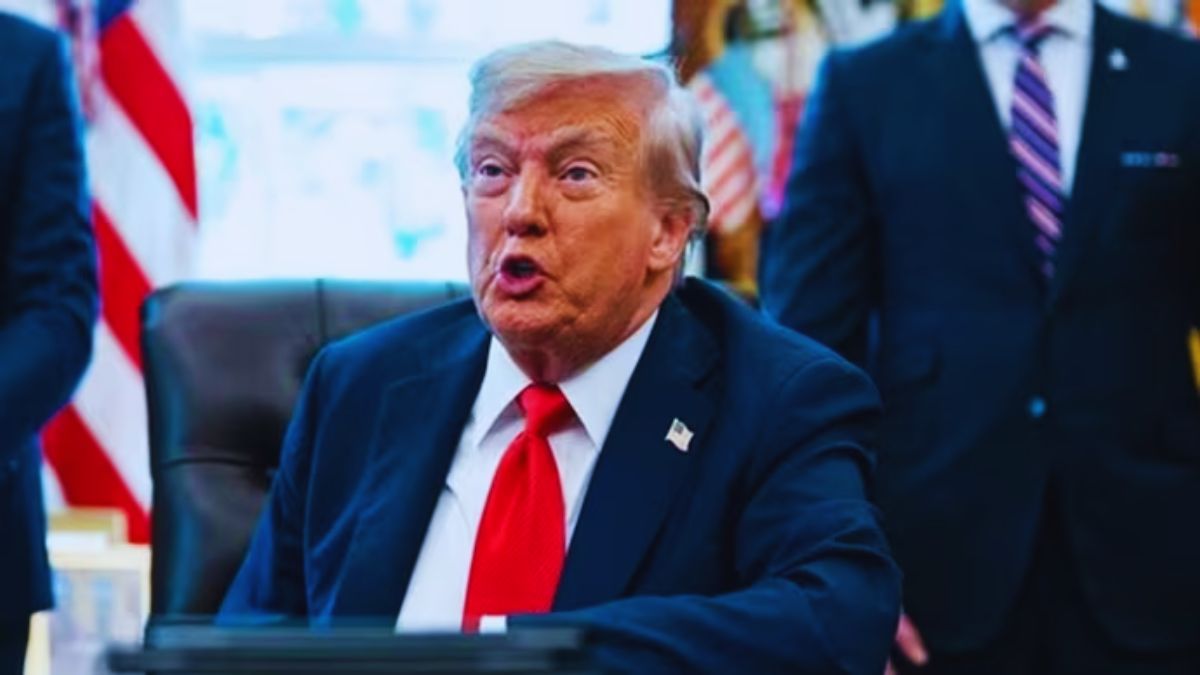
In a sweeping immigration overhaul, US President Donald Trump has signed a proclamation imposing a new $100,000 annual application fee on H-1B visas. The move, announced on Friday, is expected to disproportionately affect Indian professionals, who account for the majority of visa recipients in the United States.
The H-1B visa program, designed for highly skilled foreign workers in technology, engineering, and mathematics, currently requires applicants to pay a relatively modest fee for entering the lottery, along with additional costs that typically run into a few thousand dollars. These expenses are usually covered by sponsoring employers.
With the new rule, companies will now be required to pay $100,000 annually for each H-1B visa. US Commerce Secretary Howard Lutnick defended the decision, stating: “A hundred thousand dollars a year for H-1B visas, and all of the big companies are on board. We’ve spoken to them. If you’re going to train somebody, train one of the recent graduates from one of our great universities. Train Americans. Stop bringing in people to take our jobs.”
President Trump echoed this sentiment, adding that the technology sector “will support this change” and “be very happy with the new visa fee.” According to official data, India accounts for nearly 71% of all approved H-1B visas, while China makes up 11.7%. With an annual cap of 85,000 visas issued through a lottery system, the policy shift is expected to hit Indian tech workers hardest.
Big tech firms are also among the largest beneficiaries of the program. In 2025, Amazon received over 10,000 H-1B approvals, followed by Tata Consultancy Services, Microsoft, Apple, and Google. The majority of H-1B workers are based in California, according to the US Citizenship and Immigration Services (USCIS).
Divided Opinions in the Tech Sector
The H-1B program has long faced criticism from Trump and his allies, who argue that it suppresses wages and displaces American workers. Some sections of the domestic workforce claim that companies rely on foreign talent to keep labor costs low, bypassing equally qualified US citizens.
However, supporters of the program highlight its role in filling critical skill gaps in the American economy, particularly in the STEM fields. Tech companies have historically defended the visa system as essential for innovation and global competitiveness. Representatives for Amazon, Apple, Google, and Meta did not immediately comment on the new proclamation.
Immigration experts have also raised concerns about the legality of the new fee. Aaron Reichlin-Melnick, policy director at the American Immigration Council, questioned whether the government has the authority to impose such a steep annual charge. “Congress has only authorized the government to set fees to recover the cost of adjudicating an application,” he wrote on Bluesky, hinting at potential legal challenges.
A Broader Push on Immigration
The move marks one of the most dramatic changes to the H-1B visa system since its creation in 1990. It follows other Trump-era measures to restrict or extract revenue from legal immigration. Just last month, the US introduced a pilot program requiring consular officers to collect visa bonds of up to $15,000 from travelers from countries with high overstay rates.
The new $100,000 annual H-1B fee represents a seismic shift in US immigration policy, with major consequences for Indian tech workers and global IT companies. While the Trump administration frames the move as a way to prioritize American graduates and protect domestic jobs, critics warn that it may strain international business ties, reduce the flow of global talent, and face tough scrutiny in courts.

Helene Elliott is the Lead Science & Space Reporter at News Raise. She reports on aerospace missions, astrophysics discoveries, quantum research, and environmental technology.