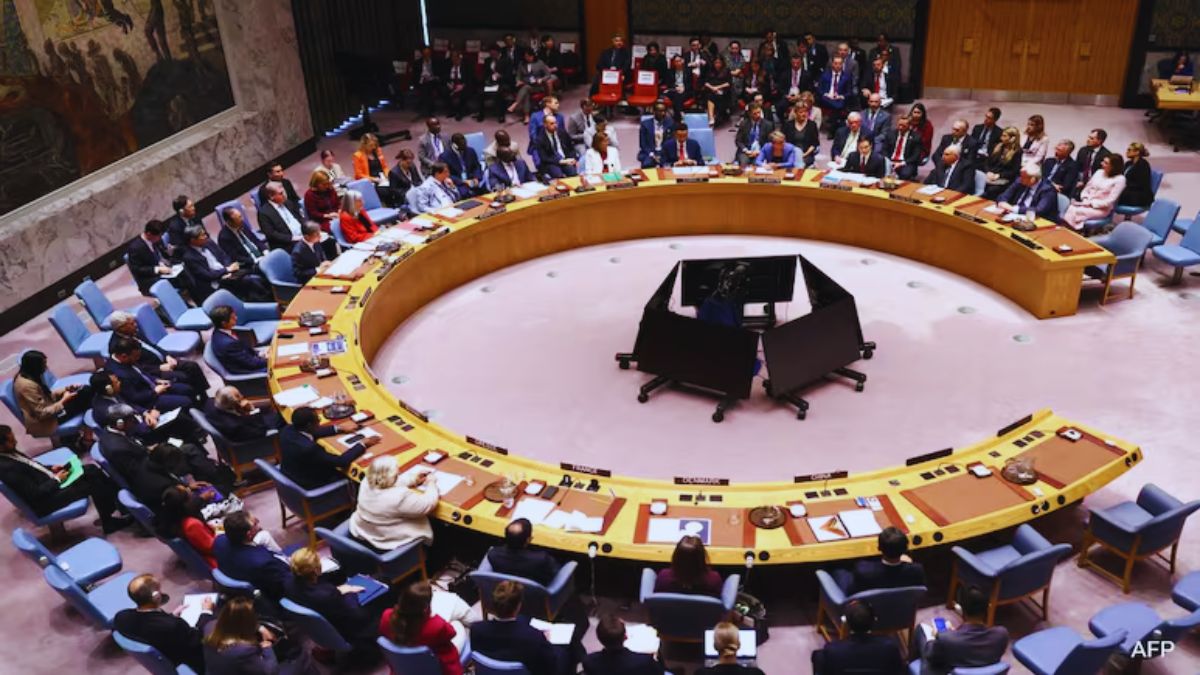
UN Security Council Rejects Bid to Delay Sanctions on Iran Amid Nuclear Tensions
The United Nations Security Council rejected a final attempt to postpone the reimposition of sanctions on Iran over its nuclear program, a decision that comes just a day before the deadline set under the 2015 nuclear accord. The move followed weeks of talks that Western countries said failed to produce any concrete outcomes.
A resolution introduced by Russia and China — Iran’s strongest allies on the 15-member council — sought to delay the sanctions, but it failed to secure the nine votes required for passage. As a result, U.N. penalties tied to the 2015 Joint Comprehensive Plan of Action (JCPOA) are set to return on Saturday.
Russia and China Call for Diplomacy
Deputy Russian Ambassador Dmitry P. criticized the decision, urging the U.S. and European nations to think twice and prioritize dialogue over ‘clumsy blackmail‘ that could escalate tensions in the region. China, Russia, Pakistan, and Algeria had all expressed support for giving Iran additional time to negotiate with the European Union’s E3 — Britain, France, and Germany — as well as the United States, which withdrew from the nuclear deal in 2018.
Sanctions to Hit Iran’s Economy Hard
Unless an unexpected breakthrough emerges, the reinstated sanctions will freeze Iranian assets overseas, halt arms deal with Tehran and impose restrictions on the development of Iran’s ballistic missile program. These measures are expected to further weaken Iran’s struggling economy.
Iranian President Masoud Pezeshkian condemned the U.N. decision as ‘unfair, unjust, and illegal,’ though he stopped short of announcing a withdrawal from the Nuclear Non-Proliferation Treaty (NPT). Pezeshkian noted that while Tehran has previously threatened to exit the NPT, it has no immediate plans to follow North Korea’s path — Pyongyang abandoned the treaty in 2003 before building nuclear weapons.
Conditions for Extended Negotiations
European nations have signaled they would consider extending the deadline if Iran meets specific conditions. These include:
- Resuming direct negotiations with the United States,
- Granting U.N. inspectors full access to its nuclear facilities, and
- Providing an account of its stockpile of over 400 kilograms of highly enriched uranium.
Iran remains the only country without a declared nuclear weapons program that enriches uranium up to 60%, just a short technical step away from weapons-grade levels.
Iran’s reluctance to allow full inspector access has grown since the 12-day war with Israel in June. During the conflict, both Israeli and American airstrikes targeted Iranian nuclear sites, raising uncertainty about the status of Tehran’s near-weapons-grade uranium reserves.
As per a PTI report, a diplomat close to the IAEA (International Atomic Energy Agency) has confirmed that inspectors are currently in Iran where an inspection of a second undamaged site is being conducted and will not leave the country ahead of the expected reimposition of sanctions this weekend. The reimposition of sanctions is expected to intensify tensions between Iran and Western powers, leaving the future of the nuclear deal and regional stability in further doubt.

Helene Elliott is the Lead Science & Space Reporter at News Raise. She reports on aerospace missions, astrophysics discoveries, quantum research, and environmental technology.