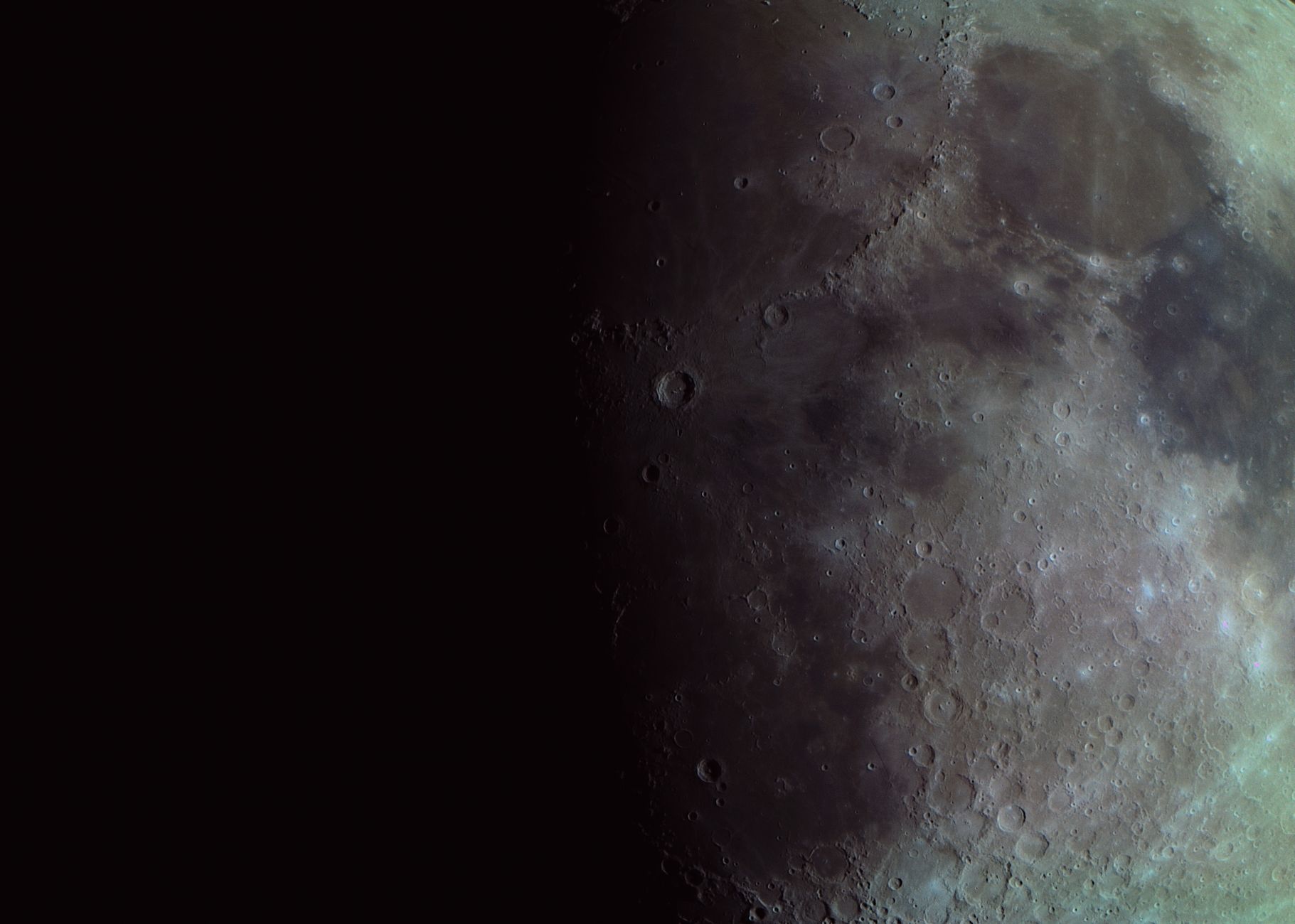
The Korea Aerospace Research Institute has shared the first photographs of a SpaceX Falcon 9 rocket stage impact on the moon’s surface. The images were captured by the Danuri orbiter, which flew over the region shortly after the impact.
The Danuri orbiter photographed the collision site both before and after the event, showing signs of a recent impact. Astronomers had projected that the impact would likely create a crater dozens of feet wide and nearly 12 feet deep.
Confirmation of the Impact
The evidence of the collision adds to observations from the Very Large Telescope, where astronomers detected sodium and lithium rising from the lunar surface, confirming that the rocket fragment did indeed strike the moon. Astronomers had predicted when and where the Falcon 9 impact would happen well in advance.
Space agencies such as NASA had warned that it would be difficult to observe the moment of impact due to weather conditions and timing. However, with the help of powerful equipment, astronomers were able to detect the impact.
Future Images and Analysis
It’s possible that in the coming days, following a series of data checks, higher-resolution images of the impact area will become available. NASA has lunar orbiters that may be able to capture more detailed images of the crater.
However, even at higher resolution, getting a granular view of the crater is unlikely due to its small size compared to the vastness of the lunar surface. The moon measures about 2,160 miles in diameter, putting the crater into perspective.
Cause of the Crash
The Falcon 9 fragment made a crash landing after being in an unstable orbit for more than a year. The rocket launched in January 2025, completing its mission to deliver lunar landers. The gravity of Earth, the moon, and the sun slowly altered its orbital trajectory until it eventually impacted the lunar surface.
SpaceX stated that for most of their missions, they plan for a controlled deorbiting of the Falcon second stage so that it re-enters safely over the ocean. However, in higher-energy missions, such as those heading to a lunar transfer orbit, a controlled deorbiting maneuver is not always possible.
SpaceX is actively working to be as responsible as possible with the hardware left in space and to ensure space safety, even on more complex missions. They are collaborating with NASA to find the optimal disposal solution for objects in these types of orbits.

Helene Elliott is the Lead Science & Space Reporter at News Raise. She reports on aerospace missions, astrophysics discoveries, quantum research, and environmental technology.