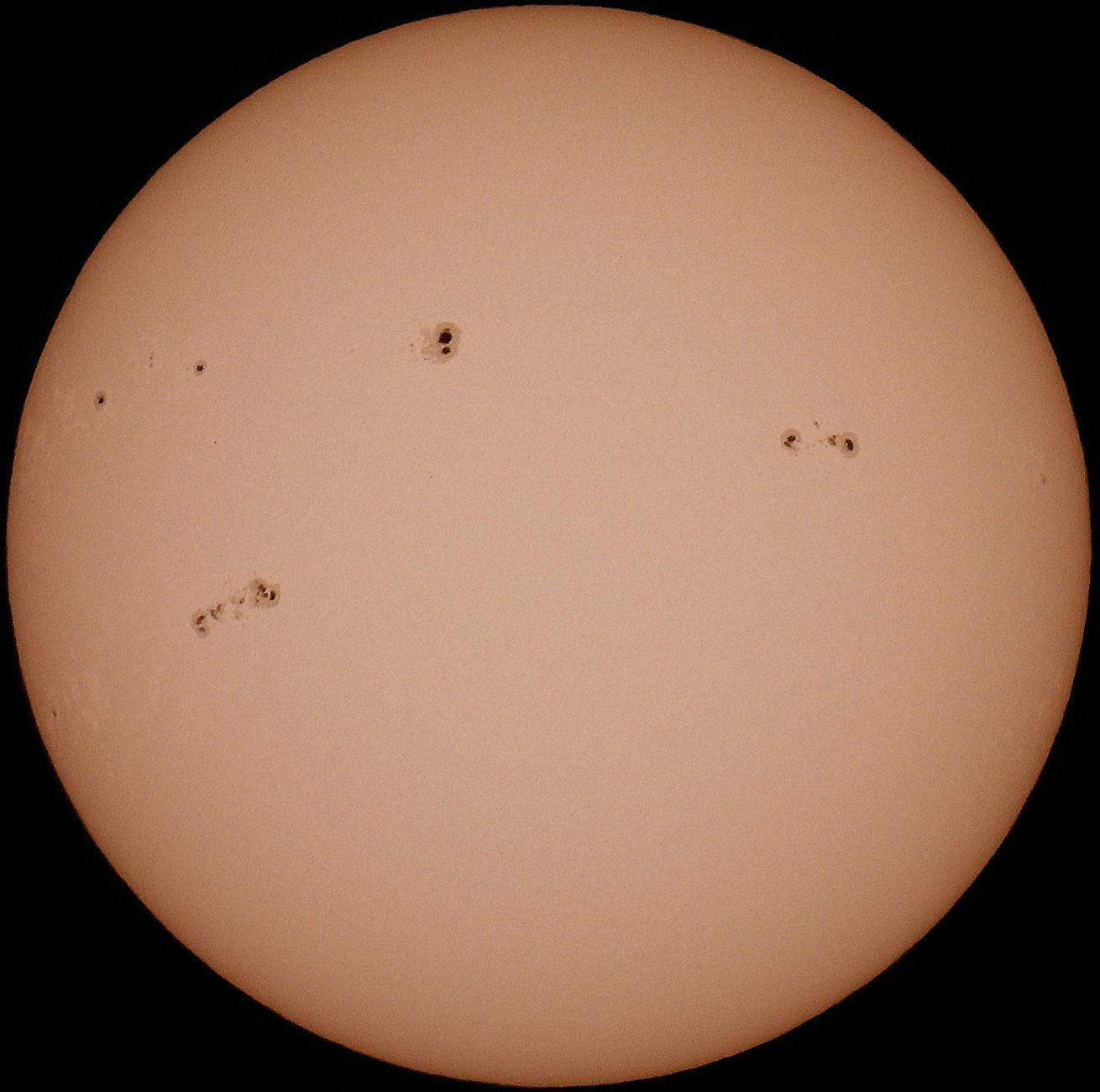
The Inouye Solar Telescope, perched on a high peak in Hawaii, has produced the most detailed photographs ever taken of the Sun’s surface, exposing a pattern of swirling magnetic vortices. Published in the journal Nature, the images show the Sun’s outer layer peppered with whirlpools spaced roughly 50 to 65 kilometres apart.
Vortices born of fluid dynamics
Scientists identify the swirling structures as a manifestation of the Kelvin‑Helmholtz instability, a phenomenon that arises when two fluids slide past one another and small disturbances amplify into spiraling vortices. On Earth, the same physics creates ripples that grow into larger ocean waves. On the Sun, the “fluids” are hot plasma and the Sun’s magnetic field, which is twisted and pushed around by the motion of the scorching gas beneath the surface.
Implications for solar eruptions
According to National Solar Observatory (NSO) astronomer Dr. David Kuridze, the twisting motions that generate these magnetic whirlpools also build up magnetic energy. “These twisting motions are creating magnetic energy, which can build up to produce those large‑scale explosions,” he told BBC News. His colleague, Dr. Friedrich Woeger, added that the stored energy can be released as a solar flare or a coronal mass ejection (CME), both of which are major drivers of space‑weather events.
Space weather can have tangible impacts on modern infrastructure, including power‑grid disruptions, satellite malfunctions, and hazards for astronauts. Understanding the smallest‑scale dynamics of the Sun is therefore a key step toward forecasting such events.
Why the Sun matters to science
Dr. David Boboltz of the NSO emphasized the broader scientific value of these observations. He described the Sun as a “unique laboratory” and noted that the first experimental confirmation of Einstein’s general relativity stemmed from solar‑eclipse observations. “To figure out and eventually predict space weather, we want to understand the physics of the Sun, all the way down to the smallest scales,” he said, underscoring the fundamental role of solar research in advancing human knowledge.
The new images were captured by the Inouye Solar Telescope, which boasts a 4‑meter primary mirror—the largest of its kind dedicated to solar observation. The telescope’s high‑resolution capabilities enable researchers to resolve features on the Sun that were previously invisible, allowing for direct visual confirmation of theoretical models describing plasma behavior and magnetic field interactions.
While the swirling vortices themselves are not new to theoretical astrophysics, the ability to photograph them at this scale provides the first concrete evidence of Kelvin‑Helmholtz instability operating on the Sun’s surface. The discovery bridges a gap between laboratory fluid dynamics and stellar physics, offering a tangible example of how fundamental physical laws manifest across vastly different environments.
Future studies will aim to track how these magnetic whirlpools evolve over time and how they interact with larger magnetic structures that give rise to solar storms. By correlating the observed vortex patterns with subsequent flare or CME activity, researchers hope to refine predictive models that could one day give advance warning of space‑weather threats.
In sum, the unprecedented clarity of the Inouye Solar Telescope’s images opens a new window onto the Sun’s turbulent surface, revealing a landscape of magnetic whirlpools that drive the star’s most powerful outbursts. The findings reinforce the Sun’s status as both a practical concern for technology‑dependent societies and a natural laboratory for testing the limits of physics.

Norman Pearlstine is the Executive Editor and Co-Founder at News Raise. With over two decades of experience across financial journalism, corporate governance, and market analysis, Norman leads the editorial direction and ensures strict adherence to journalistic accuracy and ethics.