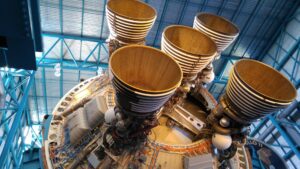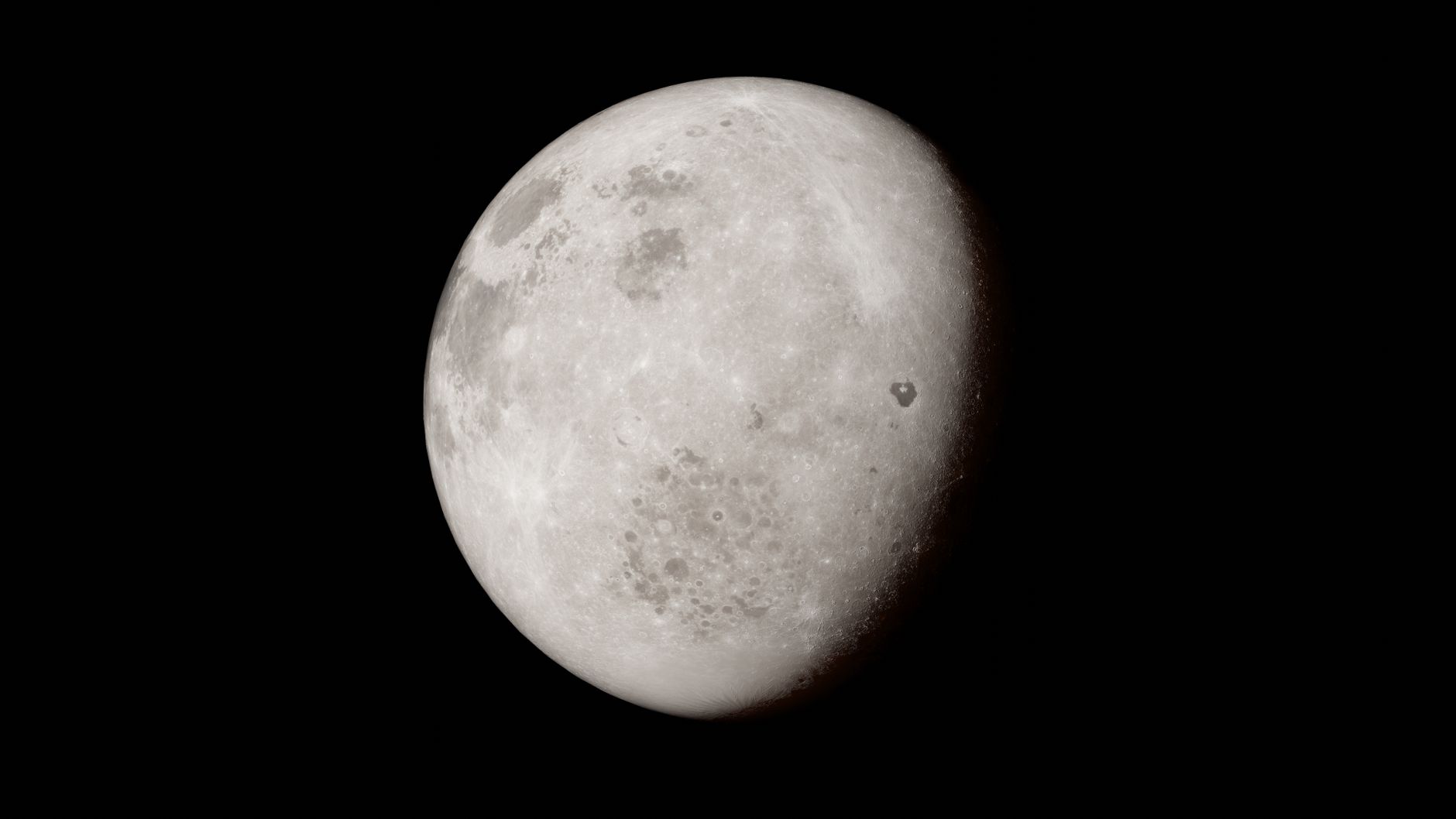
A SpaceX rocket stage has crashed into the Moon, creating a new crater and providing scientists with a unique opportunity to study the impact. The spent upper stage of a SpaceX Falcon 9 rocket, which was launched in January 2025, hit the lunar surface at roughly 8,700 kilometers per hour (5,400 mph) on August 5, 2026.
The object, which was about the size of a five-story building and weighed around 4,000 kilograms on Earth, was not intended to hit the Moon. However, solar activity and gravity put it on a path toward the lunar surface. Despite the unexpected impact, scientists were able to learn from it, with South Korea’s space agency releasing before-and-after images from its Danuri lunar orbiter.
A New Crater
The crash created a fresh crater on the Moon’s surface, with researchers estimating that the collision could release energy comparable to several tons of TNT. Dr. Sara Webb, an astrophysicist at Swinburne University, believes that the impact likely gouged out a massive crater, perhaps 20 meters wide and 5 meters deep.
The European Southern Observatory’s Very Large Telescope in Chile was able to detect spectral lines, or bands of color, in the dust plume created by the impact. The telescope detected sodium and lithium gas in the plume for five to 10 minutes after the impact, with sodium likely coming from lunar soil and lithium possibly coming from the rocket stage itself.
Sifting Through the Plume
The impact proved difficult to observe from Earth, with the flash being small and faint even for observers using strong telescopes. However, the detection of spectral lines by the Very Large Telescope provided scientists with valuable information about the materials present in the dust plume.
A Warning for the Moon Age
The crash highlights the need for better tracking of debris in cislunar space, the region between Earth and the Moon. With space agencies planning to build a long-term human presence on the Moon, the risk of artificial impacts will increase. Matt Bothwell, an astronomer at the University of Cambridge, notes that space is getting more crowded, with more objects being launched into space each year.
The crater created by the SpaceX rocket stage will not pose a threat to anyone on Earth, but it serves as a reminder of the importance of monitoring and tracking debris in space. As the number of lunar missions increases, the risk of artificial impacts will also rise, making it essential to develop strategies for mitigating this risk and ensuring the safety of both people and spacecraft.

Norman Pearlstine is the Executive Editor and Co-Founder at News Raise. With over two decades of experience across financial journalism, corporate governance, and market analysis, Norman leads the editorial direction and ensures strict adherence to journalistic accuracy and ethics.