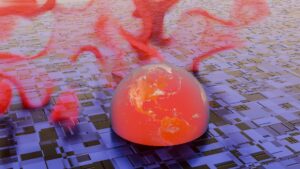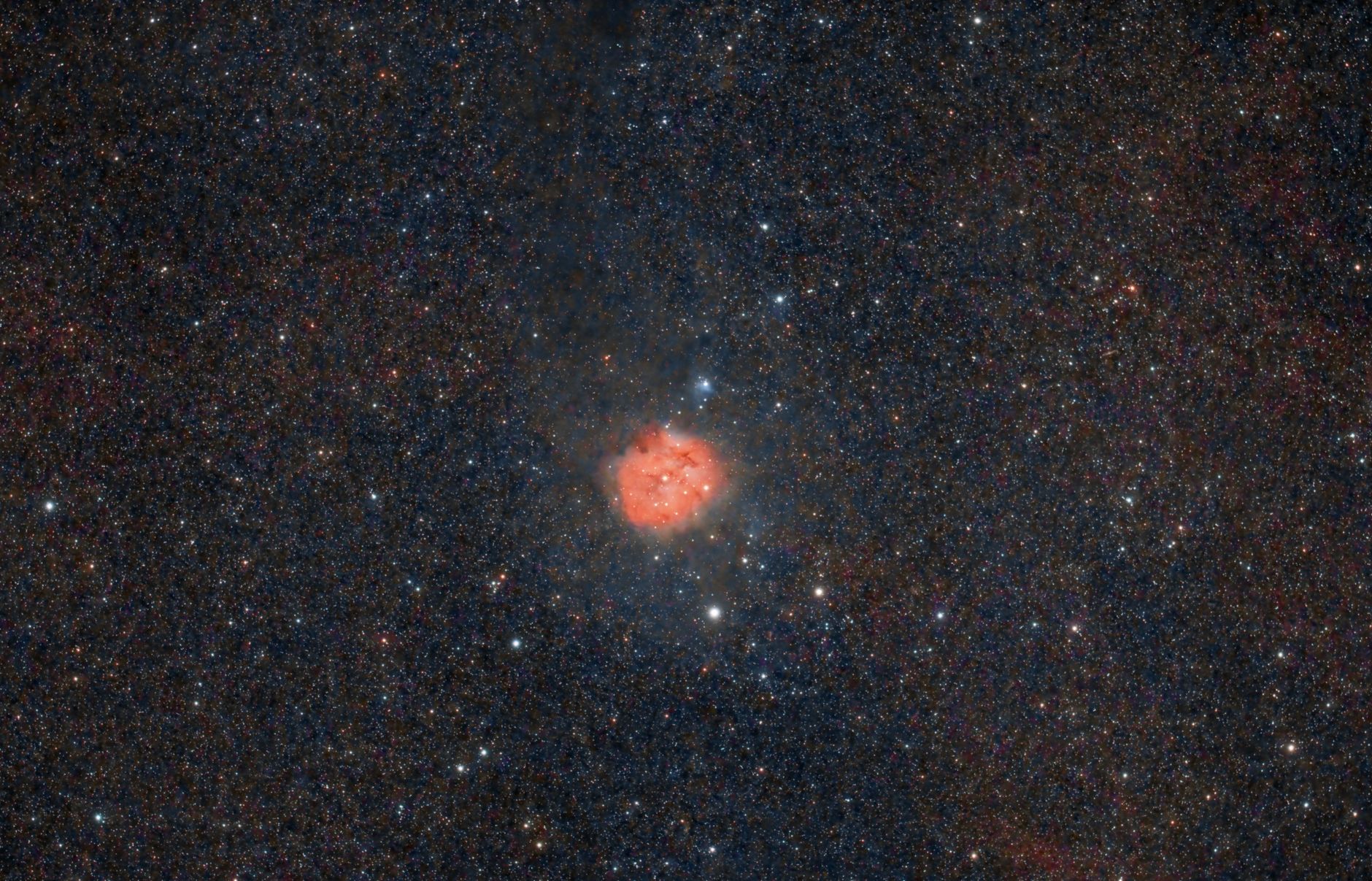
For the first time, astronomers have directly witnessed a star devouring its companion. The event involved a red giant designated WNTR23bzdiq, located roughly 2.5 million light‑years away in the Andromeda galaxy. The giant is estimated to be about seven times more massive than the Sun and roughly 350 times its width.
Discovery and Monitoring
The unusual activity of WNTR23bzdiq was first noted in 2023 when data from NASA’s now‑retired NEOWISE space telescope and the WINTER telescope at Palomar Observatory in California showed the star brightening. A review of earlier records revealed that the red giant had begun a gradual increase in luminosity as early as 2018. Lead author Viraj Karambelkar, an astrophysicist at Columbia University, explained that such subtle changes are difficult to detect, likening the effect of a star engulfing a companion to “throwing a bucket of water in a large ocean.”
Karambelkar and his colleagues hypothesized that the brightening could be caused by the giant star pulling in a nearby companion. As the smaller star spiraled toward the giant’s core, friction would generate heat and additional light, accounting for the observed rise in brightness.
Eruption Details and Implications
Near the end of 2025 the team recorded a dramatic eruption of light from the red giant. NASA’s James Webb Space Telescope observed the aftermath just 47 days later, providing a detailed view of the phenomenon. Analysis suggests that the eruption occurred when a companion star—about 70 % of the Sun’s mass—plunged into the giant’s interior.
According to the study, the blast expelled material equivalent to roughly 0.1 to 0.2 times the Sun’s mass. “Stars engulfing their companions have been theorized for many decades, and this event provides the first observations of this theoretical prediction,” Karambelkar said. While the data support a merger of the binary system, which the researchers nicknamed “Bao,” Karambelkar cautioned that an alternative scenario in which both stars survive in a tighter orbit cannot be ruled out. Continued monitoring will be required to determine the final outcome once the eruption’s debris settles.
Future Prospects
The discovery, detailed in a paper published on November 18 in the journal Nature, opens a new window onto the late stages of stellar evolution. Karambelkar expressed enthusiasm for finding additional examples, noting that upcoming facilities such as the Nancy Grace Roman Space Telescope and the Vera Rubin Observatory will be well suited to capture similar events across the sky.
“I can’t wait to find more,” he said, underscoring the potential for future observations to refine models of binary star interactions and the ultimate fates of massive stars.

Norman Pearlstine is the Executive Editor and Co-Founder at News Raise. With over two decades of experience across financial journalism, corporate governance, and market analysis, Norman leads the editorial direction and ensures strict adherence to journalistic accuracy and ethics.