If the Sun were to disappear in an instant—a scenario that cannot happen in reality—Earth would not notice the loss immediately. The photons already on their way would continue to arrive for the time it takes light to travel the Sun‑Earth distance.
Light’s eight‑minute journey
NASA defines the average Sun‑Earth separation as 149,597,870,700 metres, or one astronomical unit. Dividing this distance by the exact speed of light in vacuum (299,792,458 m/s) yields 499.0048 seconds, which is eight minutes and 19.0048 seconds. The popular “eight minutes” figure is therefore a rounded shorthand for this precise light‑time.
Because Earth’s orbit is slightly elliptical, the actual one‑way light‑time varies by a few seconds over the year. Near perihelion the signal would arrive a little sooner; near aphelion, a little later. The average figure is sufficient for the thought experiment.
Sound‑speed travel would take years
If the same distance were crossed at the speed of sound in air at 20 °C—343 metres per second, according to NOAA—the travel time would be 436,145,396 seconds. That equals about 5,048 days, or 13.82 years when a 365.25‑day year is used. Light travels roughly 874,030 times faster than sound at that temperature, a ratio obtained by dividing 299,792,458 m/s by 343 m/s.
The result changes with temperature because sound speed is not a universal constant. At 0 °C, a common value of 331 m/s would extend the hypothetical journey to roughly 14.3 years. The headline’s “nearly 14 years” therefore refers specifically to the 343 m/s convention.
Why sound cannot travel through space
Sound is a mechanical wave that requires a material medium—solid, liquid, gas, or plasma—to transmit pressure disturbances. Interplanetary space, while not a perfect vacuum, contains only sparse solar‑wind plasma, dust, and neutral particles. The particle density is far too low to support the propagation of an ordinary acoustic wave, let alone one that could be heard by a human ear.
Filling an astronomical unit with room‑temperature air would create massive gravitational and thermal effects, turning the scenario into an entirely different physical system. The 13.82‑year calculation deliberately ignores these complexities and simply asks how long a marker moving at 343 m/s would need to cross the distance.
What would actually happen after the last photons arrive
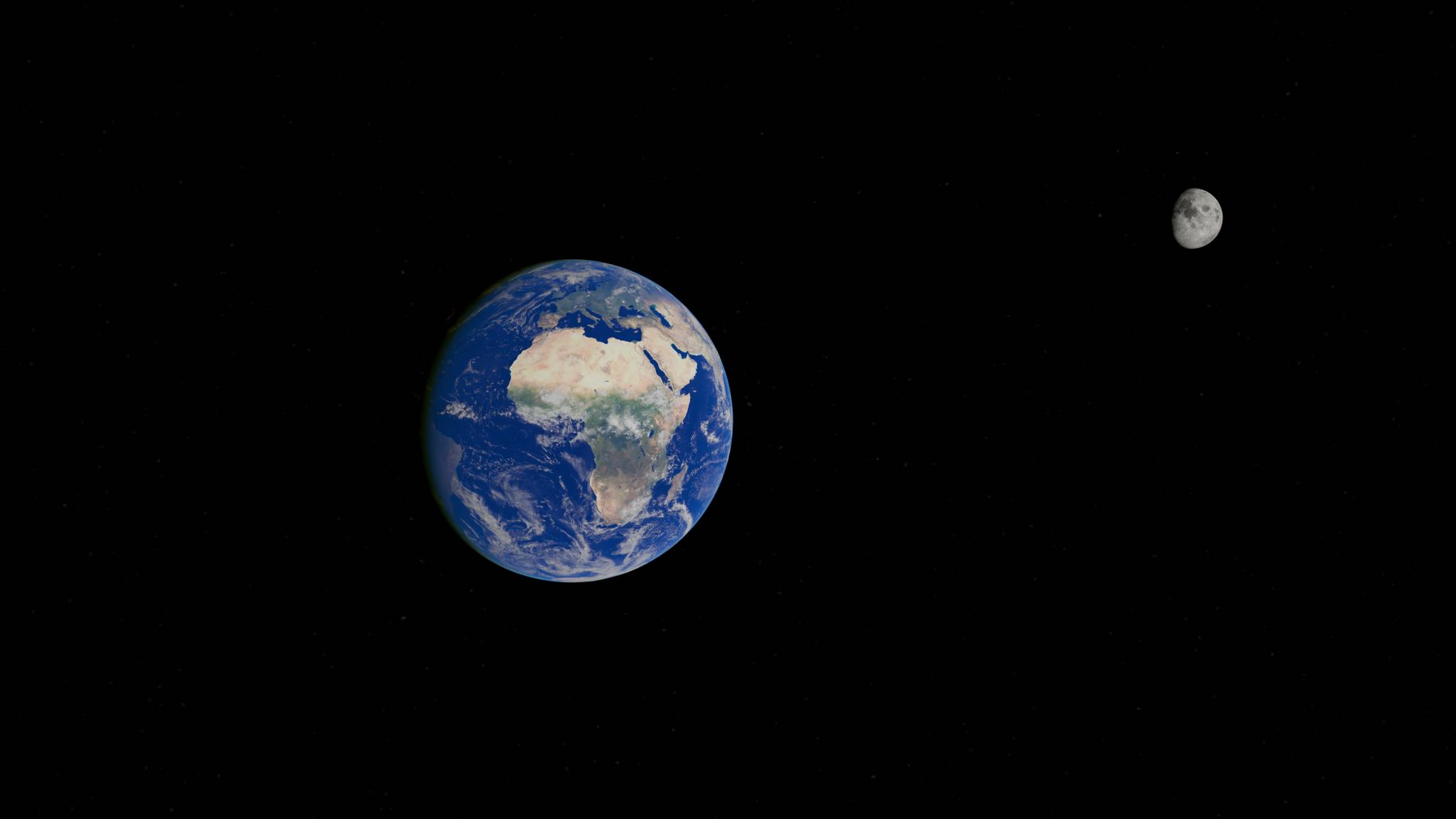
For roughly 499 seconds after the imagined disappearance, the Sun would appear unchanged because every photon reaching Earth had already left the Sun before the event. When the final direct sunlight arrives, daylight would vanish, leaving stars, artificial lighting, and reflected light from the Moon and planets as the only visible sources.
Solar‑wind particles travel much slower than light, taking days to cross the same gap, so spacecraft would continue to encounter particles already en route even after the last sunlight arrives. Gravity, according to general relativity, also propagates at light speed. Earth would continue to feel the Sun’s gravitational pull for the same eight‑minute interval before moving on a tangent to its former orbit.
The Sun does generate real pressure waves—solar oscillations with periods near five minutes—that are detected via Doppler shifts and brightness variations in sunlight. Scientists can translate these measurements into audible frequencies through sonification, but this is not a recording of sound traveling through space.
In summary, the thought experiment highlights the enormous disparity between electromagnetic and mechanical wave speeds across an astronomical distance. Light’s eight‑minute delay is a real observational fact; the 13.8‑year “roar” is a purely arithmetic illustration that cannot occur in the vacuum of interplanetary space.

Helene Elliott is the Lead Science & Space Reporter at News Raise. She reports on aerospace missions, astrophysics discoveries, quantum research, and environmental technology.