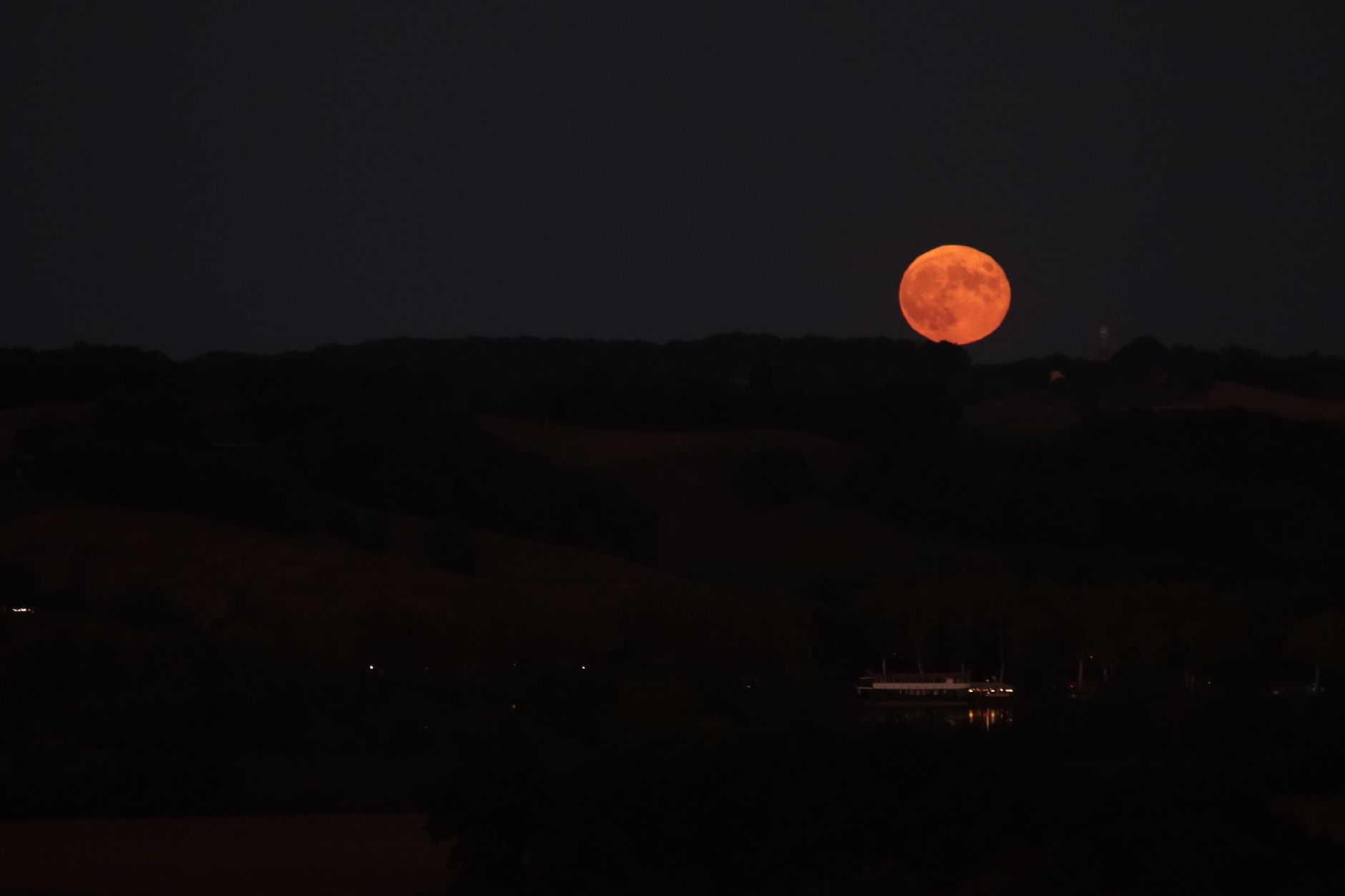
The September full moon of 2026 will reach 100 percent illumination at 12:49 p.m. EDT (1649 GMT) on September 26. In the United States the moon will rise over the eastern horizon among the stars of Pisces at sunset, presenting the classic Harvest Moon that marks the closest full moon to the September equinox.
Viewing Details
As the moon climbs from the horizon it will display a warm yellow‑orange hue. The color is produced by Rayleigh scattering, which filters sunlight through Earth’s atmosphere when the moon is low. Within roughly an hour the hue fades as the lunar disk climbs higher and the atmosphere’s effect diminishes.
Observers will also notice the “Moon Illusion,” a psychological effect that makes the moon appear larger near the horizon than when it is overhead, even though its actual size does not change. Local moonrise and moonset times will differ by region, so stargazers should consult a planet‑arium app such as Stellarium or SkySafari 7 Pro for precise timings.
Cultural Context
The September full moon is traditionally called the Harvest Moon because it falls nearest the September equinox, when the sun crosses the celestial equator moving southward and astronomical autumn begins in the northern hemisphere. The Old Farmer’s Almanac notes several alternate names: the Corn Moon, reflecting the time of grain harvest; the Turning Leaves Moon, used by the Anishinaabe people; the Falling Leaves Moon, named by the Ojibwe Tribe; and the Yellow Leaf Moon, given by the Assiniboine people.
Beyond North America, the same lunar phase coincides with the Mid‑Autumn Festival in China, a 3,000‑year‑old celebration that includes mooncakes and lanterns. In the Hindu calendar the rise of the Harvest Moon marks the start of Pitru Paksha, a period for honoring ancestors with prayers and food offerings.
Additional Sky Objects and Photography Tips
One hour after the moon rises, Saturn will be visible less than ten degrees to the lower left of the lunar disk. A modest 6‑inch telescope can reveal Saturn’s iconic rings and its brightest moons—Rhea, Tethys, Dione and Titan—aligned in a line extending from the planet.
The Great Square of Pegasus will sit to the upper left of the moon after sunset, while the constellations Cancer, Gemini, Orion and Taurus will frame a broader winter‑sky preview. Early risers can spot Jupiter and Mars flanking Cancer, with Castor and Pollux of Gemini appearing to the upper left of Mars.
Astrophotographers are encouraged to capture the Harvest Moon using a DSLR and telephoto lens. Recommended equipment includes a sturdy tripod, a remote shutter or timer to avoid camera shake, and a lens of at least 400 mm for detailed lunar surface work (12‑50 mm works well for landscape shots that include foreground elements). Smartphone stargazing apps can help locate the exact point of moonrise on the local horizon.
When the moon is near the horizon, the orange‑yellow coloration and apparent size make for dramatic compositions with terrestrial foregrounds. As the moon climbs higher, a cleaner, more “classic” view of the lunar surface becomes possible. Photographers should experiment with both scenarios to document how the shifting shadows alter the moon’s appearance over the weeks following the full phase.
For those wishing to share their images, Space.com invites submissions with location details and personal comments to spacephotos@space.com.

Helene Elliott is the Lead Science & Space Reporter at News Raise. She reports on aerospace missions, astrophysics discoveries, quantum research, and environmental technology.