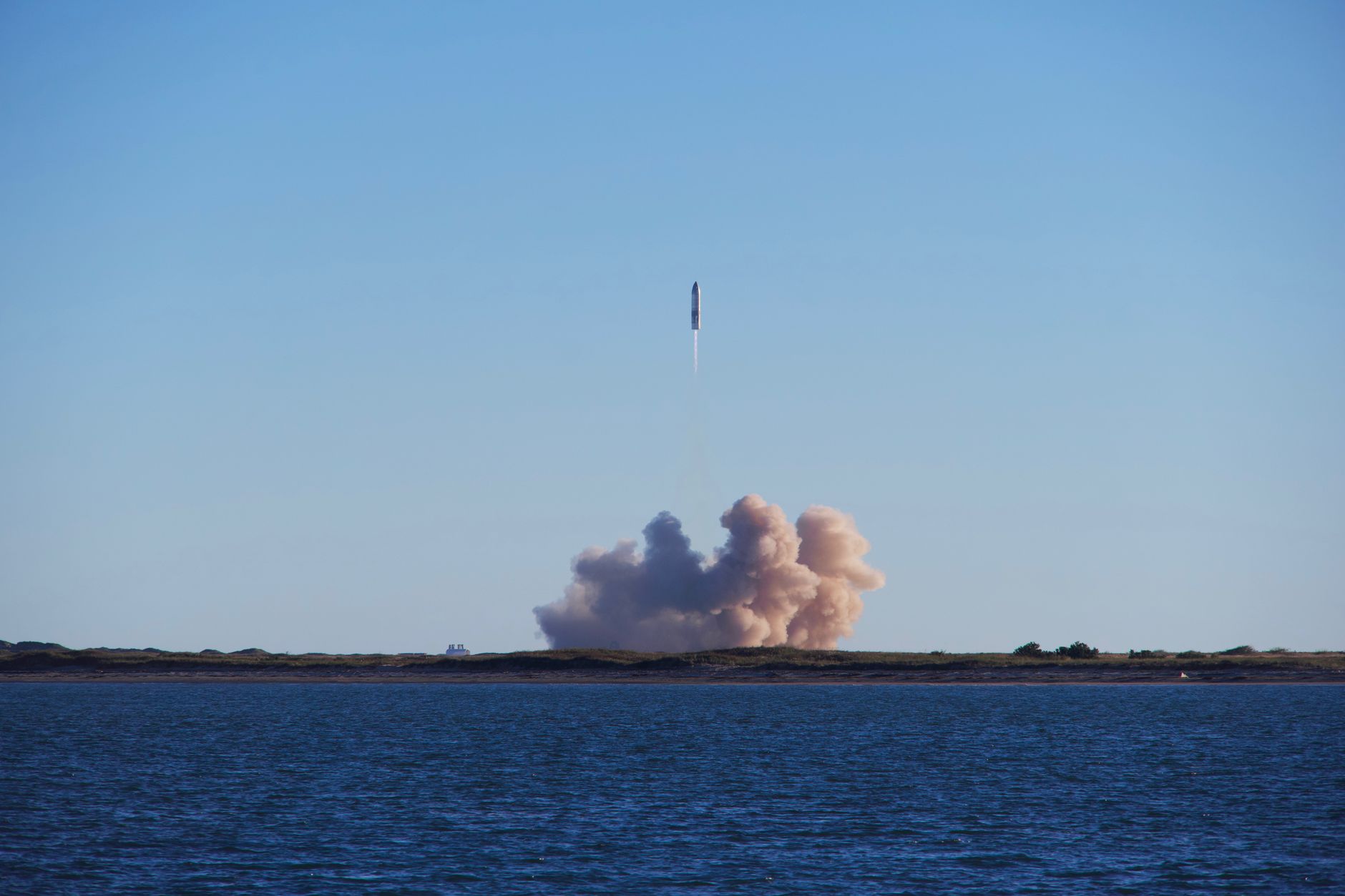
NASA launched the Nancy Grace Roman Space Telescope on a SpaceX Falcon Heavy rocket Sunday, beginning a three‑month cruise to Lagrange Point 2, a million miles from Earth where it will map the large‑scale structure of the cosmos with a 300‑megapixel wide‑field camera.
Launch and Flight Profile
The lift‑off occurred at 7:26 a.m. EDT from Pad 39A at Kennedy Space Center. Falcon Heavy’s three core stages, each powered by nine Merlin engines, generated more than five million pounds of thrust. Two side boosters separated 2½ minutes after launch, flipped around and landed at Cape Canaveral Space Force Station, while the central core fell into the Atlantic after its burn.
After two burns by the second stage, the 18,000‑pound Roman telescope was released 31 minutes after liftoff. Its solar arrays deployed automatically and the spacecraft began its 100‑day journey to L2, the same gravitationally stable region that hosts the James Webb Space Telescope.
During a post‑launch news conference, President Trump called NASA administrator Jared Isaacman, praised the successful launch and reiterated his administration’s financial support for the mission.
Instruments and Scientific Goals
Roman carries a Hubble‑class mirror originally built for a spy satellite and a wide‑field camera that will catalog roughly 20 billion stars, over two billion galaxies, tens of thousands of supernovae and countless transient events. The mission also aims to increase the known exoplanet count from about 6,200 today to well above 100,000 by the end of its survey.
A second payload, an experimental coronagraph equipped with deformable mirrors, is designed to suppress starlight and detect light reflected from Jupiter‑size planets orbiting Sun‑like stars. Vanessa Bailey, the coronagraph instrument scientist at JPL, said the device can spot planets up to 100 million times fainter than their host stars, potentially revealing atmospheric composition.
The coronagraph, roughly the size of a baby‑grand piano, represents one of the most complex instruments ever launched. If the technology proves successful, a more advanced version could enable future telescopes to directly image Earth‑like planets and search for biosignatures.
Potential Impact on Cosmology
NASA science chief Nicky Fox described Roman as a mission that will “revolutionize the way we look at our universe,” emphasizing its ability to measure both dark matter—the invisible scaffolding of the cosmos—and dark energy, the repulsive force accelerating cosmic expansion.
By mapping the distribution of dark matter and obtaining precise measurements of dark energy, Roman will address the “Hubble tension,” a discrepancy between early‑universe expansion rates inferred from the cosmic microwave background and later‑time supernova observations. Julie McEnery, senior project scientist, warned that the mission may demonstrate that the current standard cosmological model is incomplete.
In addition to cosmology, the wide‑field camera will continuously monitor stars for transits, providing a statistical trove of exoplanet detections that could reshape our understanding of planetary system formation.
Overall, Roman’s placement at L2, its powerful imaging suite, and its ambitious survey goals position it to deliver breakthroughs across galaxy evolution, dark sector physics and the search for worlds beyond our solar system.

Norman Pearlstine is the Executive Editor and Co-Founder at News Raise. With over two decades of experience across financial journalism, corporate governance, and market analysis, Norman leads the editorial direction and ensures strict adherence to journalistic accuracy and ethics.