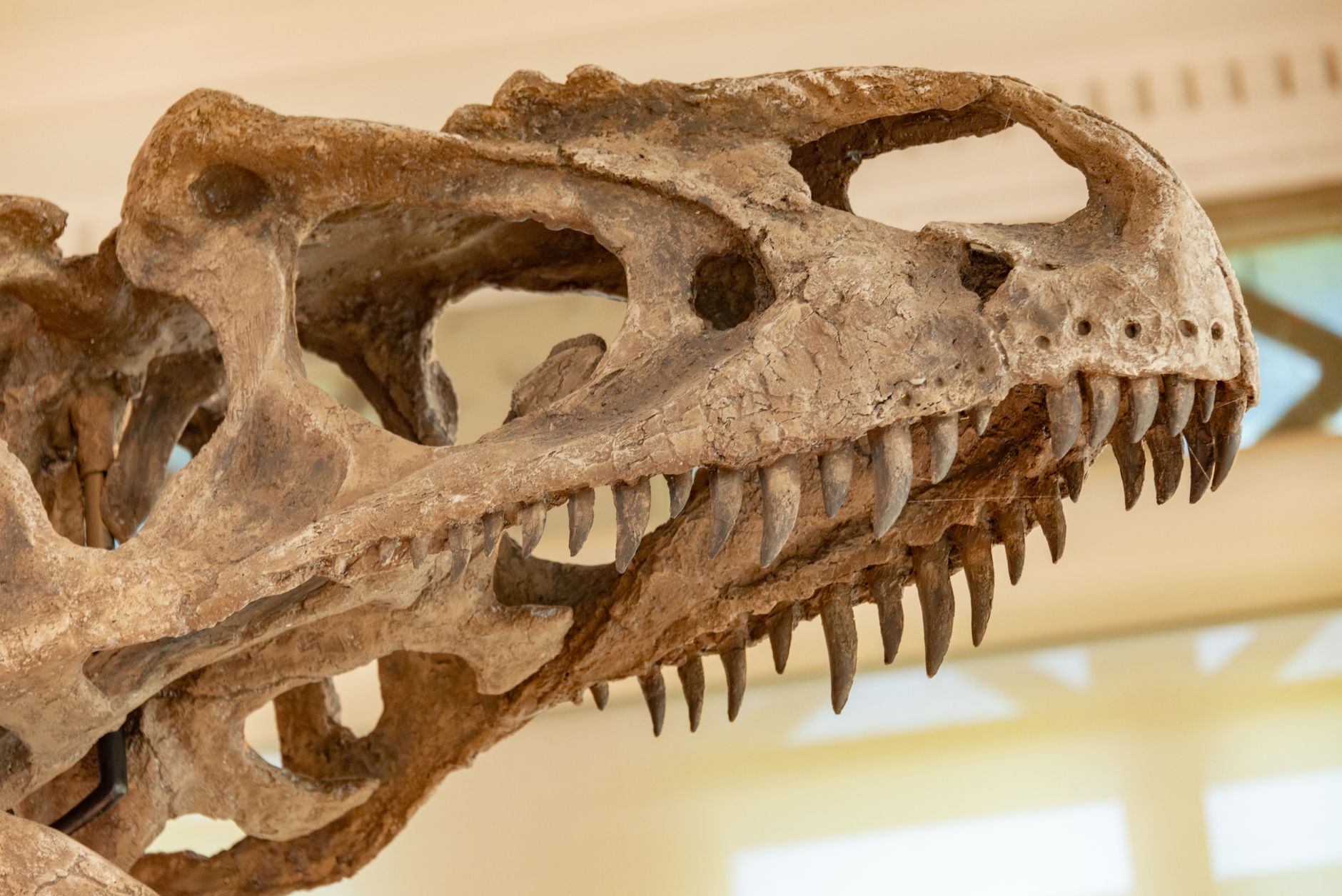
A team of researchers has estimated that the iconic predator Tyrannosaurus rex maintained an internal temperature of roughly 36.3 °C (97.3 °F). The figure places the dinosaur’s heat production in line with large modern mammals such as Indian and African elephants, and well above the temperatures recorded for crocodilians that shared its Late Cretaceous ecosystem.
How the temperature was measured
The study, led by University of California‑Los Angeles geobiologist Robert Eagle, applied a technique known as clumped isotope paleothermometry to three T. rex teeth recovered from the Hell Creek Formation in Carter County, Montana. The method examines the bonding patterns of carbon and oxygen atoms within tooth enamel, allowing scientists to infer the temperature at which the mineralized tissue formed. All three specimens originated from a single site southeast of Ekalaka, providing a consistent sample for analysis.
Results and comparative data
Clumped‑isotope measurements yielded an average body temperature of about 36.3 °C for the theropod. Eagle noted that this value aligns closely with reported body temperatures for living elephants—36 °C for Indian and 36.2 °C for African species. He also highlighted that the figure is “about the same as humans.” By contrast, teeth from contemporaneous crocodilians produced temperatures near 30.9 °C (87.6 °F), a range consistent with the ectothermic, sun‑basking lifestyle of modern crocodiles. The temperature gap between the predator and its reptilian peers suggests that T. rex was able to sustain heat well above ambient conditions, a hallmark of endothermy.
Implications for physiology and habitat
According to Eagle, a thermoregulated T. rex supports the view that tyrannosaurs were active hunters or scavengers capable of supporting fast metabolisms. The researchers extended the analysis by incorporating paleoclimate simulations of the Maastrichtian‑age North American continent. The models indicated that a wide latitudinal band—including cooler, higher‑latitude regions—would have been hospitable for a warm‑blooded T. rex. This finding dovetails with fossil records that place tyrannosaur remains as far north as Alaska’s North Slope, suggesting the species could thrive in environments that would challenge cold‑blooded dinosaurs.
Broader significance
The results add to a growing body of evidence that at least some large theropods possessed warm‑blooded physiology, capable of generating and regulating internal heat rather than relying solely on external sources. University College London paleontologist Alessandro Chiarenza emphasized that a “toasty Tyrannosaurus rex also was able to survive in a cooler habitable range, stretching into territory where cold‑blooded animals would have faltered.” He noted that the Cretaceous period was one of the warmest intervals in Earth’s history, yet winter conditions in high‑latitude locales like Alaska would still have been too harsh for a strictly ectothermic dinosaur. The study, published in Science Advances, therefore reinforces the notion that the evolutionary lineage leading to modern birds had already diverged toward endothermy long before the end of the Mesozoic era.
By providing a direct temperature estimate from fossil material, the research offers a quantitative anchor for debates over dinosaur metabolism. It also illustrates how advanced isotopic techniques can extract physiological insights from ancient remains, opening new avenues for exploring the biology of extinct megafauna.

Norman Pearlstine is the Executive Editor and Co-Founder at News Raise. With over two decades of experience across financial journalism, corporate governance, and market analysis, Norman leads the editorial direction and ensures strict adherence to journalistic accuracy and ethics.