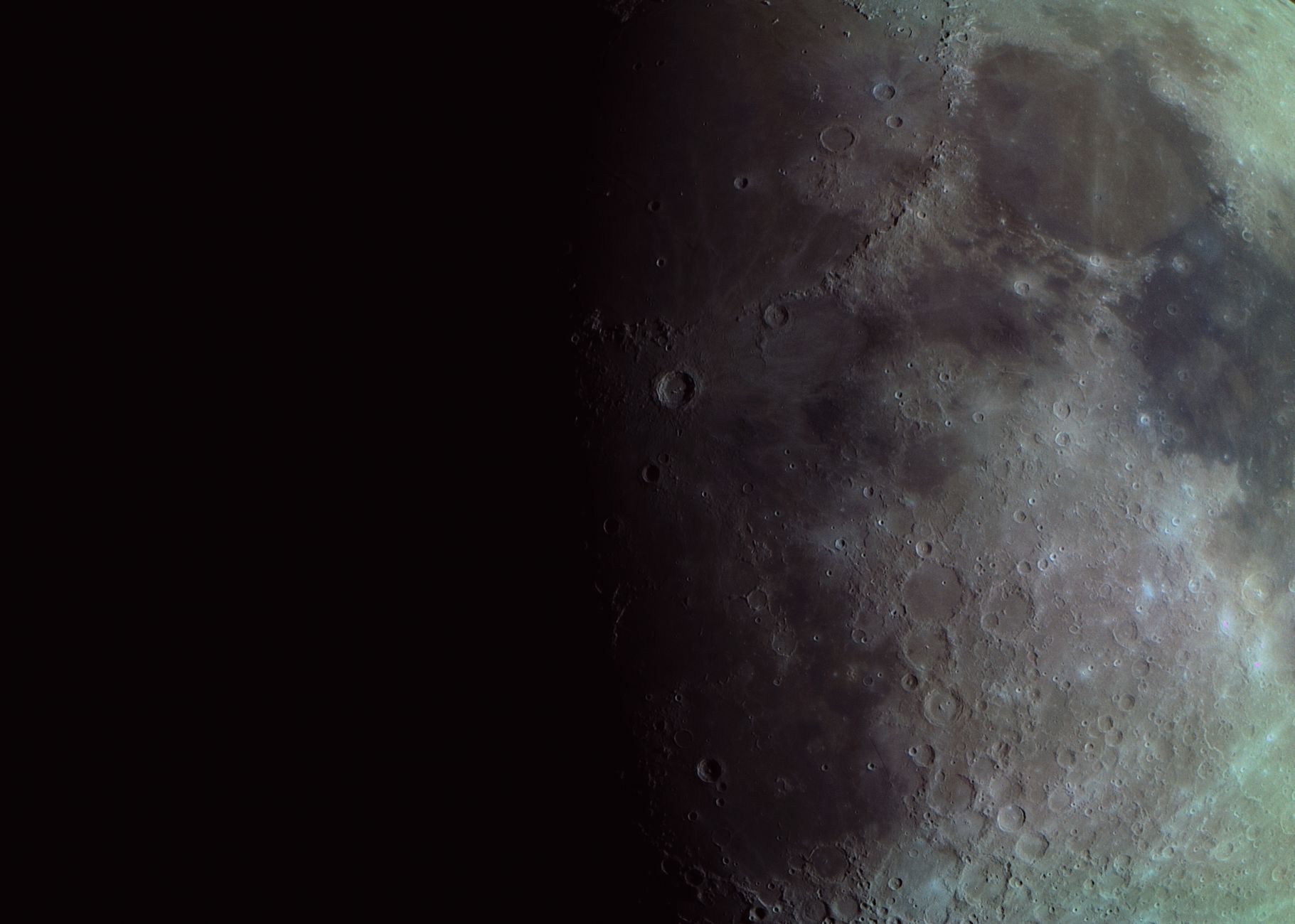
Researchers have announced the discovery of a new lunar crater that measures roughly 728 feet (222 meters) across and 141 feet (43 meters) deep, making it larger than the Roman Colosseum. The feature, named McGetchin in honor of the late lunar scientist Thomas McGetchin, was formed by an impact that occurred sometime between April 11 and May 22, 2024.
Discovery and Dimensions
The crater was identified by Robert Wagner, an image‑processing specialist with Intuitive Machines who collaborates with NASA’s Lunar Reconnaissance Orbiter Camera (LROC). While reviewing lunar images on October 24, 2025, Wagner noticed a striking new formation and halted his work to investigate the anomaly. By comparing pre‑impact and post‑impact photographs, he and his colleagues confirmed that a fresh crater had appeared. Wagner described the debris pattern as “by far the most obvious impact debris pattern” he had ever seen in LROC data.
Impact Characteristics and Rarity
According to a study published in Science Advances on September 16, the impact was likely caused by a fragment of an asteroid or comet comparable in size to a three‑ to six‑story building. Researchers estimate that an impact of this magnitude occurs on the Moon only about once every 132 years, labeling the event a “statistically rare, effectively once‑in‑a‑lifetime observation.” The collision was not detected in real time, highlighting the value of systematic image analysis for uncovering such events after the fact.
Beyond the crater itself, the impact altered a much broader region of the lunar surface. The team found surface changes extending more than 1,000 times the crater’s radius, indicating that debris and thermal effects spread far beyond the immediate rim.
Implications for Future Lunar Missions
A companion paper, also appearing in Science Advances on the same date, examined the physical and thermal consequences of the impact. The authors identified a roughly four‑mile‑wide “cold spot” surrounding McGetchin, where nighttime temperatures are 14 to 16 degrees Fahrenheit (8 to 9 °C) colder than adjacent terrain. The study linked this temperature drop to alterations in the upper layers of regolith—the Moon’s loose, rocky surface material. The disturbed regolith was found to be less dense, reducing its ability to retain heat.
NASA has noted that such changes could affect the performance of future lunar rovers. Less dense soil may influence wheel traction, while the extent of debris dispersion could pose risks to equipment and infrastructure placed near impact sites. Understanding how impact‑generated material spreads is therefore critical for planning safe landings and surface operations.
The discovery of McGetchin and its associated cold spot provides a natural laboratory for studying impact processes, regolith dynamics, and thermal behavior on the Moon. As agencies worldwide prepare for a new era of lunar exploration, the findings offer valuable data that could shape mission design, site selection, and risk mitigation strategies.

Helene Elliott is the Lead Science & Space Reporter at News Raise. She reports on aerospace missions, astrophysics discoveries, quantum research, and environmental technology.