Meta announced at its Connect event that holographic avatars will be integrated into its forthcoming VR glasses and the Meta Ray‑Ban Display frames. In a hands‑on demonstration, a user reported that the avatars appeared so lifelike that they were initially mistaken for the real person on a WhatsApp call.
Creating an avatar
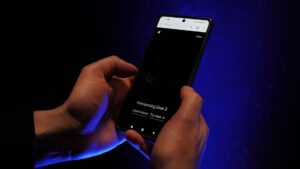
The setup process differs by device. For the display‑enabled glasses, users generate an avatar through the Meta AI app, a workflow that resembles Apple’s Vision Pro “persona” creation. The app accesses the phone’s camera, prompting the user to rotate their head to capture multiple facial angles. It then asks a series of personal questions—such as “what does your perfect day look like from start to finish” and “what’s one of your hobbies, and why do you like it”—to model voice characteristics. Although the demo experienced a brief glitch where the app skipped questions, the overall creation time remained around five minutes. After completion, the avatar can be used on video calls via WhatsApp or Zoom while wearing the glasses.
Performance and technical details
The avatars run on Meta’s new Muse Realtime Avatar model, which translates the brief training session into real‑time facial expression mapping. During the demo, the user could see a small preview of their own avatar in the lower corner of the display, noting that it looked identical yet was clearly recognized as a digital representation. A transparent watermark appears on all avatar‑based calls, serving as an identifier for viewers.
When using the VR glasses, the system leverages inward‑facing cameras and sensors to capture facial movements without requiring a separate training questionnaire. This enables the creation of a full‑body avatar that includes lower limbs, a capability the reviewer compared favorably to Apple’s “persona” avatars, which lack arms and legs and often appear overly smooth. The VR avatar displayed minor distortions near the feet and slight blurring at the head’s edges, and it only presents a frontal view rather than a fully three‑dimensional model. Despite these limitations, the experience was described as “much more natural looking” than previous VR avatar interactions.
Availability and future outlook
Meta describes the holographic avatars as being in an “early preview” stage, acknowledging existing bugs and hardware‑specific restrictions. Currently, a Ray‑Ban Display user can call another user only when both are wearing the glasses, and VR avatars are limited to glasses‑to‑glasses conversations. Meta plans to roll out early‑access holograms for Ray‑Ban Display users later this fall.
Company representatives indicated that employees are already using avatars for work meetings, suggesting a potential alternative for situations where a traditional camera feed is undesirable. While the reviewer felt that using an avatar with close friends or family might feel “weird and inauthentic,” the technology could enhance a sense of presence for professional or casual video interactions.

Steve Lopez is a Senior Editorial Columnist and Health & Public Policy reporter for News Raise. Steve focuses on healthcare advancements, medical technologies, and public health policies.