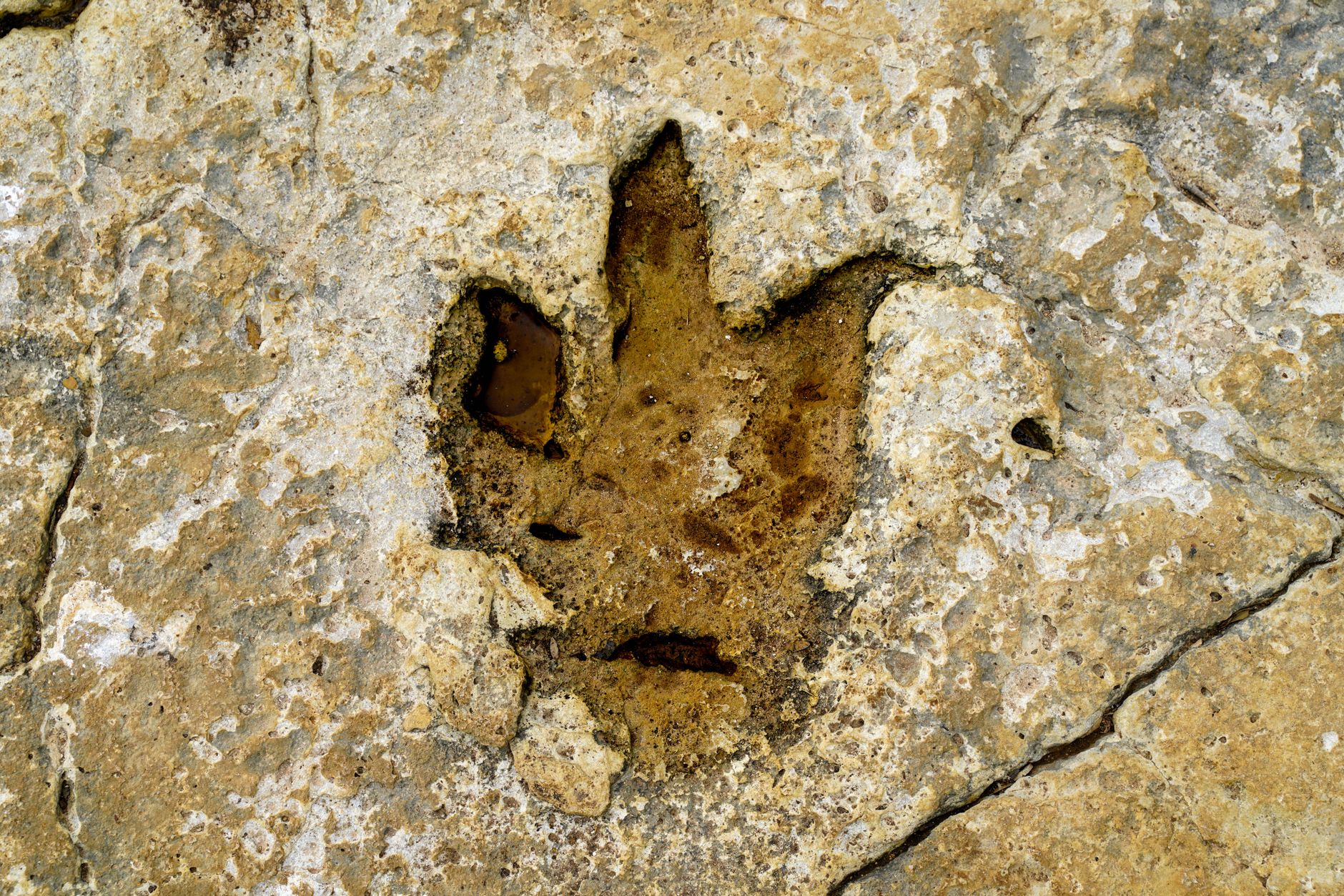
On a July 2025 field trip to the Hell Creek Formation, a high‑school science teacher from Northglenn, Colorado, documented what researchers say is the first confirmed Tyrannosaurus rex trackway ever found.
Kent Hups, a volunteer research associate with the Denver Museum of Nature & Science, was surveying the sedimentary layers that stretch across Montana, Wyoming, North Dakota and South Dakota when he noticed two large, three‑pronged depressions in the mudstone. “My first reaction was total disbelief,” Hups recalled. He spent several minutes examining the marks before concluding they were not ordinary rocks.
Discovery and verification
The impressions measured roughly three feet (0.9 m) in length and between two and two‑and‑a‑half feet (0.6‑0.8 m) wide. Such proportions—longer than they are wide—suggest a carnivorous trackmaker. “Footprints with a length that’s greater than the width indicate the track maker was likely a meat eater,” Hups explained. The size and three‑toed shape matched the known anatomy of the iconic apex predator that roamed the late Cretaceous floodplain.
Hups reported the find to senior curator of vertebrate paleontology Tyler Lyson, also of the Denver Museum. Lyson, initially skeptical, marked an “X” in the sediment where additional prints should appear. Subsequent excavation uncovered a third and fourth footprint, each showing slender toes with an elongated middle digit—characteristic of T. rex feet. A fifth print was later located, solidifying the sequence as a continuous trackway.
The team’s analysis, published on September 8 in the Journal of Vertebrate Paleontology, notes that the Hell Creek Formation is one of the world’s best‑studied rock units, hosting a known dinosaur fauna that includes the massive tyrannosaur and the duck‑billed Edmontosaurus. “Their feet are very different,” Lyson said, emphasizing that the footprint dimensions rule out the herbivore.
Prior to this discovery, only two isolated T. rex footprints had been reported: one identified by a U.S. Geological Survey geologist in New Mexico in 1994, and another described in a 2008 study of the Montana portion of Hell Creek. Isolated prints provide limited context, making the new multi‑print trackway especially valuable.
Scientific implications
Beyond confirming the presence of the species, the trackway offers direct evidence of its locomotion. The four‑print segment spans about 13 feet (4 m), indicating a stride length that translates to a walking speed of roughly 3.5 to 4.5 mph (5.6 to 7 km/h). Thomas Holtz Jr., a vertebrate paleontologist at the University of Maryland, cautioned that the speed estimate reflects movement in soft, wet soil rather than the dinosaur’s maximum capability, but he called the find “perhaps the first definitive Tyrannosaurus rex trackway sequence.”
According to Romilio, a paleontologist with the University of Queensland’s Dinosaur Lab, trackways capture “a few seconds of life, 66.5 million years ago,” providing behavioral data that bones cannot. The Denver Museum plans to collect three of the North Dakota prints for further study of possible tissue and skin impressions, potentially revealing details of the animal’s foot covering.
Hups hopes the discovery will encourage more amateur and professional observers to scrutinize unusual rock surfaces. “It is the closest thing that we have to a time machine,” he wrote in an email, urging greater public involvement in paleontological fieldwork.
The new trackway not only enriches the scant record of North American theropod locomotion but also underscores the rarity of such evidence from the final chapter of the dinosaur era. As researchers continue to examine the prints, the findings may refine estimates of T. rex gait, speed, and even soft‑tissue anatomy, opening fresh windows onto the world that vanished 66.5 million years ago.

Helene Elliott is the Lead Science & Space Reporter at News Raise. She reports on aerospace missions, astrophysics discoveries, quantum research, and environmental technology.