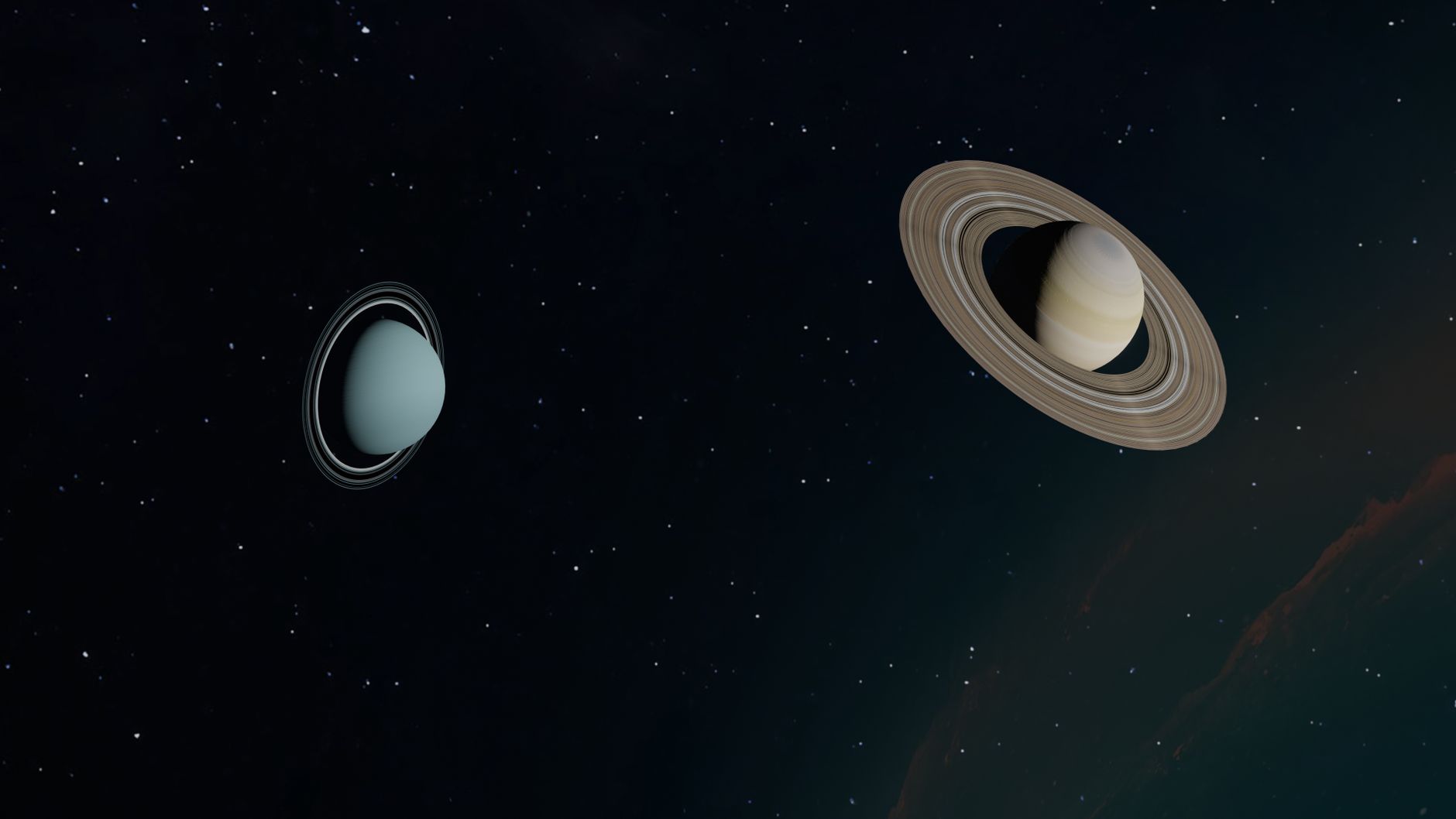
When Earth slides directly between the Sun and Saturn this weekend, the ringed world will appear at its largest and most luminous point of the year. At the time of opposition the planet will be roughly 784 million miles (1.26 billion kilometres) from our planet, a distance that makes it shine more brightly than at any other moment in 2026.
What opposition means for observers
The astronomical event known as opposition occurs when a superior planet lines up opposite the Sun in the sky, with Earth in the middle. This geometry places the planet at its nearest approach for the calendar year, and the Sun’s glare is absent, allowing the planet to be seen all night long. For Saturn, the alignment will happen on Sunday morning at 8:21 a.m. UTC, but cloud cover is forecast for that day, making the pre‑dawn hours of Friday, October 2, the most promising window for clear sight.
How to see Saturn tonight
Even without optical aid, Saturn will be visible as a faint yellowish point in the eastern to southeastern sky after sunset. It will rise in the east as twilight fades, climb to its highest altitude around midnight, and remain above the horizon until dawn. A modest backyard telescope will easily resolve the planet’s iconic rings and may reveal the brightest of its 293 known moons.
While scanning the sky for Saturn, stargazers can also locate two familiar asterisms nearby. Slightly higher in the sky lies the Great Square of Pegasus, a rectangular pattern of four bright stars that outlines the mythic winged horse. To the right of the planet, the faint ring‑shaped grouping called the Circlet of Pisces offers another point of reference for beginners learning the night sky.
Ring tilt changes after a year‑long edge‑on view
The view of Saturn’s rings this year differs markedly from that of 2025. Last year Earth crossed the plane of the rings, causing the massive structure—about 175,000 miles across but only roughly 30 feet thick—to appear edge‑on and virtually invisible. Since that opposition, the rings have tilted about 7.5 degrees relative to our line of sight, restoring their classic, open appearance and making them a striking feature for anyone with a telescope.
Saturn’s previous opposition occurred on September 21, 2025. The planet reaches opposition roughly every 378 days, which translates to an advance of about two weeks each successive year as Earth catches up to Saturn in its orbit. After this weekend’s event, Saturn will stay a favorable evening target for much of the month, offering multiple nights of observation for both casual skywatchers and seasoned astronomers.
Looking ahead, the pattern of oppositions continues with other planets. Jupiter will be opposite the Sun on February 11, 2027, and Mars will follow on February 19, 2027, providing additional opportunities for planetary viewing later in the next year.

Norman Pearlstine is the Executive Editor and Co-Founder at News Raise. With over two decades of experience across financial journalism, corporate governance, and market analysis, Norman leads the editorial direction and ensures strict adherence to journalistic accuracy and ethics.