Researchers have pinpointed the origin of a millisecond‑long radio flash that erupted more than 10 billion years ago, linking it to a diminutive, star‑forming galaxy observed when the universe was roughly one‑fifth of its present age. The burst, designated FRB 20240304B, was reported today in the journal Science as the most distant fast radio burst (FRB) with a confirmed host galaxy.
Discovery and localization
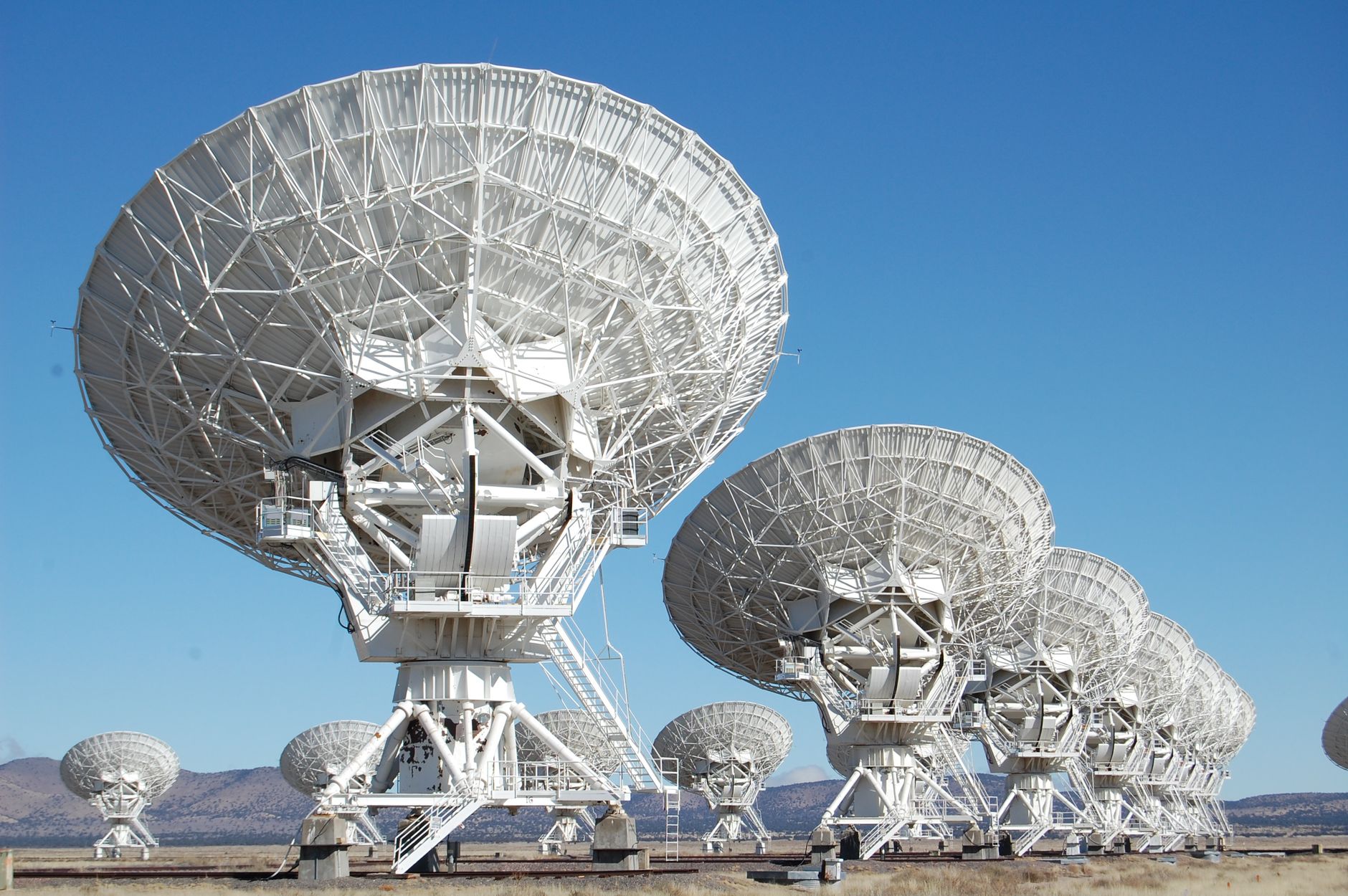
The signal was first captured by the MeerKAT radio telescope in South Africa, employing the MeerTRAP system that scans the sky for rapid, transient radio events in real time. FRB 20240304B exhibited a pronounced dispersion – a delay of lower‑frequency components relative to higher‑frequency ones – indicating that the burst had traversed a substantial column of ionised material. By quantifying this dispersion, astronomers inferred a great cosmological distance and were able to fix the burst’s sky coordinates.
Initial follow‑up with large ground‑based observatories such as the Keck Telescopes failed to reveal any visible host, as the presumed galaxy was too faint in optical light. The team then turned to the James Webb Space Telescope (JWST). Using JWST’s infrared camera, they detected a tiny galaxy positioned very close to the FRB’s radio coordinates. Spectroscopic analysis of the galaxy’s light provided a redshift that translates to a look‑back time of about 10.6 billion years, confirming the burst’s ancient origin.
Characteristics of the host galaxy
The identified host is exceptionally small, containing roughly 10 million solar masses – a fraction of the Milky Way’s mass. Its spectral signature shows low metallicity and vigorous star formation, traits typical of young galaxies in the early universe. These properties differ markedly from the more massive, metal‑rich galaxies that have hosted most previously identified FRBs.
The galaxy’s youthful, high‑energy environment aligns with one leading hypothesis that at least a subset of FRBs arise from magnetars – highly magnetised, rapidly rotating neutron stars born in recent supernovae. Nonetheless, the authors caution that FRBs display diverse temporal and spectral behaviours, suggesting multiple progenitor channels may be at work.
Implications for cosmic studies
Beyond locating the burst’s birthplace, the signal itself serves as a probe of the intervening cosmos. As the radio waves traveled billions of light‑years, they recorded the distribution of free electrons, the structure of the cosmic web, and the orientation of magnetic fields encountered along the way. Small twists in the wave’s polarisation, induced by magnetic fields, allow researchers to map magnetic field complexity across vast stretches of space.
Because FRB 20240304B originates from a time only about three billion years after the Big Bang – a period of peak star formation – it demonstrates that FRBs were already being generated during the universe’s most active growth phase. The detection therefore opens a window onto roughly 80 % of cosmic history, offering a new method to trace how electrically charged matter and magnetism have evolved.
Identifying such distant FRBs remains challenging: the bursts become fainter with distance, and their host galaxies are often beyond the reach of conventional telescopes. The successful combination of MeerKAT’s rapid detection, Keck’s deep imaging, and JWST’s infrared sensitivity exemplifies a pathway forward. Expanding the sample of high‑redshift FRBs will enable astronomers to use these fleeting flashes as signposts for mapping matter distribution, galaxy evolution, and intergalactic magnetic fields over cosmic time.

Norman Pearlstine is the Executive Editor and Co-Founder at News Raise. With over two decades of experience across financial journalism, corporate governance, and market analysis, Norman leads the editorial direction and ensures strict adherence to journalistic accuracy and ethics.