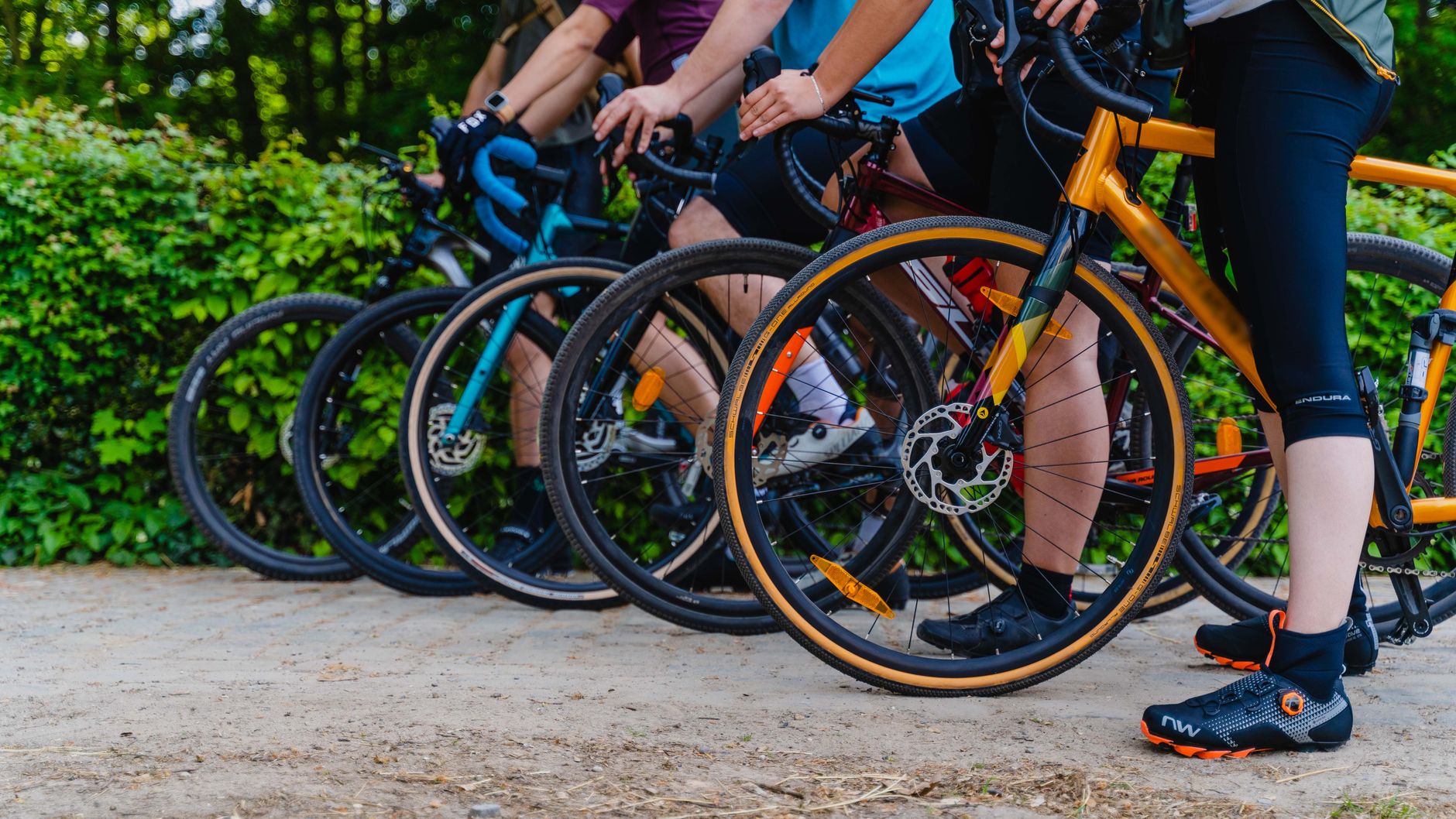
Velo’s latest field test brings together six markedly different gravel bicycles to determine which design philosophy may shape the future of the discipline. The trial took place on a purpose‑built loop in Squamish, British Columbia, where riders tackled everything from smooth fire roads to rugged single‑track sections.
The Six Bikes on the Lineup
The roster spans the spectrum of gravel engineering. The Giant Revolt Advanced SL 0, equipped with SRAM Red XPLR components, claims a 53 mm tire clearance and weighed in at 7.84 kg (17.3 lb) in a medium‑size frame. Factor’s Sarana, also paired with SRAM Force XPLR, offers the widest clearance at 56 mm but is the heaviest at 9.58 kg (21.12 lb). Argon 18’s Anti‑Matter, another SRAM Red XPLR build, provides 55 mm of clearance and recorded a weight of 8.5 kg (18.74 lb). The Obed GVR, described as a progressive race bike, lists 56 mm of clearance and tipped the scales at 9.12 kg (20.1 lb). Pivot’s Les SL Drop Bar, fitted with a 12‑speed SRAM GX Eagle drivetrain, uses a 29 × 2.4 in tire size and weighed 9.78 kg (21.56 lb). Finally, the Salsa Fargo 32 Ti, the only 32‑wheel model, claims 60 mm of clearance and measured 9.48 kg (20.9 lb), also paired with SRAM GX Eagle components.
Riders, Backgrounds, and Test Philosophy
Three cyclists with distinct riding styles were recruited to evaluate the machines. Mike Levy, a former mountain biker who now favors drop‑bar setups, brings a preference for rough, off‑road routes and an adventurous mindset. In‑house Velo tech editor Josh Ross specializes in long‑distance efficiency, regularly logging extensive rides across the Pacific Northwest and seeking equipment that extends his range. Logan Jones‑Wilkins, who once placed 18th overall at the Unbound 200, focuses on outright speed and extracting maximum performance, while still valuing the bike’s capability for exploration.
The trio’s differing priorities—adventure, endurance, and speed—provide a broad lens through which the bikes’ strengths and compromises can be assessed. Their combined feedback is intended to illuminate whether a single design direction can satisfy the varied demands of modern gravel riders.
Controlled Test Conditions and Future Plans
To isolate the impact of frame geometry and component choices, all bikes were fitted with identical 50 mm Schwalbe G‑One RX tires, mounted on Easton EC90 ALX wheels, and run at the same pressure. The test loop incorporated champagne‑smooth paved sections, loamy dirt trails, and mildly technical rocky single‑track, offering both climbs and descents. This mixed‑terrain approach aims to stress each bike’s handling, comfort, and efficiency across the full range of conditions a gravel rider might encounter.
The initial episode documents the riders’ impressions on the diverse loop. Subsequent installments will feature head‑to‑head timed segments, including dedicated climbs, descents, and flat‑road efficiency runs, to generate quantitative performance data. Sponsorship from Endura (providing kits and helmets), Schwalbe (supplying the tires), and Easton (supplying the wheels) helped make the test possible.
While the first round offers a qualitative snapshot, the series promises to refine the conversation around gravel bike design, potentially confirming a prevailing direction or highlighting the continued relevance of multiple approaches.

Norman Pearlstine is the Executive Editor and Co-Founder at News Raise. With over two decades of experience across financial journalism, corporate governance, and market analysis, Norman leads the editorial direction and ensures strict adherence to journalistic accuracy and ethics.