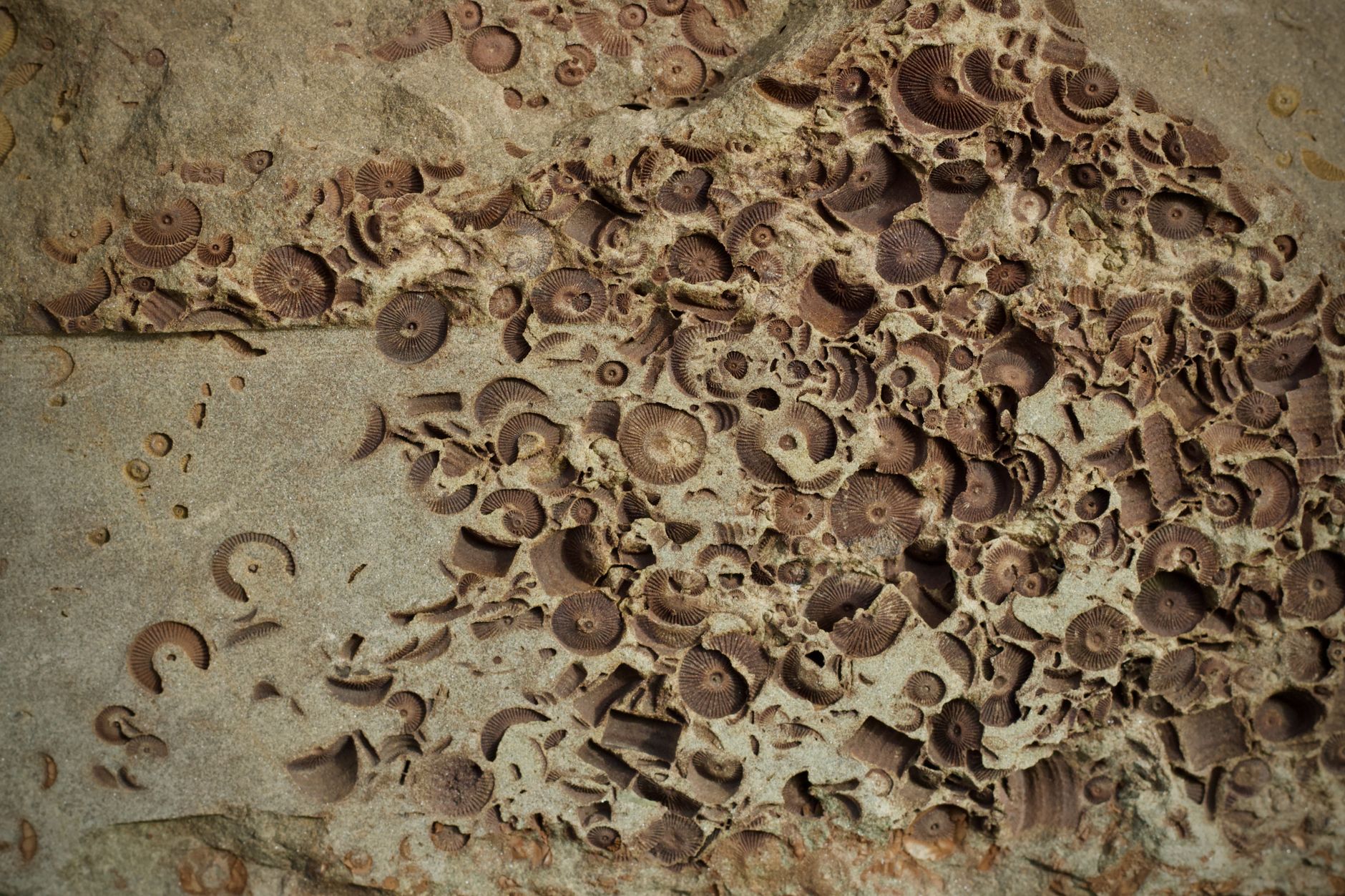
Researchers have identified two exceptionally preserved fossils of a primitive amphibian that lived in the sea during the Late Triassic, about 237 million years ago. The specimens, recovered from what is now Guizhou province in China, belong to a temnospondyl group and have been provisionally named Gerrothorax maritimus. Measuring roughly 74 centimetres in length, the animals possessed flattened bodies and were almost entirely covered in a hard, armor‑like exoskeleton.
Evidence for a fully marine lifestyle
The discovery challenges the long‑standing view that no modern amphibian species lives exclusively in marine environments, despite the existence of more than 8,000 amphibian species today. The research, published today in Nature Ecology & Evolution, argues that G. maritimus was not merely tolerant of salt but actually spent its entire life in seawater.
Key to this conclusion is the context of the fossils’ preservation. The skeletons were found far from any contemporary landmass, reducing the likelihood that the animals were washed ashore after dying elsewhere. Moreover, isotopic analysis of strontium in the bone material matched the composition of seawater from the Late Triassic, indicating that the creatures obtained the element directly from the marine environment. The authors interpret this match as evidence that the amphibians “grew up drinking the seawater.”
Scientific reactions and implications
Steve Brusatte, a palaeontologist and evolutionary biologist at the University of Edinburgh, described the find as “potentially a revolutionary discovery.” He added, “If this Triassic amphibian, Gerrothorax, really was fully marine, then it is a game‑changer.” The statement underscores how the specimen could reshape understanding of amphibian evolution, suggesting that marine adaptation may have occurred far earlier than previously thought.
Ryosuke Motani, a palaeobiologist at the University of California, Davis and co‑author of the study, noted that while some amphibians can tolerate salt, they typically manage excess salt by drinking fresh water. “In most cases, they do it by drinking fresh water,” Motani explained, highlighting why the marine habit of G. maritimus is noteworthy. The study’s authors argue that fresh water would not have been an option for the animal, given the isotopic evidence and the remote marine setting of the fossils.
The findings open new questions about the diversity of ecological niches occupied by early tetrapods and may prompt a re‑examination of other temnospondyl fossils for similar marine adaptations. If marine life was a viable pathway for early amphibians, the evolutionary tree could feature previously unrecognized branches that led to specialized marine forms, even if none survived to the present day.
Future research will likely focus on additional fossil sites from the same period and region, seeking further evidence of marine‑adapted amphibians. Such work could clarify whether Gerrothorax maritimus represents an isolated case or part of a broader, yet undocumented, marine amphibian fauna during the Triassic.

Norman Pearlstine is the Executive Editor and Co-Founder at News Raise. With over two decades of experience across financial journalism, corporate governance, and market analysis, Norman leads the editorial direction and ensures strict adherence to journalistic accuracy and ethics.