Xreal has opened preorder for its Aura smart glasses, a spatial‑computing device developed in partnership with Google for the Android XR platform. The product, first revealed at Google I/O 2026, is scheduled to ship in mid‑November.
Preorder details and pricing
The Aura is a wired headset that runs the Android XR operating system, making it the first pair of smart glasses to use Google’s latest XR software. It connects to a separate “puck” that houses a battery and most of the processing power, allowing the glasses themselves to stay lightweight.
Preorders are being taken exclusively through Xreal’s online store. While the standard retail price is $1,279, early customers can secure a discounted price of $1,099, a reduction of $180. According to a press release, shipments are slated for mid‑November.
Chi Xu, Xreal’s co‑founder and chief executive, said the product “unlocks new ways for people to work, watch, play, and build” and described the launch as “a defining moment for XR.” He added that the glasses are intended for users who want spatial‑computing power without losing sight of their surroundings.
Hardware and performance
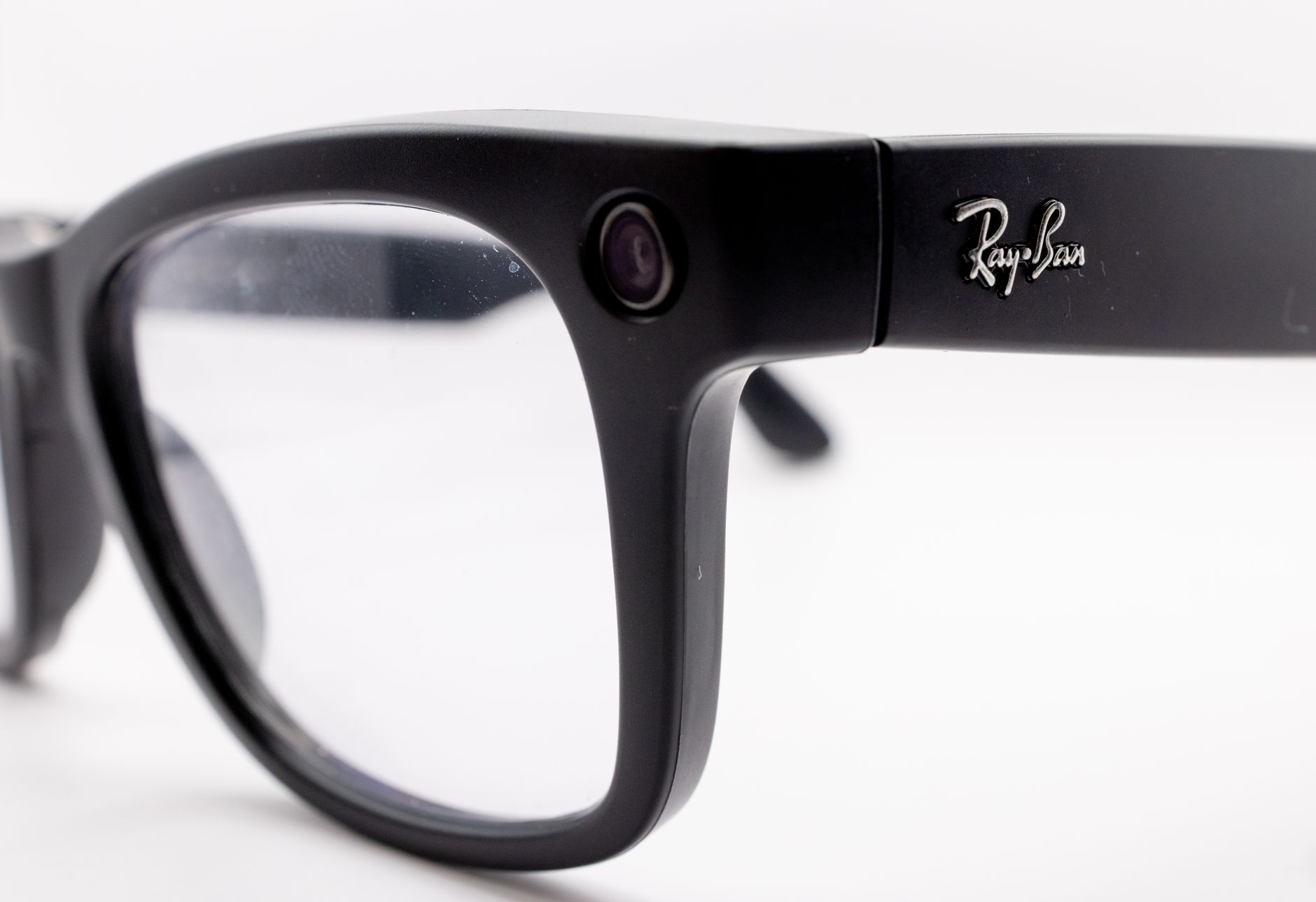
The Aura features dual Sony Micro‑OLED displays that together create a virtual screen with a 70‑degree field of view. Brightness can reach up to 1,050 nits and the panels support refresh rates as high as 120 Hz. Each eye receives a 1,200‑p resolution image (1,920 × 1,200 pixels). The frames weigh less than 95 grams and include electrochromic lenses that can shift among five transparency levels. Audio is supplied by Bose, and four built‑in microphones capture voice commands.
Processing is handled by Xreal’s X1S chip in conjunction with Qualcomm’s Snapdragon Reality Elite Platform. The glasses accept input from voice, hand gestures, keyboards, trackpads and game controllers. On‑board sensors and cameras enable the voice and hand‑movement controls highlighted by the company.
The accompanying puck connects to the glasses via a cable and provides both power and the bulk of the computational workload. This architecture lets the lenses stay thin while still delivering the performance required for high‑fidelity XR rendering.
Software ecosystem and XR content
Running Android XR, the Aura taps into Google’s ecosystem from day one. Users can ask Gemini, Google’s AI assistant, to answer questions about their environment or trigger actions across apps. Integration with Google Photos lets users transform existing photos and videos into three‑dimensional experiences, while Google Maps can render destinations in immersive 3‑D or Street View. YouTube 360‑degree and VR180 videos are also supported.
At launch, Xreal is bundling more than 150 XR experiences, ranging from productivity tools to games. Highlighted titles include an NBA app built for Android XR, the Fallout: Factions video game, a mixed‑reality adventure called Project Hail Mary, a NASCAR XR app, the physics‑based arcade game Oh My Galaxy!, a medical visualization suite XR HoloMedicine, and the music‑learning app Simply Piano XR.
The Aura joins a growing field of spatial‑computing glasses. Snap’s Specs AR glasses, which are fully wireless, carry a price tag of $2,195, while Meta’s upcoming VR glasses are priced at $1,299 but are not expected until spring 2027. Apple’s Vision Pro introduced the concept of spatial computing to a broader audience, but it remains a headset rather than a glasses form factor.
At its discounted launch price of $1,099, the Aura undercuts many competitors while offering a comparable feature set, positioning it as a potentially more affordable entry point into spatial computing.
By combining a lightweight, transparent design with Android XR and a broad library of experiences, Xreal aims to make immersive computing more accessible to consumers who prefer a glasses‑sized device over bulkier headsets.

Steve Lopez is a Senior Editorial Columnist and Health & Public Policy reporter for News Raise. Steve focuses on healthcare advancements, medical technologies, and public health policies.