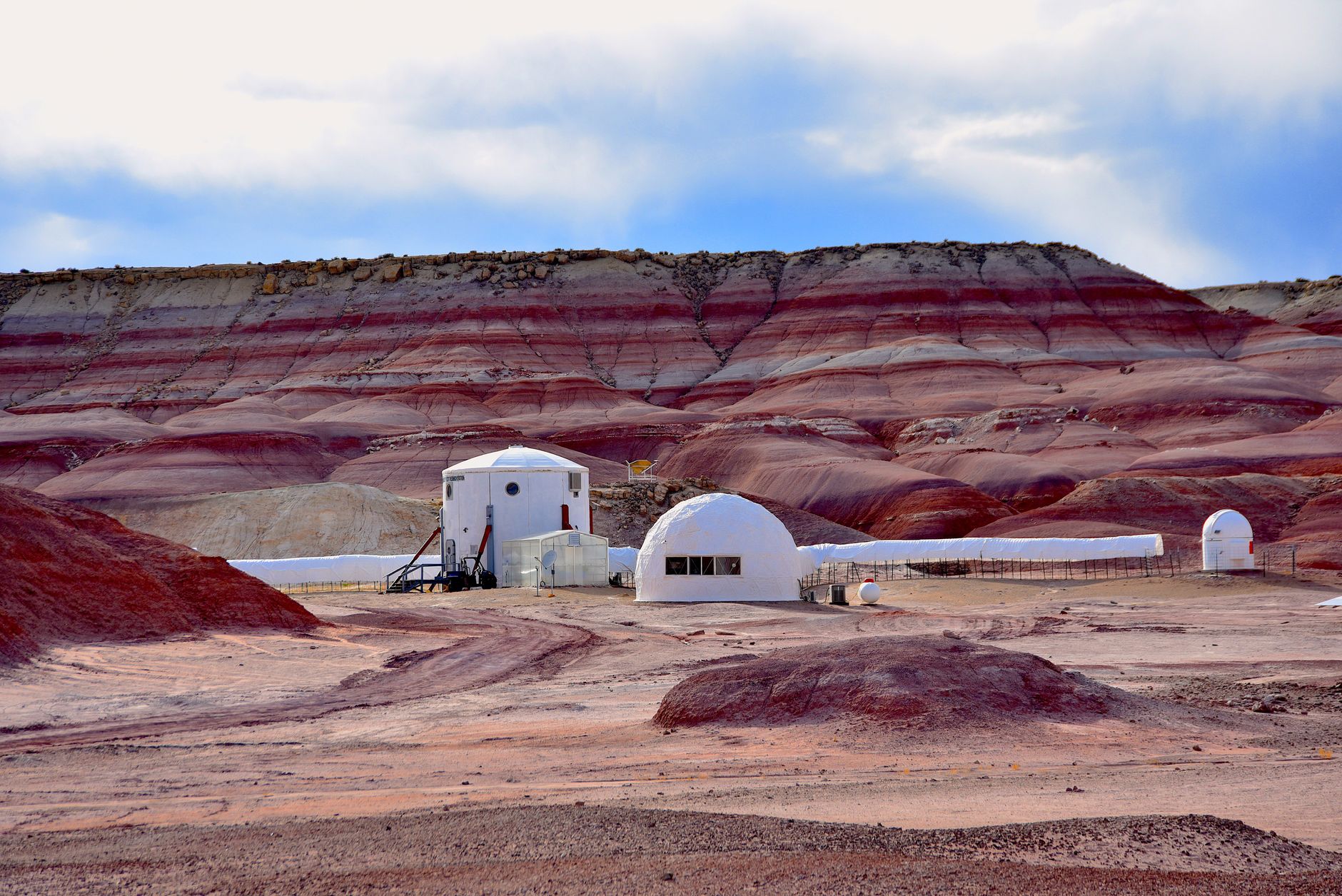
Four NASA astronauts emerged from a 1,700‑square‑foot 3D‑printed habitat at the Johnson Space Center on Saturday, concluding a 378‑day analog mission designed to simulate the conditions of a crewed journey to Mars. The crew entered the isolated environment on Oct. 19, 2025, and spent the entire period cut off from the outside world, carrying out a range of experiments and operational tasks intended to inform future long‑duration spaceflight.
Mission overview
The exercise, known as the Crew Health and Performance Exploration Analog (CHAPEA), was NASA’s second mission of its kind. Like its predecessor, which ran for 378 days across 2023 and 2024, the current simulation required the crew to live and work inside a purpose‑built habitat that replicates the constraints of a deep‑space vessel. Key objectives included growing crops in a substrate that mimics Martian soil and maintaining communications with mission control under artificially introduced time delays that mirror interplanetary latency.
Medical officer Ellen Ellis, who served as the mission’s health lead, described the experience as “a hell of a year — analog astronauts living in captivity of our own free will.” She highlighted the broader strategic context, noting that the United States faces a “narrowing window of opportunity to maintain US preeminence in space,” and referenced the space‑related service academy initiatives pursued during the Trump administration, as well as plans for a lunar base.
Director of the Johnson Space Center, Vanessa Wyche, greeted the crew as they left the habitat. Wyche praised the team for managing limited resources, preserving the structural integrity of the habitat, and executing simulated Mars operations. She emphasized the significance of the communication delays, saying they “require patience, careful planning and greater independence — qualities that will be essential for future astronauts traveling millions of miles from home.”
Crew reflections and leadership
Mission commander Ross Elder reflected on the challenges ahead, stating, “For Mars, the risks are great. But through seeking understanding, strong vision and leadership, creativity, fortitude, hard work and incredible foundation, the goal of putting humans on Mars is not only achievable, but rather inevitable.” Science officer Matthew Montgomery and flight engineer James Spicer, who completed the mission alongside Elder and Ellis, also participated in the post‑mission debrief, though specific comments from them were not recorded in the public remarks.
Following their exit, the crew will undergo two weeks of evaluations and debriefings with NASA scientists. The agency aims to extract actionable insights on how astronauts adapt to the daily routines, health demands, and psychological stresses of extended isolation, with the ultimate goal of keeping future crews healthy, productive, and connected during missions beyond Earth.
Implications for future exploration
NASA’s analog work feeds directly into its broader exploration roadmap. The agency has articulated ambitions for a crewed Mars mission as early as the 2030s, contingent on the lessons learned from habitats, life‑support systems, and crew dynamics demonstrated in CHAPEA. Before a Mars landing, NASA plans to return humans to the Moon for the first time since 1972, using lunar missions as a stepping stone to test technologies and operational concepts that will be critical for the longer journey to the Red Planet.
The successful completion of the second CHAPEA mission underscores NASA’s commitment to incremental, evidence‑based progress. By replicating the constraints of deep‑space travel on Earth, the agency hopes to refine the protocols, equipment, and human factors that will enable safe and sustainable exploration of Mars and beyond.

Steve Lopez is a Senior Editorial Columnist and Health & Public Policy reporter for News Raise. Steve focuses on healthcare advancements, medical technologies, and public health policies.