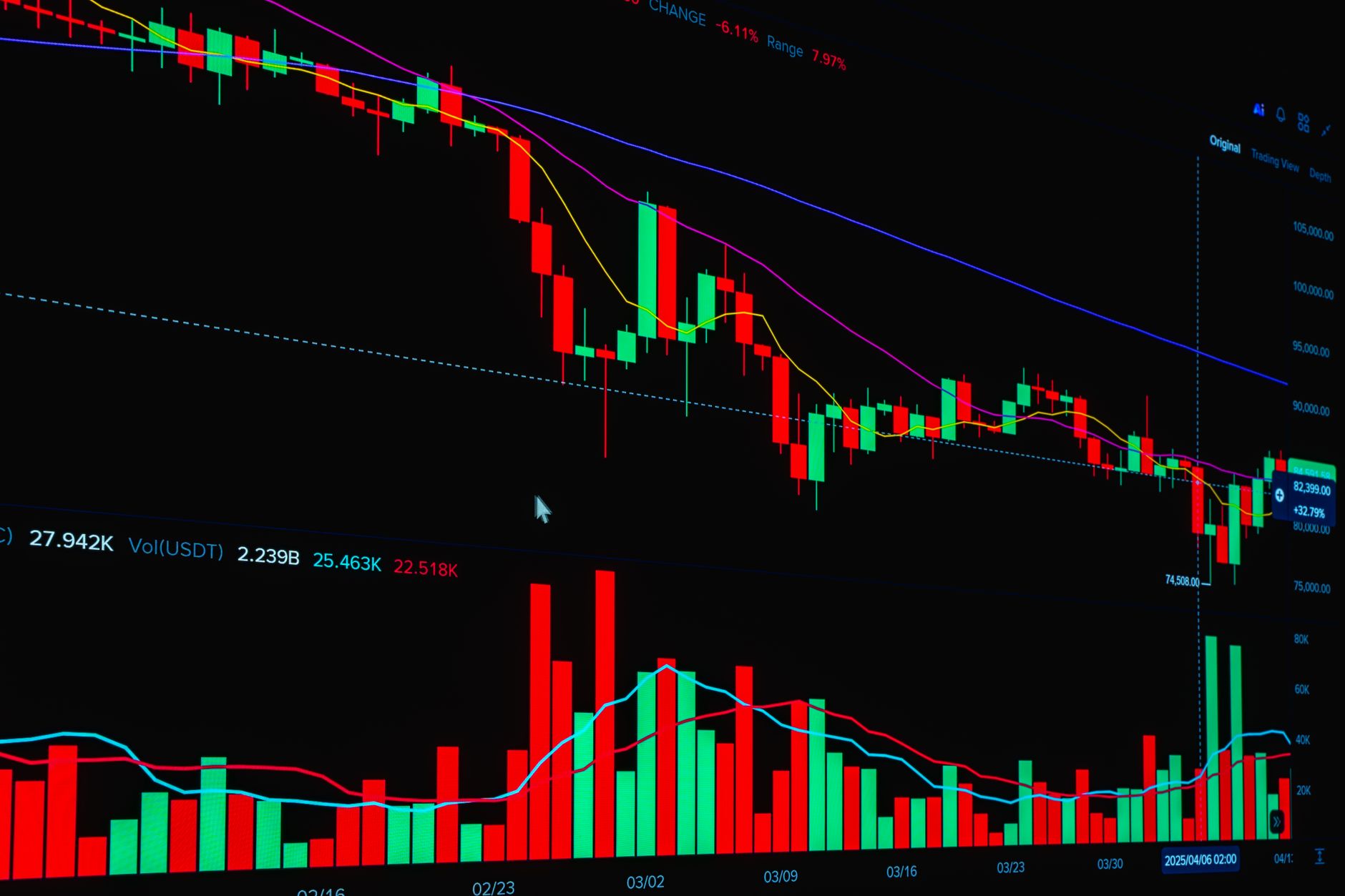
U.S. equity futures opened Friday with divergent moves after a steep sell‑off in artificial‑intelligence‑linked shares sent the Nasdaq Composite into correction territory. Dow Jones futures fell 1.3%, S&P 500 futures slipped 0.35%, while Nasdaq‑100 futures edged up 0.3%, recouping a portion of Thursday’s heavy losses.
Mixed futures on Wall Street
Thursday’s regular‑session trading produced the worst one‑day declines for the three major U.S. indexes since April 2025. The Nasdaq Composite dropped 5.5%, closing more than 10% below its recent peak and formally entering correction territory. The broader S&P 500 lost 4.4%, and the Dow Jones Industrial Average shed over 1,800 points, a 3.4% decline.
All eleven sectors of the S&P 500 finished the day in the red, with companies tied to the AI build‑out hit hardest. Micron Technology and Advanced Micro Devices each plunged 17%, while cloud‑infrastructure firm CoreWeave fell 10%. Even the so‑called “Magnificent Seven” were not immune; Nvidia slid 9%, turning negative for 2026, and the group collectively erased more than $1 trillion in market capitalisation.
Asian markets react
Across the Pacific, equity markets echoed the U.S. sell‑off. South Korea’s Kospi tumbled more than 6%, delivering the region’s steepest loss. Japan’s Nikkei 225 dropped 5.9%, pushing the index into bear‑market status (a decline of at least 20% from its recent peak). Australia’s S&P/ASX 200 slipped 0.9%, Hong Kong’s Hang Seng fell 1%, and mainland China’s CSI 300 declined 1.47%.
The breadth of the decline was amplified by political developments in the United States. Recent Democratic victories in the House, Senate and key governorships—including a win in Texas—raised concerns among investors about a potential slowdown in data‑center construction, a sector heavily dependent on AI‑driven demand.
Outlook and investor sentiment
Looking at the week‑to‑date performance, the Nasdaq is down 4.4%, the S&P 500 is off nearly 3%, while the Dow remains the relative outperformer, trailing just 0.5% for the period. Victoria Greene, chief investment officer at G Squared Private Wealth, told CNBC that the AI trade is “not dead” and that the recent dip offers a “good discount.” Greene highlighted memory‑chip stocks, noting that management teams have repeatedly cited a capacity crunch throughout the earnings season. She added that buying a volatile dip can be prudent provided the broader economy remains in a non‑recessionary phase.
Investors also have a macro‑economic catalyst on the horizon: the October payrolls report due Friday morning. Consensus forecasts project an addition of 59,000 jobs for the month, with the unemployment rate expected to hold steady at 4.2%.
Overall, the market’s near‑term trajectory will hinge on whether the AI‑related sell‑off stabilises and how the upcoming employment data influence risk appetite. As the Dow shows relative resilience, some analysts view the current pullback as a buying opportunity, while others remain cautious amid lingering political and sector‑specific uncertainties.

Helene Elliott is the Lead Science & Space Reporter at News Raise. She reports on aerospace missions, astrophysics discoveries, quantum research, and environmental technology.