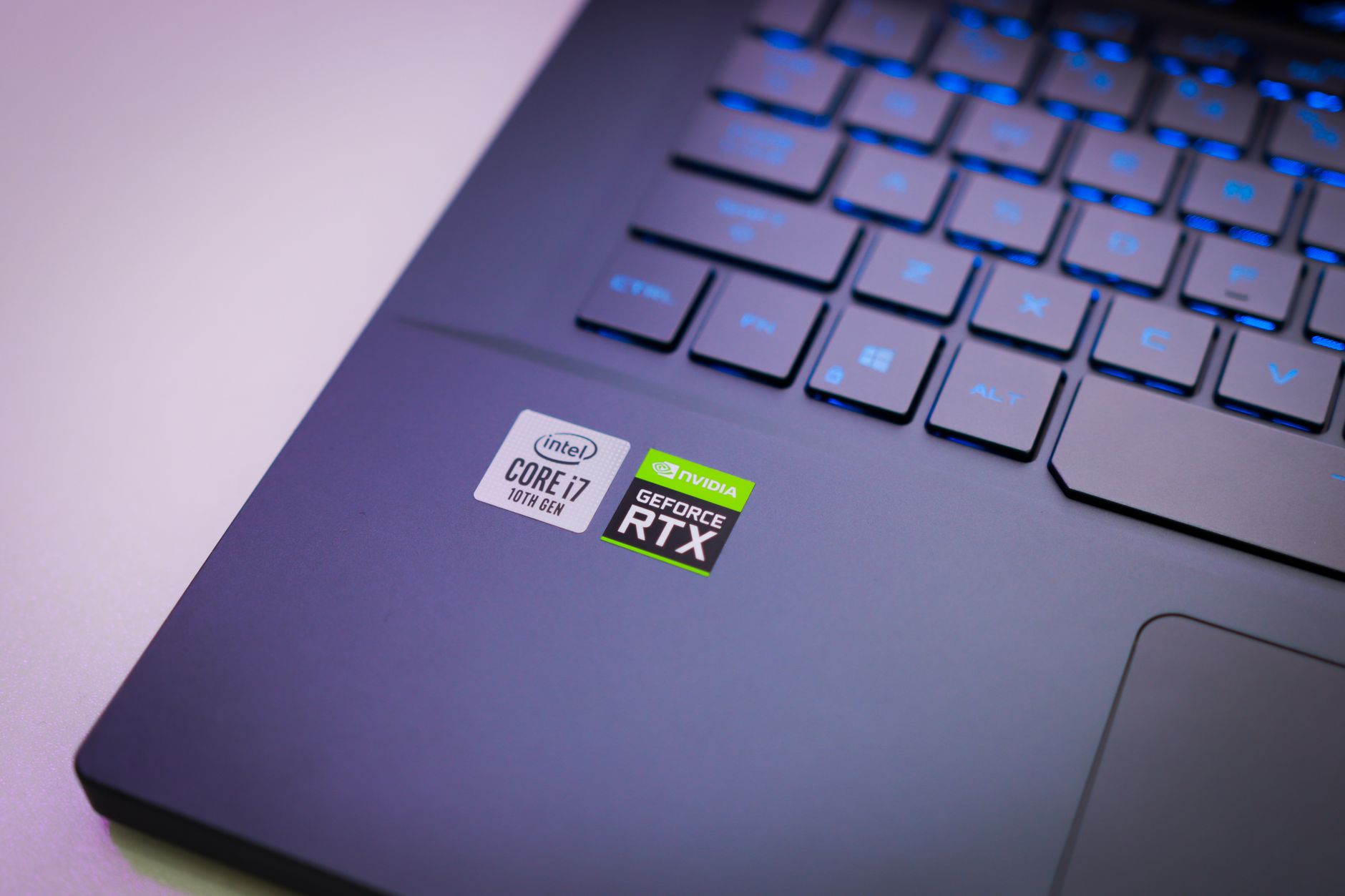
HP’s newly released OmniBook Ultra positions itself as a personal data‑center rather than a conventional laptop. Priced at roughly $7,000, the notebook is equipped with Nvidia’s RTX Spark architecture, 128 GB of unified memory, a 2 TB Gen5 NVMe solid‑state drive, and a 16‑inch OLED screen. Weighing close to five pounds, the machine delivers about one petaflop of FP4 AI performance, a capability the author describes as “superb at AI tasks.”
HP OmniBook Ultra specifications and performance
The RTX Spark GPU provides a significant advantage over typical consumer‑grade PCs, especially those used with services like GitHub Copilot. The large unified memory pool allows the system to keep the entire AI model in memory, eliminating the need for data shuffling between CPU and GPU. Storage speed is bolstered by the Gen5 NVMe drive, supporting rapid data access for large language model (LLM) workloads. Despite its power, the laptop remains portable enough to be moved, though the author notes that the fan can be heard across a room during intensive inference, and the chassis stays comfortably cool.
Local AI workflow and cost implications
In a recent development project, the author leveraged the OmniBook Ultra to run a completely local AI stack. Using the open‑source llama.cpp inference runtime together with the open‑weights Qwen 3.8‑27B LLM, the setup was orchestrated through a coding harness called Cline, which runs as a Visual Studio Code extension. Initial configuration was accelerated by GitHub Copilot, which generated PowerShell scripts that got the environment operational in about thirty minutes.
The workflow followed a “human‑in‑the‑loop” model: the LLM generated code, executed tests, observed outcomes, and iterated on the code base while the developer periodically reviewed progress. The AI was also tasked with processing a spreadsheet containing two‑thousand article links, retrieving missing pages from the Internet Archive’s Wayback Machine, and outputting two folders—each with 1,951 files—in raw HTML and Markdown formats. A final script was produced to automate future content additions.
According to the author’s metrics, the project required 479 inference calls and processed roughly 50 million logical tokens, resulting in a net cost of exactly $0.00. This contrasts sharply with commercial AI subscriptions, which range from $10 to $20 per month for entry‑level plans (ChatGPT Plus, Claude Code Pro, GitHub Copilot). Those plans impose usage caps that would have limited the described project, while higher‑tier plans cost $100 per month and still risk rate‑limiting for larger tasks. Analyst Joey Brookhart cited on the Decoder podcast that the top 5 percent of Claude Code users spend about $18,000 annually, whereas most users stay under $75 per month.
The primary advantage of the local approach, beyond cost elimination, is privacy. Because the model runs entirely on the laptop, prompts, documents, and inference workloads never leave the device, protecting potentially sensitive data such as financial statements or proprietary code. The author emphasizes that while the current project used publicly available web content, future applications could involve confidential material that would be unsafe to upload to cloud‑based AI services.
Despite the impressive capabilities, the author acknowledges that a $7,000 investment may be hard to justify for many developers. A CPA reportedly warned that the return on investment is unclear. However, the piece notes that Moore’s Law—predicting a doubling of computing power roughly every 18 months—could make similar performance mainstream and more affordable within a few years.
Overall, the HP OmniBook Ultra demonstrates that high‑end AI workloads can be performed locally without token‑based billing, offering both economic and privacy benefits for developers willing to invest in premium hardware.

Norman Pearlstine is the Executive Editor and Co-Founder at News Raise. With over two decades of experience across financial journalism, corporate governance, and market analysis, Norman leads the editorial direction and ensures strict adherence to journalistic accuracy and ethics.