In 2015 a prospector in Maryborough, Victoria, unearthed an unusually heavy, reddish stone that he believed might contain gold. The rock resisted every effort to split it – a saw, an angle grinder, a drill, acid and even a sledgehammer failed to make a dent. After three years of frustration, the prospector delivered the specimen to the Melbourne Museum in 2018, where two museum geologists, Dermot Henry and Bill Birch, quickly suspected it was not a terrestrial ore at all but a meteorite.
Identification and analysis
Henry and Birch noted the rock’s density, which far exceeded that of ordinary Earth rocks of comparable size, and its sculpted surface dotted with small depressions. Such clues prompted a more detailed examination. Using a diamond‑tipped saw they cut a thin slice from the mass for laboratory testing. Their findings, co‑authored with geologist Andrew Tomkins, were published in July 2019 in the Proceedings of the Royal Society of Victoria.
The analysis confirmed the specimen as an H5 ordinary chondrite – the most common class of meteorite, typically originating from the asteroid belt between Mars and Jupiter. The “H” denotes a high iron content, while the “5” indicates the rock experienced significant heating within its parent asteroid, causing its matrix to recrystallize and its chondrules to become less distinct.
Characteristics of the meteorite
The meteorite measures roughly 15.4 inches long, 5.5 inches wide and 5.5 inches thick. Its interior contains metallic iron‑nickel alloys, including kamacite, taenite and tetrataenite, often accompanied by the iron sulfide troilite. Tiny spherical silicate grains called chondrules, up to one millimeter across, are embedded throughout the stone; these formed when dust in the early solar system briefly melted during sudden heating events before solidifying.
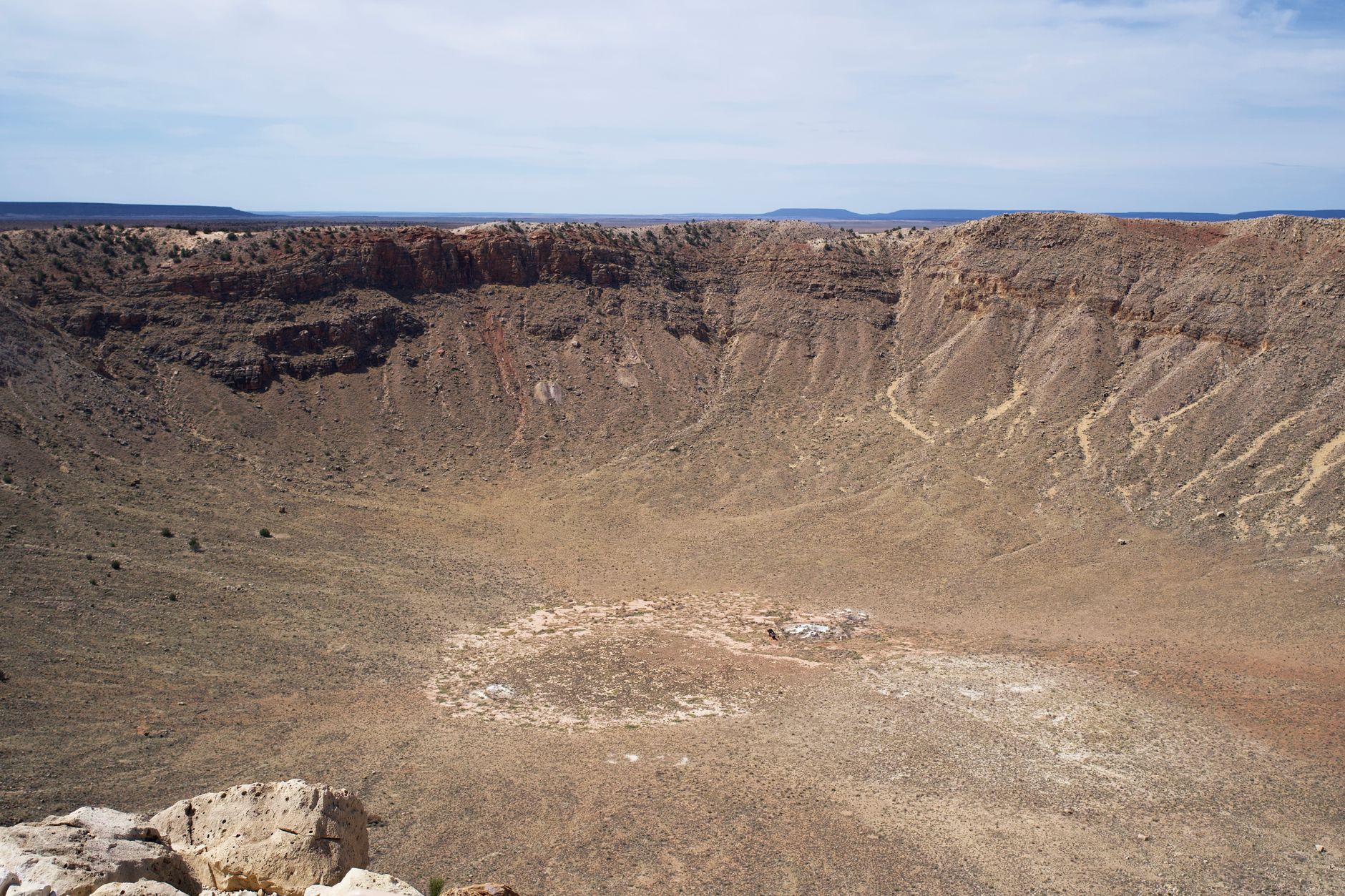
Laboratory tests found no evidence of the violent shock that many space‑borne rocks endure, and only a thin layer of iron oxide weathering the metallic grains, suggesting the meteorite spent a relatively short time on Earth’s surface. Carbon‑14 dating places its fall at less than 1,000 years ago, though no impact crater has been located. Historical newspaper reports note several meteor sightings in the region between 1889 and 1951, but none can be directly linked to the find.
Radiometric dating of the meteorite’s material yields an age of about 4.6 billion years, matching the age of the solar system and making it slightly older than the planet itself. Chondrites like this one are among the oldest accessible materials for scientific study.
Scientific significance
The Maryborough meteorite is only the 17th meteorite officially recorded in the Australian state of Victoria and the third classified as an H5 chondrite. With a mass surpassed only by the Kulnine meteorite – which weighs roughly 121 pounds – it ranks as the second‑largest single chondritic mass ever discovered in the state.
For the museum’s geologists, the rock’s rarity confers a value far beyond that of any gold nugget the prospector might have hoped for. Meteorites provide direct insight into the composition, age and formation processes of the early solar system. Some meteoritic types even contain organic molecules such as amino acids or stardust grains older than the Sun, underscoring their importance to planetary science.
By confirming the Maryborough stone’s extraterrestrial origin, the Melbourne Museum added a significant specimen to Australia’s meteorite collection and offered researchers another window into the ancient materials that built our planetary neighborhood.

Steve Lopez is a Senior Editorial Columnist and Health & Public Policy reporter for News Raise. Steve focuses on healthcare advancements, medical technologies, and public health policies.