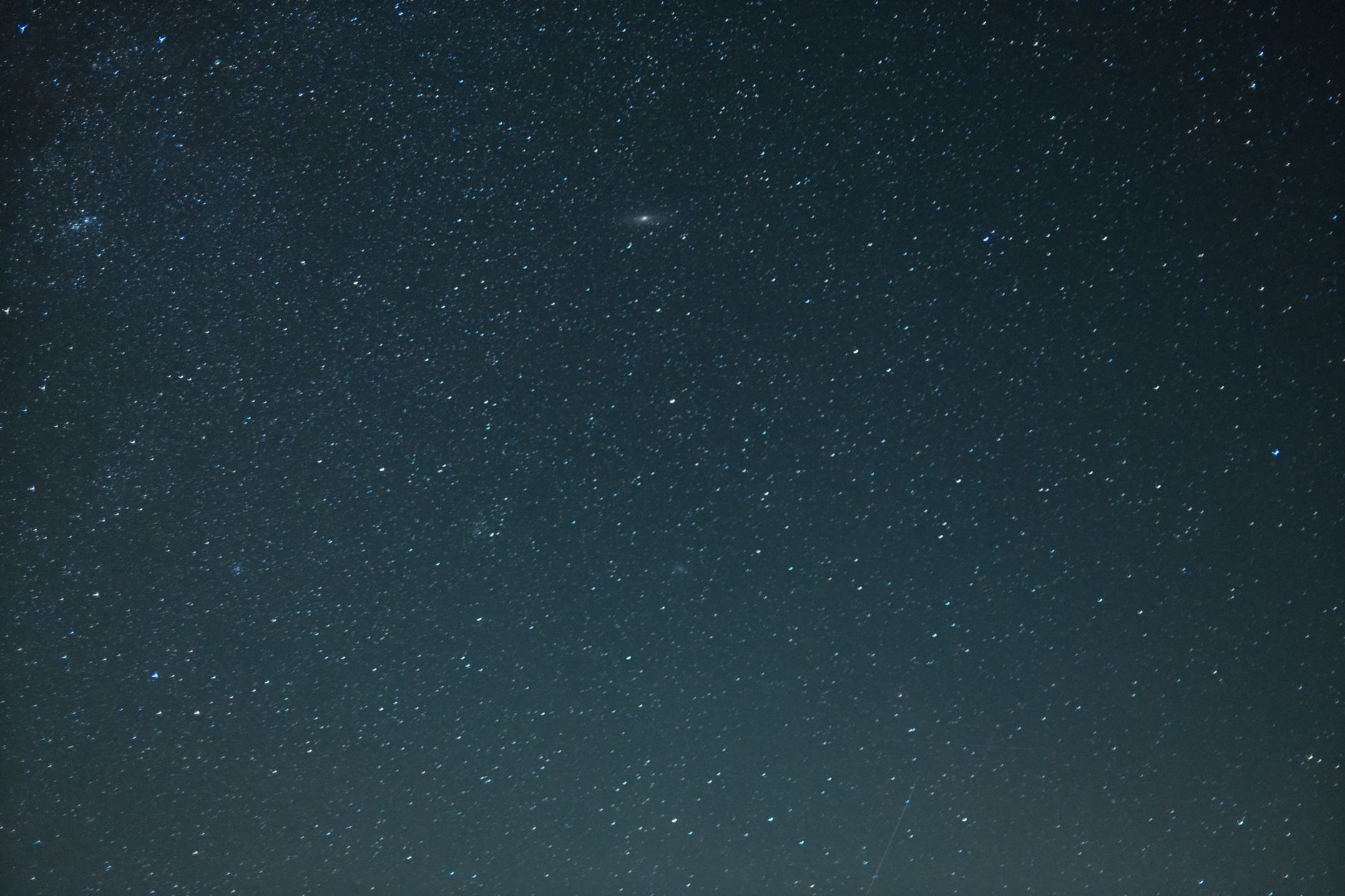
Scientists have announced the discovery of the most ancient quasar ever observed, pushing the known frontier of cosmic history back to over 13.1 billion years ago. The object, identified as a quasar—a luminous galactic core powered by a supermassive black hole—dates to a time when the universe was less than five percent of its current age, roughly 630 million years after the Big Bang.
Discovery and Characterisation
The quasar was first flagged by the European Space Agency’s Euclid space telescope. Subsequent observations using a suite of ground‑based and additional space‑based instruments refined its properties. Researchers have given the object the nickname Dún Aonghasa, after an ancient Irish stone fort perched on a cliff overlooking the Atlantic Ocean.
Physical Properties and Significance
According to lead author Julien Wolf of the European Southern Observatory, the black hole at the heart of Dún Aonghasa already weighed about 360 million times the mass of the Sun when the universe was merely 630 million years old. This makes it roughly 90 times more massive than the black hole residing at the centre of the Milky Way. Co‑author Silvia Belladitta of the Max Planck Institute for Astronomy described how the intense inflow of gas, dust and other material forms a hot accretion disk that radiates energy far exceeding the combined light of the host galaxy.
The quasar’s brightness enables it to be seen across billions of light‑years, offering a rare window into the conditions of the early universe. Its existence during a “transformative epoch”—when the first stars and galaxies were ionising the surrounding neutral hydrogen fog—provides a valuable probe of how early galaxies and their central black holes evolved.
Implications for Black‑Hole Formation Theories
Belladitta noted that the rapid growth of such a massive black hole so early challenges conventional models. One hypothesis is that the black hole began as a relatively small remnant of a first‑generation star, yet the observed accretion rate appears insufficient to reach its present mass within the available time. An alternative scenario, also discussed by Wolf, involves a “direct collapse” in which a massive gas cloud remains warm enough to avoid fragmenting into stars, allowing it to collapse directly into a black hole far larger than typical stellar remnants.
Wolf added that the direct‑collapse pathway could produce an initial black‑hole seed substantially larger than those formed from ordinary stellar deaths, potentially reconciling the observed mass with the brief cosmic interval.
Looking ahead, the Euclid mission may uncover quasars at even greater distances, implying older ages. Theoretical models suggest the first quasars could appear as early as 270 to 470 million years after the Big Bang. Belladitta concluded that while Dún Aonghasa currently holds the record for the most distant quasar, it may not be the ultimate limit.
The findings were published in the journal Astronomy and Astrophysics and underscore the need to refine our understanding of black‑hole growth mechanisms during the universe’s formative stages.

Helene Elliott is the Lead Science & Space Reporter at News Raise. She reports on aerospace missions, astrophysics discoveries, quantum research, and environmental technology.