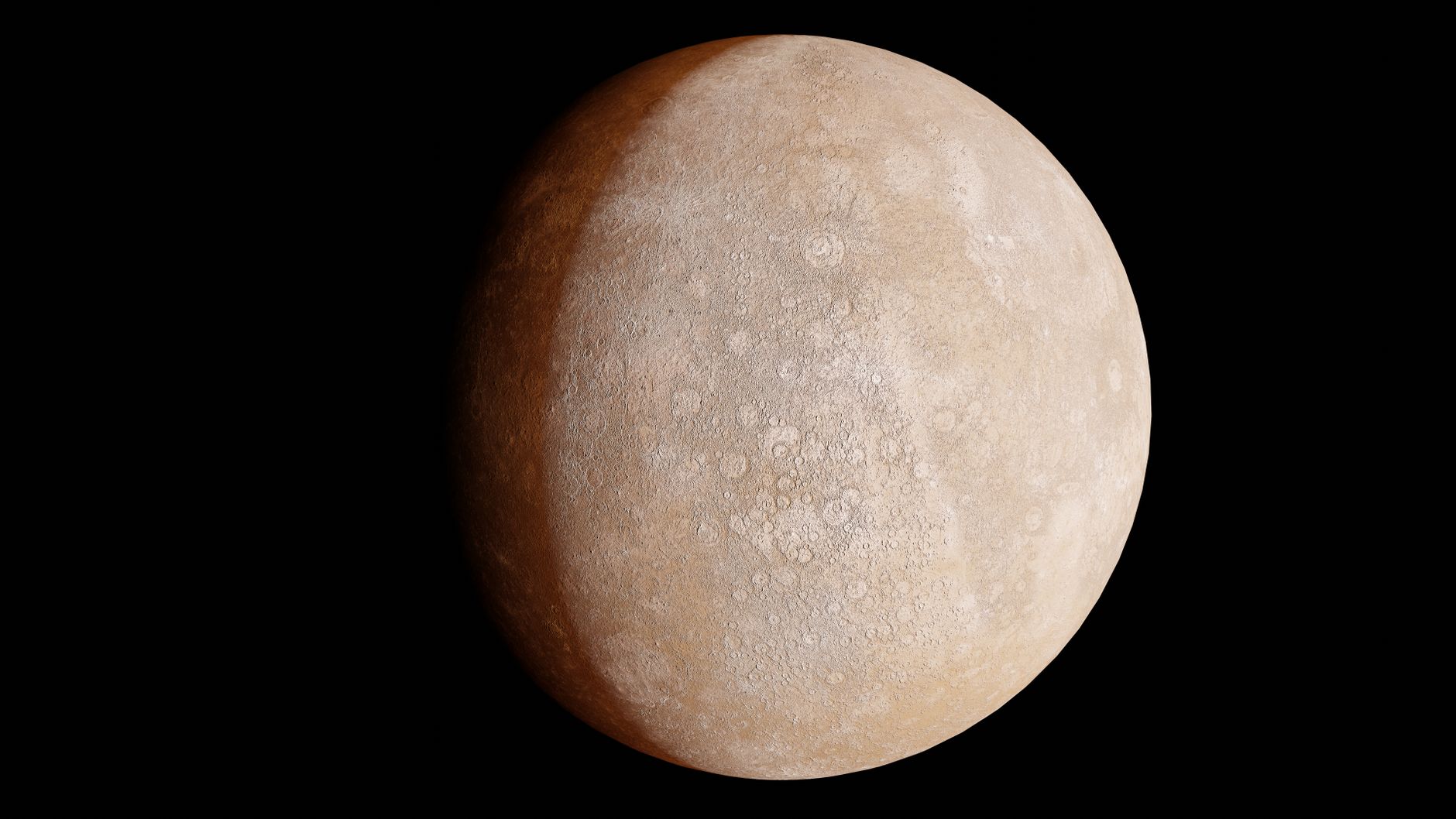
On 21 November, the $2 billion BepiColombo mission – a joint European Space Agency (ESA) and Japan Aerospace Exploration Agency (JAXA) effort – completed its eight‑year voyage to Mercury. The spacecraft entered a scheduled communications blackout 395 miles (635 km) above the planet while it pointed its thrusters for orbit insertion and turned its antenna away from Earth.
Orbit insertion anomaly
Engineers at ESA’s operations centre in Darmstadt expected a 37‑minute thruster burn to place the probe in a 58‑hour orbit. The burn stopped after only 28 minutes, prompting immediate concern. “The first hint that things were not going according to plan was the fact that we received the signal earlier than expected – that meant something was not right,” said Ignacio Tanco, head of Inner Solar System Mission Operations at ESA.
Four hours of data analysis confirmed that the partial burn succeeded in capturing the spacecraft, but in a higher‑than‑planned orbit. The probe now circles Mercury every 75 hours, with its apogee roughly 10,000 km (6,200 mi) above the surface – “inconvenient, but not terrible,” Tanco described.
The shortened burn delivered only 77 % of the planned velocity change. An unexpected timing mismatch between the guidance software and thruster controls generated an abnormally strong command that cut the burn short. ESA had previously estimated a one‑in‑six chance of such a glitch, though it was not part of the training simulations used for the insertion attempt.
Implications and next steps
While the spacecraft is safe in its new orbit, the reduced margin leaves less room for error in upcoming maneuvers. The two orbiters – ESA’s Mercury Planetary Orbiter and JAXA’s Mercury Magnetospheric Orbiter – must separate on 9 December to begin their respective science campaigns. The altered orbital period forces engineers to adjust the timing and duration of the separation maneuvers.
“There’s a price to pay,” Tanco said, noting that additional trajectory corrections will be required. The team also faces a “tough Christmas and New Year’s” as they fine‑tune the re‑configured spacecraft for the separation and subsequent low‑Mercury operations.
Had the burn failed to slow the probe enough, BepiColombo would have continued on a solar orbit, and mission control would have needed to expend significant fuel to return for a second insertion attempt – a scenario the team was eager to avoid.
Since the September separation of the Mercury Transfer Module, BepiColombo has been operating as a newly configured spacecraft, using its flight software for the first time. The mission, named after Italian engineer Giuseppe “Bepi” Colombo, launched on an Ariane 5 from Kourou in October 2018 and has traveled more than 6 billion miles (10 billion km).
Scientific observations are slated to begin in April 2027. The mission aims to address fundamental questions about Mercury’s small size, high density, large iron core, and active magnetic field – topics raised by earlier NASA missions Mariner 10 and MESSENGER. Unlike MESSENGER, which focused on the northern hemisphere, BepiColombo’s dual‑orbiter design will provide comparable coverage of both hemispheres.
All eyes remain on the forthcoming separation and the subsequent science phase. Despite the unexpected orbit, ESA officials expressed confidence that the team can manage the challenges, noting that “the spacecraft was clearly safe” and that they “still managed to pretty much hit all the orbital parameters.”

Norman Pearlstine is the Executive Editor and Co-Founder at News Raise. With over two decades of experience across financial journalism, corporate governance, and market analysis, Norman leads the editorial direction and ensures strict adherence to journalistic accuracy and ethics.