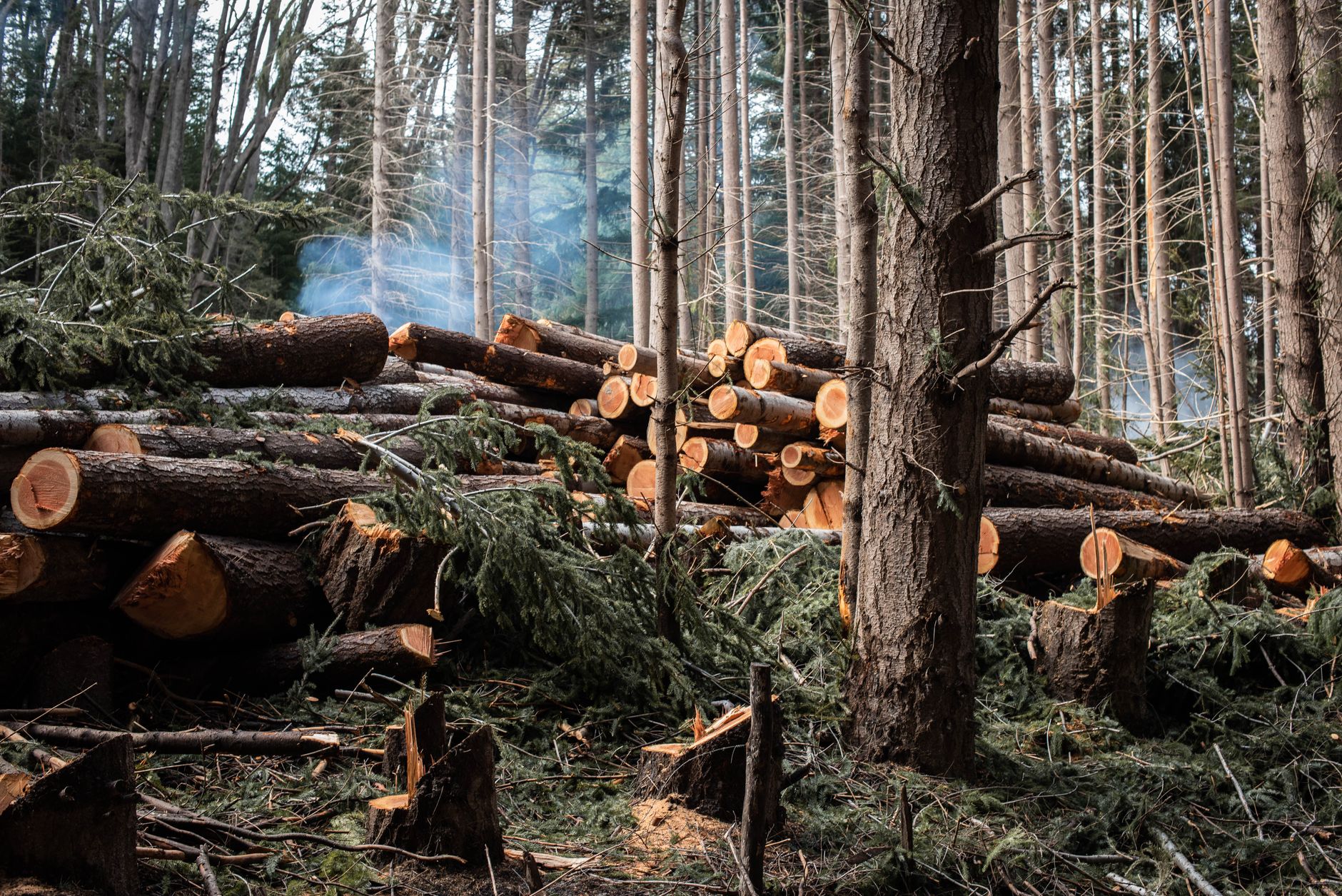
Trees may store less planet-heating carbon than current climate models assume, according to a new study. Researchers found that in many cases, trees stop their wood growth months before the process of photosynthesis concludes for the year.
Photosynthesis vs. Wood Growth
Forests are considered a crucial defense against climate breakdown because they absorb carbon dioxide from the atmosphere and convert it into wood, effectively storing the greenhouse gas for decades or centuries. Climate scientists have anticipated that as atmospheric carbon dioxide levels rise due to fossil fuel emissions, the land-based carbon sink provided by forests would remain stable or even grow throughout the 21st century. However, many existing models estimate this carbon uptake based on the rate of photosynthesis, rather than actual wood growth.
“Right now, most models assume that if you have photosynthesis, you have growth. We find that’s not the case,” said Mukund Palat Rao, a carbon cycle scientist at the Lamont-Doherty Earth Observatory at Columbia University and lead author of the study. “Just because there is more photosynthesis might not necessarily mean more tree growth in the future.”
Study Findings
The study, which examined 137 sites across the United States, revealed that at sites in the eastern U.S., approximately 36% of the yearly carbon uptake occurred after tree growth had ceased in late summer. In California, this figure was about 26%.
More detailed measurements at four specific sites indicated that wood growth was limited to periods characterized by low aridity and moderate temperatures. These conditions are becoming less frequent as global temperatures rise, leading to more common heatwaves and droughts.
“The moment you have dry and hot conditions, growth activity stops pretty instantly, while photosynthesis seems to continue at a slightly decreased rate,” Rao explained.
Implications for Carbon Sinks
The findings suggest that the capacity of forests to act as long-term carbon sinks depends not only on how much carbon is absorbed but also on how much of that absorbed carbon is directed towards wood growth. If a larger portion of absorbed carbon is allocated to more transient uses, such as foliage production or internal biological processes, the effectiveness of forests in sequestering carbon could be diminished.
The researchers noted that Earth system models which assume a consistent and tight link between photosynthesis and growth might be overestimating future forest carbon sequestration, particularly under conditions of increasing atmospheric moisture demand.
The research team is now investigating whether this observed decoupling of photosynthesis and wood growth occurs in other tree species and geographic regions. This work comes as efforts to remove carbon dioxide from the atmosphere are intensifying, with land-based actions like tree planting forming the vast majority of human removal strategies, while technological solutions account for a very small percentage.

Mitchell Landsberg is a Senior Technology Correspondent at News Raise. He covers consumer electronics, artificial intelligence, software developments, and digital privacy trends.