DJI has launched the Mic Mini 2S wireless microphone system, a compact upgrade that finally includes internal 32‑bit float recording and the ability to handle up to four transmitters at once. The new features address the primary criticism of earlier Mic Mini models, which lacked any onboard backup audio.
Design and specifications
The transmitters weigh 12 grams, a gram heavier than the previous Mic Mini 2, due to the addition of 14.5 GB of internal storage. This capacity can hold roughly 28 hours of 24‑bit audio or about 22 hours of 32‑bit float audio. Visually, the unit sports a slightly clearer cover, an orange‑tinted power button, and an embossed logo that protrudes a millimeter, allowing optional covers to mask the branding.
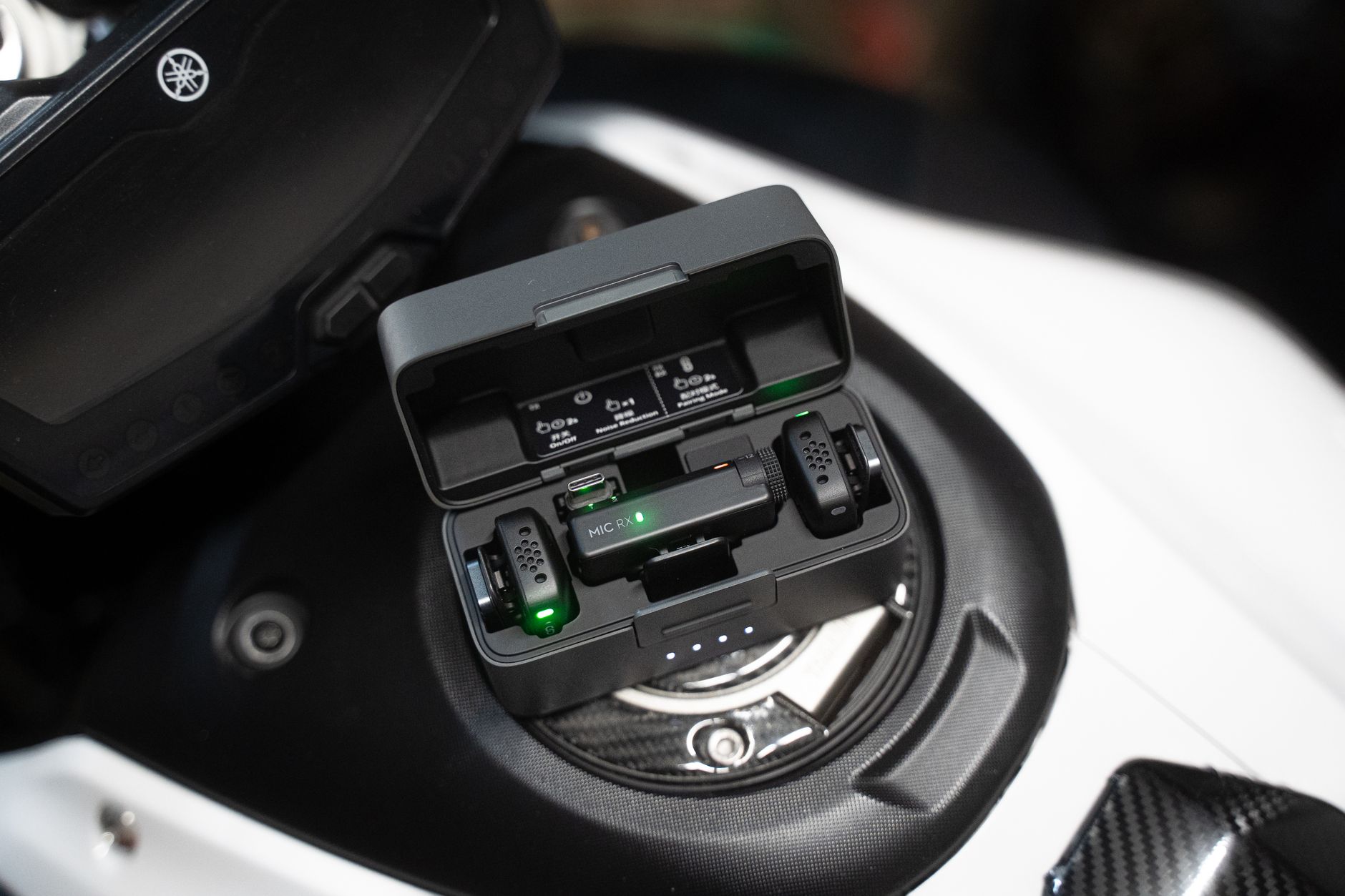
DJI offers two kit configurations. The camera kit includes a receiver with a 3.5 mm mic output, two transmitters, a charging case and assorted accessories. The smartphone kit provides a USB‑C receiver, a single transmitter and a charging case. The camera‑type receiver features a volume knob, power and Bluetooth buttons, a hot‑shoe clip and support for four transmitters, indicated by numbered LEDs. Unlike the higher‑end Mic 3, the Mini 2S receiver lacks a colour screen and provides less internal storage, though the 22‑hour per‑mic limit is sufficient for most creators.
Battery performance remains strong: each transmitter can run up to 11 hours on a charge, while the receiver lasts about 10 hours. In room‑temperature testing the system delivered just under ten hours of continuous use, matching DJI’s specifications. The charging case can replenish both transmitters and the receiver 3.2 times, yielding more than 40 hours of total operation—outpacing rivals such as the Rode Wireless Go III and Hollyland Lark M2.
Operation and audio performance
Using the Mic Mini 2S is straightforward. The transmitter clips to clothing or attaches magnetically, the receiver connects to a camera via the supplied 3.5 mm cable or to a smartphone through a USB‑C adapter, and pairing occurs automatically. Pressing the link button twice switches recording from mono to stereo, enabling separate left‑right channels when two mics are used. For four‑mic setups, internal recording on each unit keeps tracks distinct.
Recording starts and stops with a single press of the orange power button. The DJI Mimo app, accessed by linking the receiver to a phone, unlocks 32‑bit float recording, loop recording, adaptive gain control and AI‑driven noise reduction with basic and strong modes. Three voice‑tone presets—Rich, Bright and Regular—let users tailor tonal character without post‑production equalisation.
Audio captured at 48 kHz/24‑bit on a connected camera is crisp, though the low‑end can feel thin; enabling the Rich preset adds depth. Compared with premium lavalier microphones, the Mini 2S exhibits slight distortion in higher vocal frequencies, which can be mitigated by reducing gain. The AI noise‑reduction algorithm improves on the previous model, preserving voice quality at the basic setting and offering better handling of non‑voice frequencies at the strong setting.
The 32‑bit float format shines when input levels are overdriven. In testing, camera‑level clipping produced unusable audio, yet the internally recorded 32‑bit float track remained clean and could be restored without distortion in DaVinci Resolve Studio.
Pricing and market positioning
The Mic Mini 2S is not currently sold in the United States due to a national‑security‑related ban, but it is available in Europe, Canada and other regions. The camera kit retails for CAD 265, £169 or €189, while the smartphone kit is priced at CAD 149, £79 or €99. Competitors offering internal 32‑bit float recording include the Rode Wireless Pro (USD 259) and Sennheiser Pro Audio Profile Wireless (USD 279). DJI’s own Mic 3, priced at USD 277, provides the same audio format and larger storage but is only sold in the U.S.
Considering its ease of use, internal backup, multi‑mic capability and competitive price, the Mic Mini 2S positions itself as an attractive option for beginners and for creators who previously avoided DJI products due to the lack of internal recording. For users in supported markets, the system presents a compelling blend of functionality and affordability.

Steve Lopez is a Senior Editorial Columnist and Health & Public Policy reporter for News Raise. Steve focuses on healthcare advancements, medical technologies, and public health policies.