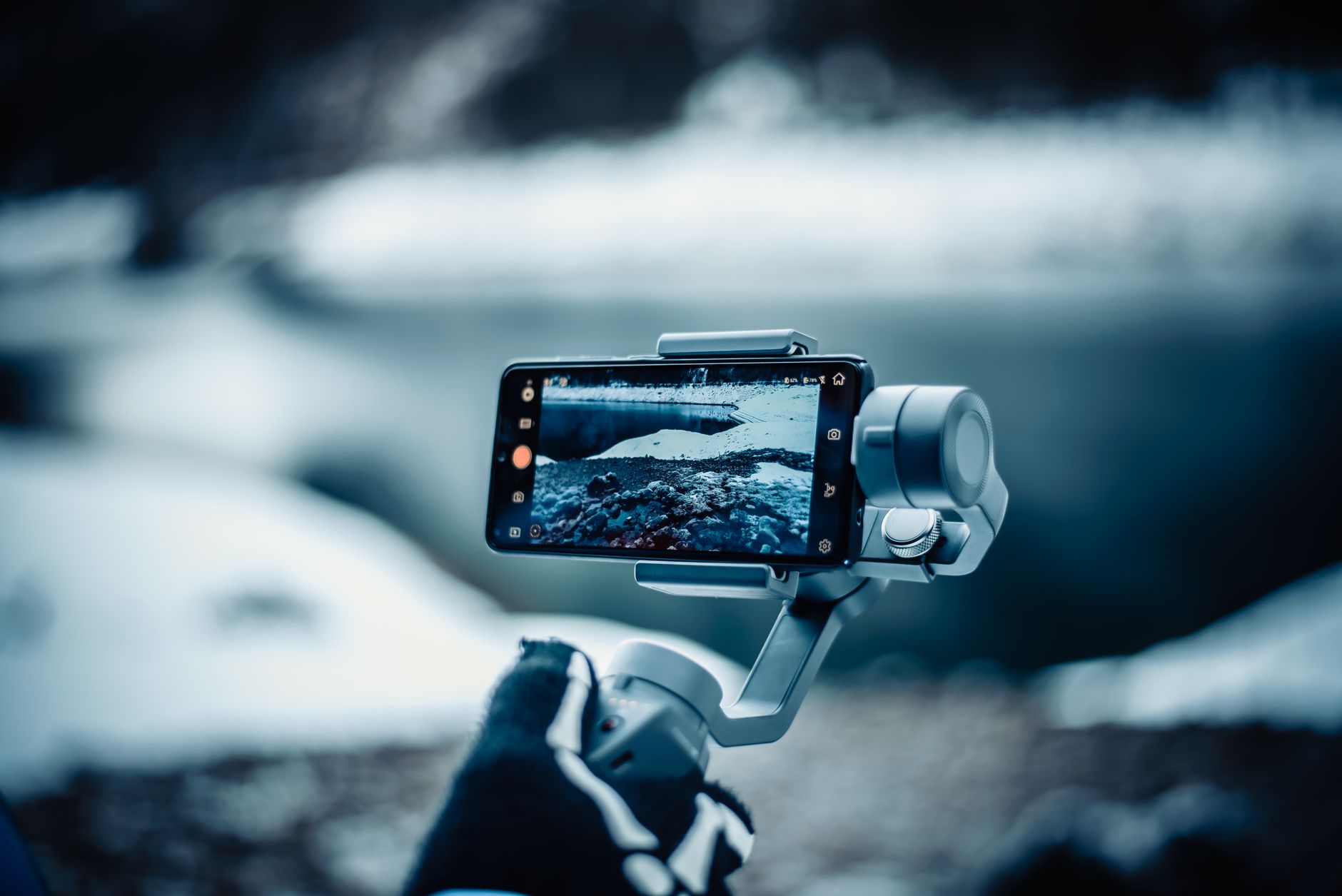
Honor introduced the Robot Phone at the Mobile World Congress in Barcelona earlier this year, positioning it as a flagship device that incorporates a miniature gimbal directly into the handset. Unlike external stabilizers, the gimbal folds into a dedicated compartment on the back of the phone, allowing users to capture stabilized footage without additional accessories.
Design and gimbal mechanics
The Robot Phone measures 9.6 mm in thickness, not counting the camera module, and houses what Honor calls the world’s smallest gimbal. The motor that drives the arm weighs 2.6 grams and is engineered to fit within the limited space of a smartphone. Activation requires sliding a plastic cover across the rear of the device and tapping a launcher inside the camera or AI assistant app. Once engaged, the arm unfolds while an on‑screen X‑ray graphic illustrates the movement behind the 6.31‑inch display.
Honor’s Yoyo AI assistant, which remains largely functional only in China, is present in the interface but does not affect the core gimbal operation. The phone’s IP54 rating protects against dust and water only when the gimbal is retracted, leaving the mechanical components exposed when deployed.
Camera system and performance
The primary sensor is a 200‑megapixel camera equipped with an f/1.6 lens, traditional optical image stabilization (OIS) and three‑axis stabilization provided by the built‑in gimbal. Complementary lenses include a 200‑megapixel telephoto unit with OIS offering up to 2.7× optical zoom, a 50‑megapixel ultra‑wide sensor with a 122‑degree field of view, and a 50‑megapixel front‑facing camera for selfies.
Video‑centric features dominate the experience. Honor partnered with cinematic camera manufacturer ARRI to supply the user interface, lookup tables (LUTs) and support for ARRI’s LogC3 color‑grading format. Users can preview LUTs in real time, facilitating on‑the‑fly adjustments without committing to a final look. The phone also provides AI‑guided shooting modes, such as a 180‑degree spin shot and a “super‑steady” mode that maintained even footage while the reviewer bounced around Kings Cross station in London.
Subject tracking is configurable; the gimbal can follow both human faces and inanimate objects, though early use showed occasional mis‑tracking of unintended subjects. Manual control is possible through an on‑screen joystick that adjusts tracking speed and angle.
Pricing, availability and future outlook
In China, the Robot Phone retails for 9,999 yuan, roughly $1,500 at current exchange rates. Honor has indicated that the device is part of a limited production run, similar to Samsung’s earlier Galaxy Z TriFold experiment, and it is not scheduled for an official launch outside China. Importers may be able to obtain units, but availability could be constrained as Honor seeks to match initial demand.
Historically, Honor’s devices command higher prices in markets outside Asia. For comparison, the company’s recent Magic V6 foldable launched in China for less than the Robot Phone, yet costs £2,000 (over $2,700) in the United Kingdom. Should the Robot Phone eventually reach Western markets, its price would likely exceed the Chinese retail figure.
Durability concerns accompany the mechanical gimbal, as moving parts can be prone to wear. The IP54 rating applies only when the gimbal is stored, offering limited protection during active use. Honor’s spokesperson confirmed that the company is already exploring future devices that could launch beyond China, and hinted at the possibility of extracting the tiny gimbal into a standalone pocket‑sized camera.
Overall, the Robot Phone demonstrates that high‑resolution imaging and active stabilization can coexist within a single handset, albeit at a premium price and with limited geographic availability. Whether the concept will evolve into a mainstream product remains to be seen.

Mitchell Landsberg is a Senior Technology Correspondent at News Raise. He covers consumer electronics, artificial intelligence, software developments, and digital privacy trends.