Researchers have identified a tiny, exceptionally preserved feather inside a fossilized dinosaur droppings, or coprolite, recovered from the Hell Creek Formation in Montana. The specimen, described in a recent paper in Current Biology, provides a rare snapshot of a bird that lived just before the asteroid impact 66 million years ago and may help explain why only a single group of ancient birds persisted after the mass extinction.
Discovery and Context
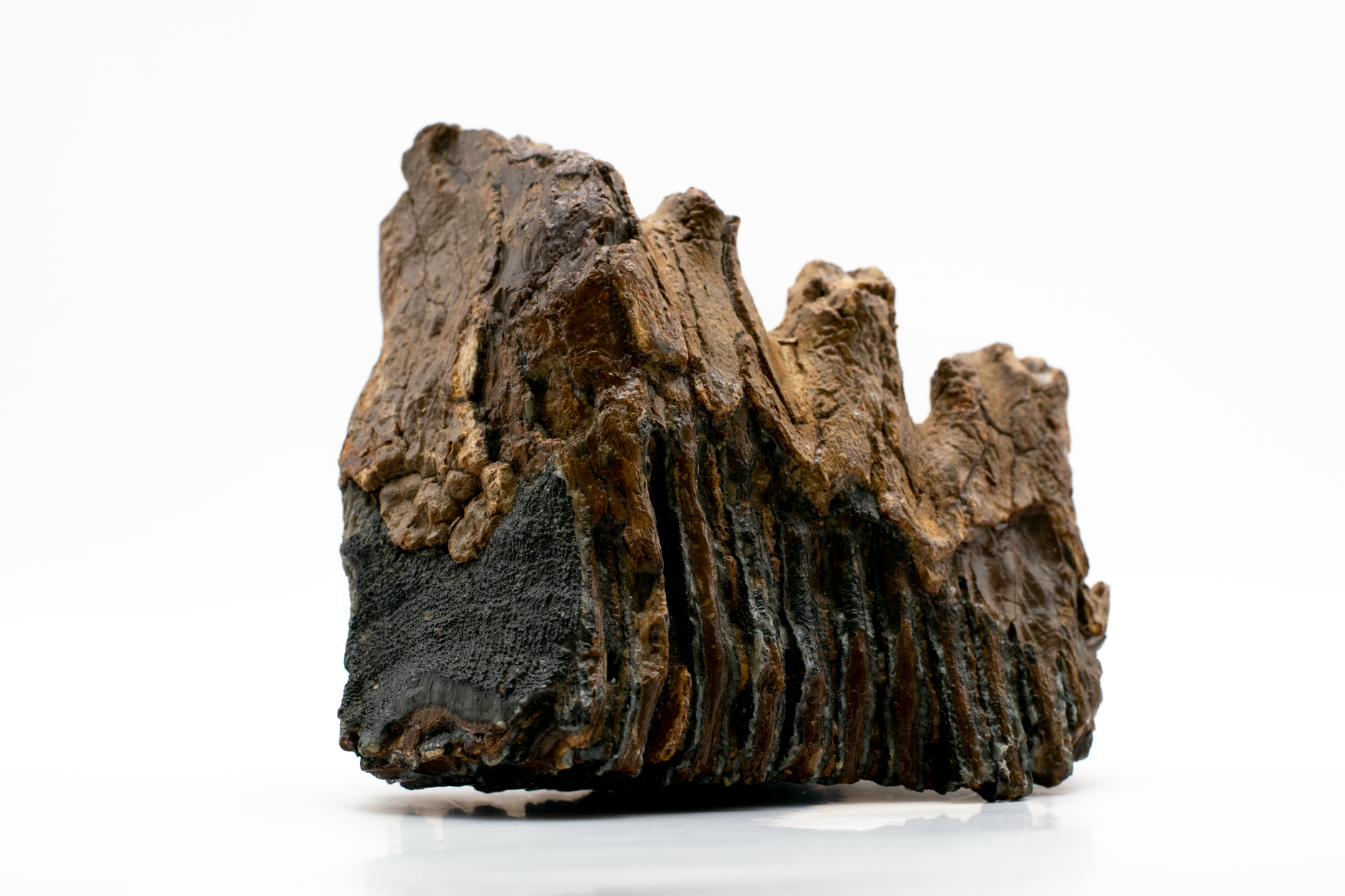
The coprolite was first noticed in 2016 by David DeMar Jr., a paleontologist at the University of Washington, while he was collecting fish fossils in the Hell Creek Formation. He observed a crack in a reddish‑brown nodule and, after examining it with a hand lens, realized it contained a minute feather. Subsequent micro‑CT scanning revealed that the fossilized feces also held several other feathers, leg bones, remnants of stomach contents, and even two tiny, diamond‑shaped fish scales belonging to a gar—a fish still alive today. The presence of the bird’s last meal suggests the bird was swallowed whole by a large predator, possibly a Tyrannosaurus rex or a smaller theropod, shortly before the asteroid strike.
According to lead author Jingmai O’Connor, associate curator of fossil reptiles at Chicago’s Field Museum, the feather is the best‑preserved Mesozoic feather ever recovered. “It’s such a beautiful, well‑preserved feather, from such an unexpected source, and it’s exciting that it could help us answer this huge question in paleontology,” O’Connor said in a news release.
Feather Structure and Survival Hypothesis
Analysis of the feathers shows a mixture of modern‑like and primitive traits. Some feathers possess a central shaft with a square cross‑section, a feature that would make them both stiff and lightweight—characteristics typical of today’s bird feathers. Other feathers are smaller, fuzzier, and lack the same insulating efficiency, indicating a more primitive body covering.
O’Connor explains that such primitive feathers would have been adequate in the warm, greenhouse conditions of the Late Cretaceous but would become a liability during the “impact winter” that followed the asteroid collision. The impact is thought to have lofted billions of tons of dust and gases into the atmosphere, sharply reducing sunlight and causing global temperatures to plunge. With photosynthesis halted for up to two years, food resources dwindled, and birds with less effective insulation would have required more energy to stay warm—energy that was increasingly scarce.
The study links the feathered bird to the extinct group Hesperornithiformes, a clade of small, flightless diving birds that resembled modern loons. Although Hesperornithiformes lived near water like the surviving Neornithes, their primitive plumage may have contributed to their disappearance, whereas Neornithes, which possessed more advanced feather structures, survived.
Implications and Future Research
The find underscores the potential of coprolites as sources of delicate soft‑tissue preservation, a fact highlighted by O’Connor: “If it wasn’t for the break exposing the feathers, we’d still be unaware that coprolites can be a source of this kind of information.” The researchers suggest that confirming the feather‑based survival hypothesis would require a pre‑impact Neornithes fossil with well‑preserved plumage, ideally preserved in amber or another coprolite that retains three‑dimensional detail.
Other scientists have noted similar patterns in enantiornithines, another Cretaceous bird group whose feathers are known from amber. The new evidence adds a tangible data point to the broader debate over why only one avian lineage made it through the Cretaceous‑Paleogene extinction.
Anthony Fiorillo, an adjunct faculty research professor at Southern Methodist University and director of the New Mexico Museum of Natural History & Science, who was not involved in the study, expressed admiration for the discovery, saying, “I continue to marvel over the kinds of things we find in the fossil record that were never thought possible.”

Helene Elliott is the Lead Science & Space Reporter at News Raise. She reports on aerospace missions, astrophysics discoveries, quantum research, and environmental technology.