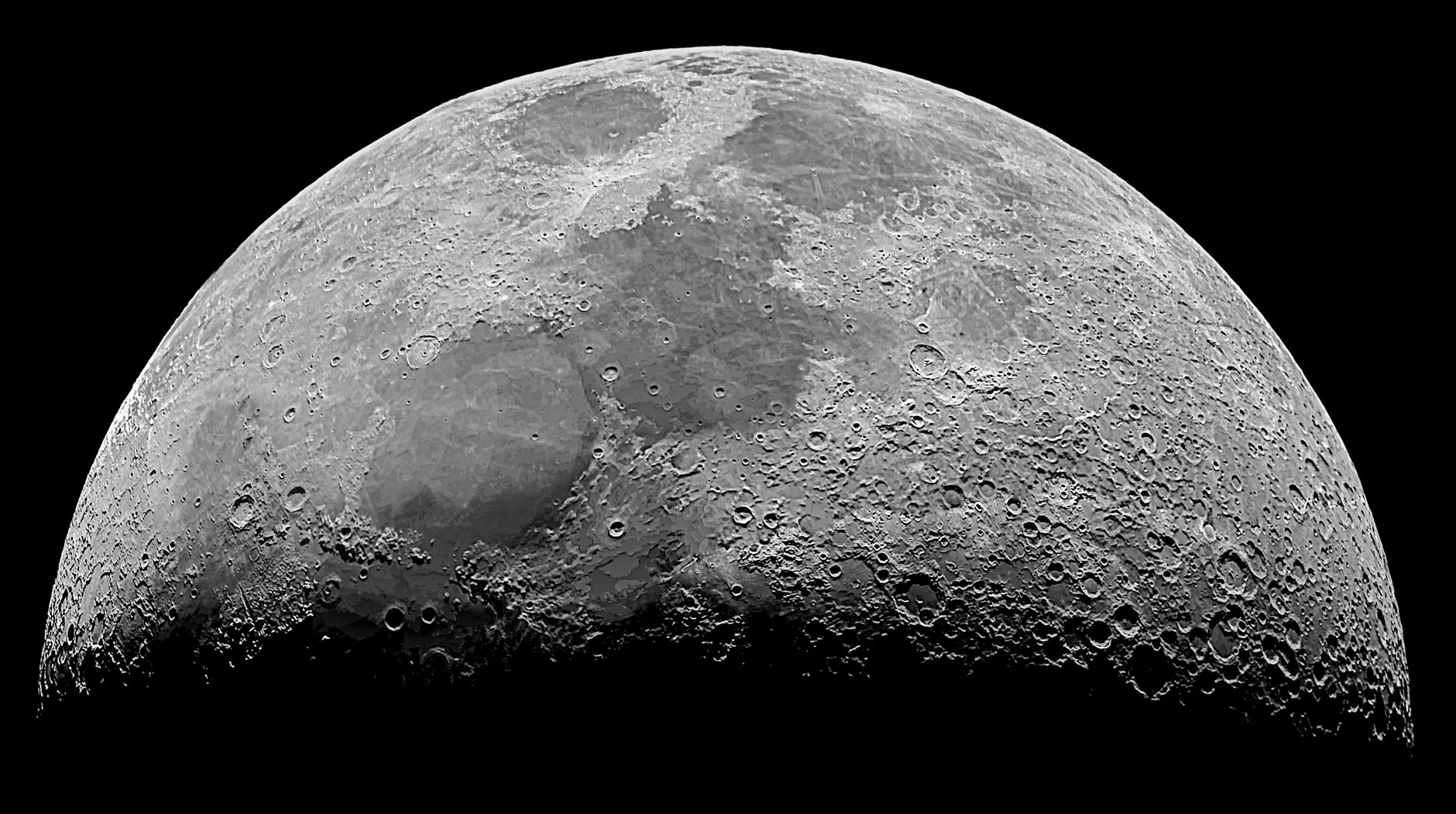
NASA’s Lunar Reconnaissance Orbiter (LRO) has reported a newly formed crater on the Moon’s near side that spans roughly 728 feet—about the length of two football fields—and reaches a depth of 141 feet. The dimensions make the pit larger than the historic Roman Colosseum and qualify it as the largest known impact crater created in recent times across the solar system.
Discovery and dimensions
The impact occurred sometime between 11 April and 22 May 2024 when a fragment the size of a three‑ to six‑story building struck the lunar surface. The event escaped real‑time detection by Earth‑based and orbital telescopes, and the LRO’s wide‑angle imagery was not flagged until August 2025 amid a flood of data. Follow‑up observations later that fall produced higher‑resolution images, and the discovery was formally confirmed early in 2026.
The crater, named after the late Thomas McGetchin, a former director of Houston’s Lunar and Planetary Institute, measures about 728 feet across and 141 feet deep—roughly three vertically stacked yellow school buses. Its ejecta blanket extends more than 66 miles from the impact point, and a surrounding cold spot roughly four miles wide indicates a loosening of the lunar regolith.
Scientific significance
Researchers emphasize that such a large impact is statistically rare, occurring on average once every 132 years. In a study published in Science Advances, the authors described the event as “a statistically rare, effectively once‑in‑a‑lifetime observation.” Lead author Mark Robinson, chief scientist for the LRO’s cameras at Intuitive Machines, noted that the impact expelled dust and rocky soil at angles higher than anticipated, reshaping a sizable portion of the surface.
Co‑author David Paige of the University of California, Los Angeles, likened the effect to “gardening” the Moon’s topsoil, suggesting that impacts can churn regolith and bring deeper material to the surface. This perspective may alter how scientists view the Moon’s evolving landscape, especially given that the LRO has shown the top inch of lunar soil overturns roughly every 80,000 years—faster than earlier estimates.
Implications for future lunar bases
The discovery arrives as NASA prepares to return astronauts to the Moon and construct a permanent outpost. Understanding the frequency and reach of ejecta from recent impacts is essential for assessing risk to future habitats. Robinson indicated that the next analytical step involves estimating the probability that debris from such events could strike a lunar base, information that will guide engineers in hardening structures against impact damage.
Robinson also addressed a common misconception about the durability of Apollo-era footprints, stating that the lunar surface’s constant churning means those footprints will likely be erased within the same 80,000‑year timescale. The new crater thus provides a timely natural experiment to refine models of surface evolution and to develop protective measures for upcoming human activities on the Moon.
Overall, the fresh crater offers a unique laboratory for studying impact mechanics, regolith dynamics, and the long‑term stability of lunar installations. As NASA continues to monitor the site, the data gathered may prove crucial for both scientific inquiry and the practical challenges of establishing a sustainable presence on Earth’s nearest celestial neighbor.

Norman Pearlstine is the Executive Editor and Co-Founder at News Raise. With over two decades of experience across financial journalism, corporate governance, and market analysis, Norman leads the editorial direction and ensures strict adherence to journalistic accuracy and ethics.