Scientists at the University of California, Los Angeles have reported that the famous Tyrannosaurus rex maintained an internal temperature of roughly 97.3 degrees Fahrenheit, give or take a few degrees. The finding, published in the journal Science Advances, bolsters the long‑standing hypothesis that the apex Cretaceous predator was warm‑blooded and capable of sustained, rapid activity rather than relying on a slow, ambush strategy.
How the temperature was measured
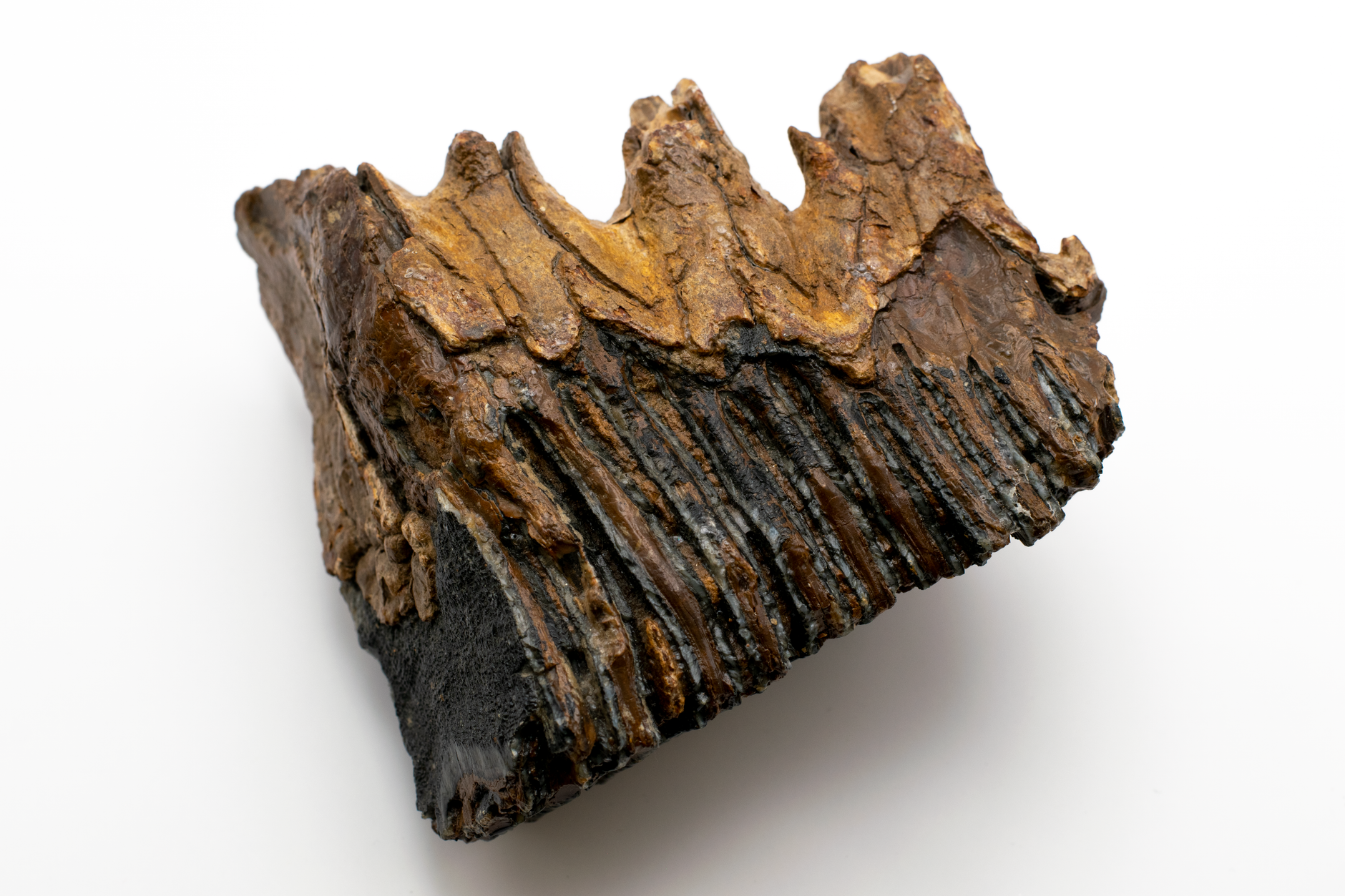
The UCLA team applied a decade‑old technique that examines the isotopic composition of carbon and oxygen atoms locked within fossil enamel. Different isotopes bond at rates that vary with temperature, allowing researchers to back‑calculate the temperature at which the enamel formed. Because tooth enamel is highly resistant to post‑mortem alteration, it provides a reliable proxy for the animal’s body heat.
Earlier versions of the method required relatively large samples, which made it impractical to test the scarce dinosaur teeth held in museum collections. Recent refinements reduced the required mass, enabling the scientists to scrape minute amounts from a T. rex tooth housed at the Natural History Museum of Los Angeles. The same analysis was also performed on ancient crocodile teeth, which yielded a markedly lower temperature of about 88 °F, illustrating the contrast between the two groups.
Implications for T. rex behavior and habitat
A body temperature comparable to that of modern mammals suggests a metabolism capable of continuous activity. Unlike cold‑blooded reptiles that can only sustain brief bursts of speed, a warm‑blooded T. rex could have pursued prey over longer distances and maintained higher levels of stamina. The study’s authors note that such a metabolic profile would also permit the dinosaur to inhabit a broader geographic range, including higher latitudes and elevations, because it would not depend on external heat sources.
During the Cretaceous, average global temperatures were estimated to be 10‑25 °F warmer than today, further expanding the potential habitats for a thermally independent predator. This may help explain isolated T. rex fossils discovered as far north as Alaska, a region where cold‑blooded reptiles would struggle to survive.
Other recent T. rex research
Complementary discoveries have added nuance to the picture of T. rex locomotion. A set of adult footprints unearthed in North Dakota indicates a walking speed of 3.5 to 4.5 miles per hour, with each stride covering roughly 13 feet. Separate work by researchers at the College of the Atlantic suggests that smaller individuals could run on tiptoe, covering 100 meters in just 8.77 seconds—faster than the world‑record sprint of Usain Bolt.
These biomechanical insights, together with the new temperature data, reinforce the view of T. rex as a dynamic, active animal rather than a sluggish scavenger. Whether the iconic dinosaur relied primarily on hunting, scavenging, or a mix of both remains an open question, but the evidence now points toward a creature equipped for both pursuit and endurance.

Helene Elliott is the Lead Science & Space Reporter at News Raise. She reports on aerospace missions, astrophysics discoveries, quantum research, and environmental technology.