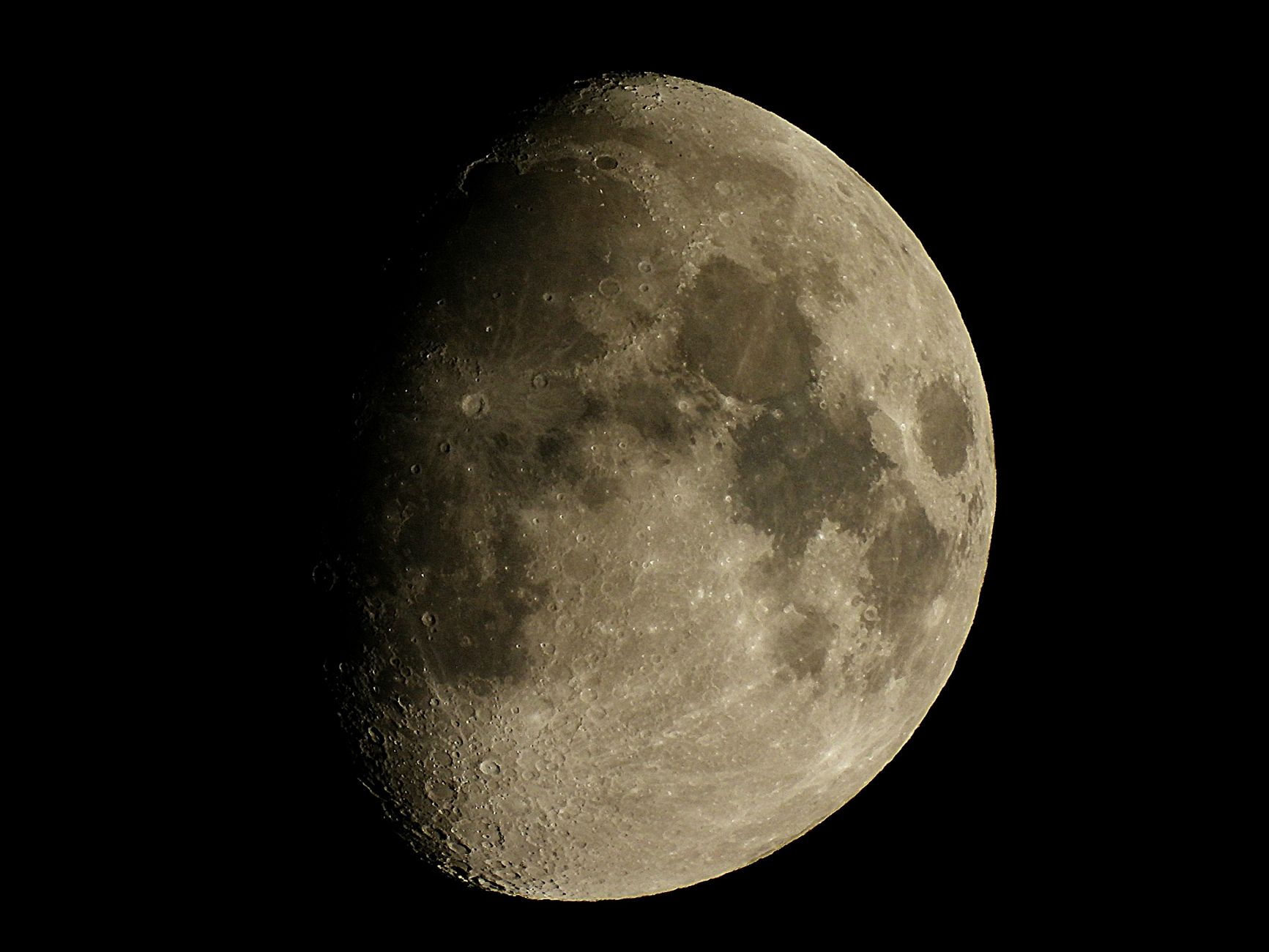
A routine data‑quality review of lunar imagery led NASA researcher Robert Wagner to a historic find: the largest impact crater ever documented on the Moon, and the first newly formed crater of its size recorded in the solar system. The feature, now called McGetchin Crater, was identified after a bright patch surrounded by a dark halo appeared in images captured by the Lunar Reconnaissance Orbiter (LRO) Camera system.
Discovery process
While examining a global map of the Moon for quality control, Wagner noticed an unusually bright area with a contrasting dark rim. The anomaly prompted him to compare the new image with earlier data. The side‑by‑side analysis confirmed that a fresh crater had been created on the Moon’s eastern edge sometime between April 11 and May 22, 2024. The impact was attributed to a comet or asteroid striking the lunar surface, according to NASA.
Characteristics of McGetchin Crater
The newly named McGetchin Crater measures roughly 728 feet (222 meters) across and reaches a depth of about 141 feet (43 meters). NASA estimates that impacts of this magnitude occur on the Moon about once a century or less frequently. The crater’s size and recent formation make it a unique subject for scientific study.
The discovery was enabled by the Lunar Reconnaissance Orbiter Camera system, which orbits roughly 60 miles (96 kilometers) above the Moon. The suite includes two high‑resolution black‑and‑white cameras and a third instrument that gathers moderate‑resolution multispectral imagery. Over the years, the LRO’s imaging capabilities have produced detailed lunar maps, providing a baseline that allowed Wagner to spot the new feature.
Legacy and scientific significance
The crater was named in honor of lunar scientist Tom McGetchin, who passed away three months after writing a reflective memorial for the U.S. Geological Society of America. In that piece, McGetchin wrote, “Shaping your stone means quietly doing your job as well as you can. Your identity will soon be lost to history but your stone, if well shaped and polished, will fit into the structure we call civilization and hold its weight as time sweeps past us and others build upon us.” By bearing his name, the crater offers a lasting tribute to his contributions to lunar science.
Scientists say the discovery underscores the value of continuous high‑resolution monitoring of the Moon’s surface. Each new impact provides data on the frequency and scale of extraterrestrial collisions, informs models of lunar geology, and refines our understanding of how the Moon evolves over time. The rarity of such a large, freshly formed crater also highlights the importance of the LRO’s imaging suite, which continues to reveal subtle changes that would otherwise go unnoticed.
As research on McGetchin Crater proceeds, the scientific community anticipates that detailed analysis of its morphology and ejecta will yield insights into the mechanics of lunar impacts. The event also serves as a reminder that, despite the Moon’s seemingly static appearance, it remains an active environment shaped by ongoing cosmic events.

Steve Lopez is a Senior Editorial Columnist and Health & Public Policy reporter for News Raise. Steve focuses on healthcare advancements, medical technologies, and public health policies.