NASA’s Nancy Grace Roman Space Telescope used just 18 kilograms of the 200 kilograms of propellant budgeted for its first mid‑course correction on Aug. 31, a result that could lengthen the observatory’s potential science operations from the original 10‑year estimate to at least 22 years.
Fuel budget and early savings
The mission had set aside 441 pounds (200 kg) of hydrazine for the initial correction maneuver. The burn, executed on Aug. 31, consumed roughly 40 pounds (18 kg) and achieved better than 99 percent accuracy, according to NASA’s Sep. 14 update. This means only about nine percent of the allocated fuel was used, leaving 182 kg untouched.
NASA says the efficient burn, combined with other margins, could provide roughly four additional years of operation. A second four‑year gain stems from the spacecraft’s actual launch mass being lighter than the conservative design mass, allowing more propellant to be loaded.
Launch mass advantage adds years
Engineers planned for a maximum observatory mass of 21,605 lb (9,800 kg). Roman launched at 17,760 lb (8,056 kg), 1,744 kg lighter than the ceiling. The reduced mass meant each change in velocity required less propellant, and it also permitted tanks to be filled to full volume rather than just the amount needed for a ten‑year mission. NASA estimates that this launch‑mass surplus could translate into about four more years of fuel reserve.
The remaining projected four‑year extension relies on expectations that the second mid‑course correction and the later L2 orbital insertion will each consume less propellant than originally allocated. If those forecasts hold, the cumulative effect pushes the fuel horizon to at least 22 years.
Implications for mission lifetime
Roman will orbit the Sun‑Earth L2 point on a large halo‑like path, requiring periodic station‑keeping burns roughly every 28 days to counter gravitational perturbations, solar radiation pressure and navigation errors. Hydrazine, the telescope’s primary finite resource, powers both these burns and occasional reaction‑wheel unloads.
While propellant is a critical consumable, NASA cautions that it is not the sole factor that could end the mission. Detector degradation, electronics wear, micrometeoroid impacts, and the need for continued ground‑system support also influence longevity. Consequently, NASA describes the 22‑year figure as “potential science operations,” not a guaranteed operational span.
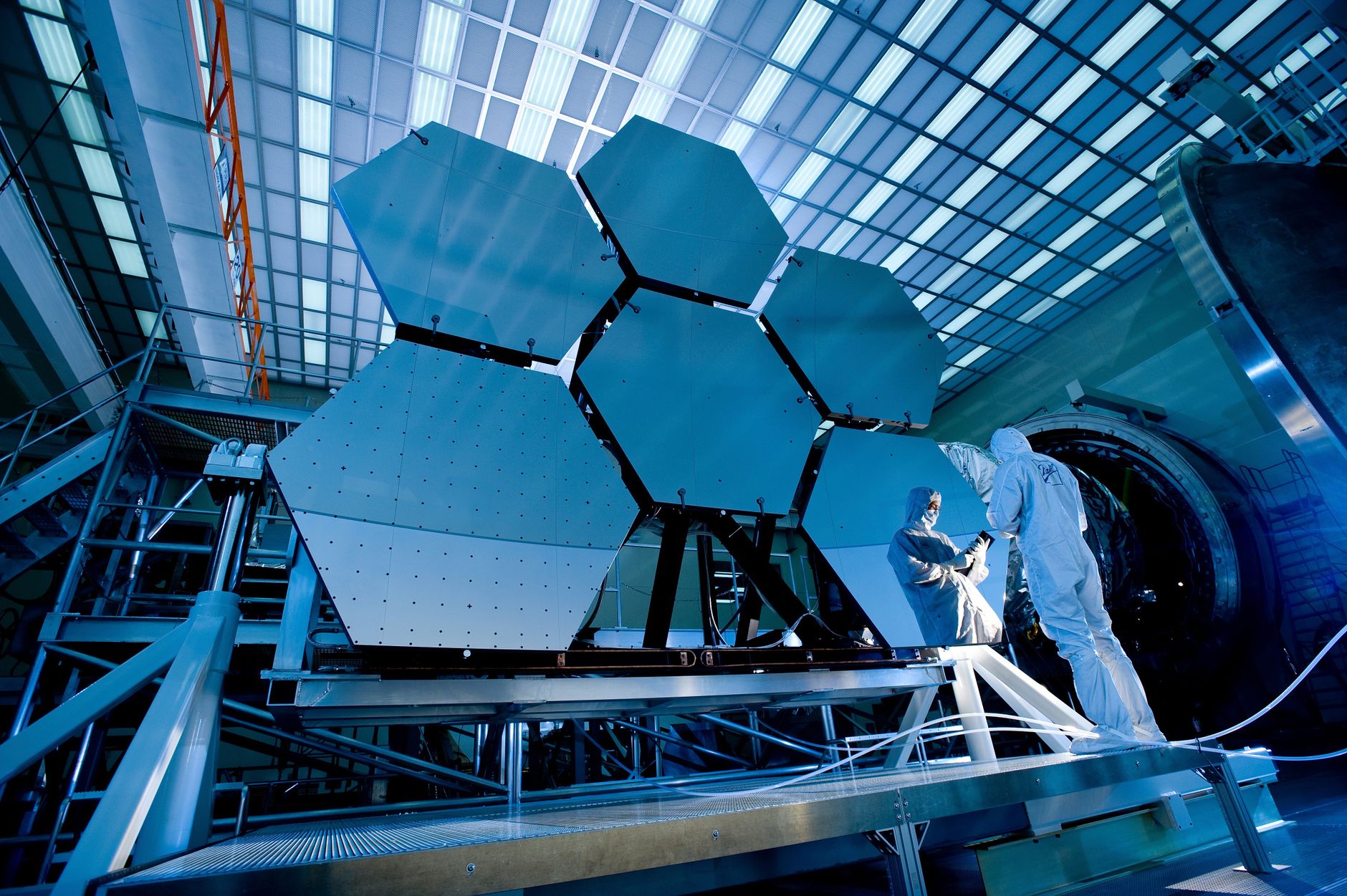
Roman’s scientific payload includes a 2.4‑meter primary mirror and a roughly 300‑megapixel infrared camera. Its Wide Field Instrument can image an area of sky at least 100 times larger than Hubble in a single exposure while maintaining comparable sharpness. The coronagraph serves as a technology demonstrator for imaging faint exoplanets and dusty disks.
Extended operations would enhance the mission’s scientific return. A longer time baseline improves measurements of stellar motions, allows fields to be revisited after years rather than months, and increases the likelihood of capturing rare transients. For cosmology, additional observing seasons could deepen samples used to study supernova distances, galaxy clustering and gravitational lensing, sharpening constraints on cosmic expansion.
In summary, the combination of an unusually efficient first maneuver, a lighter-than‑expected launch mass, and optimistic fuel use for later burns has turned an engineering margin into the prospect of more than a decade of extra astronomy, pending the health of the spacecraft’s other systems.

Helene Elliott is the Lead Science & Space Reporter at News Raise. She reports on aerospace missions, astrophysics discoveries, quantum research, and environmental technology.