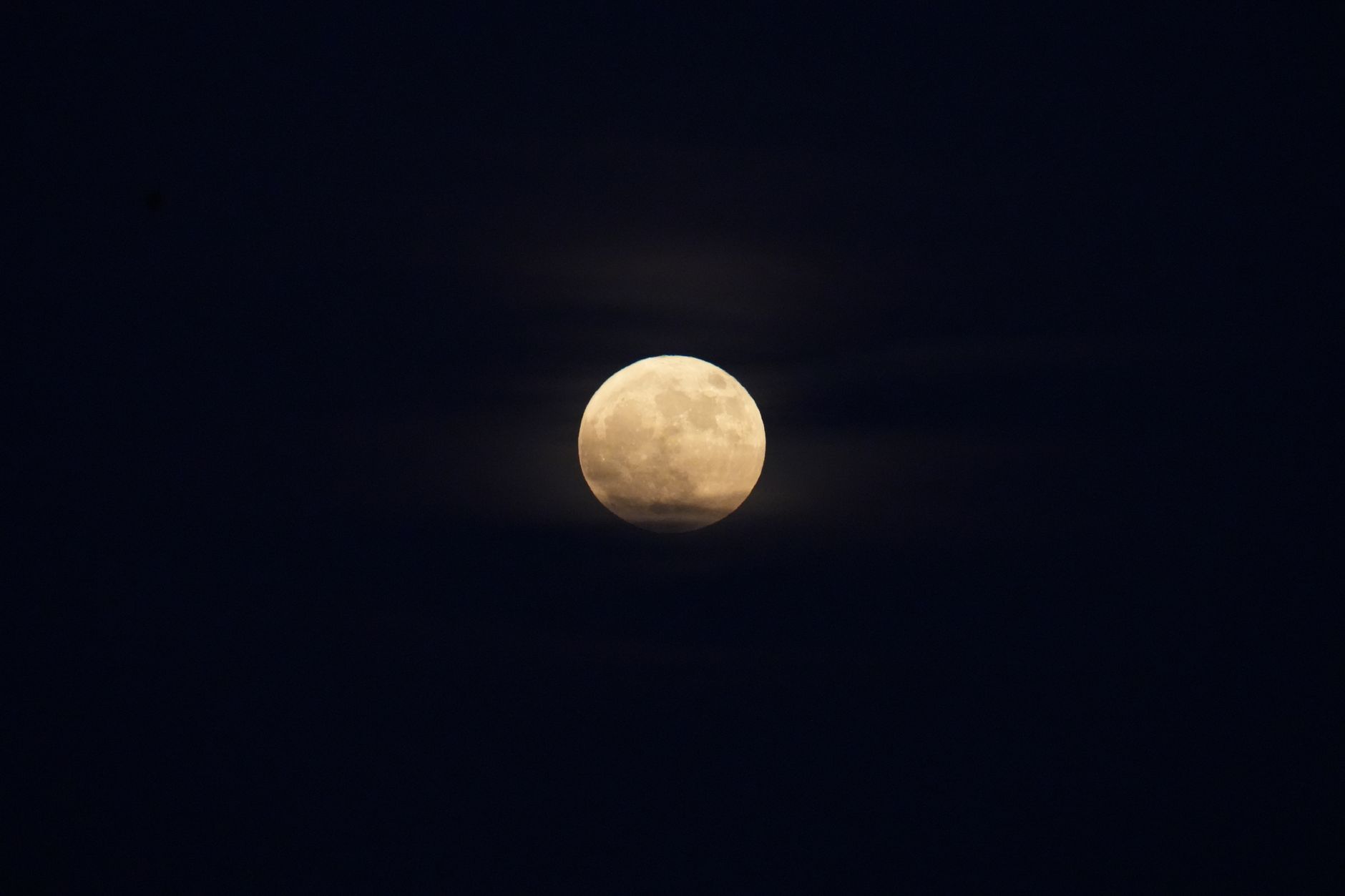
The first full moon of the fall season, commonly called the harvest moon, will be at its brightest on Saturday morning, reaching peak illumination at 10:49 a.m. Mountain Daylight Time. Although the exact moment occurs before sunrise, observers are advised to look for the silvery disc just after sunset that evening for the most striking view, according to EarthSky.
When and Where to See the Harvest Moon
Sky‑watchers in the Northern Hemisphere can expect the moon to dominate the night sky from Friday through Monday. If cloud cover interferes, the moon will still appear nearly full on Friday and Sunday evenings, providing additional opportunities for a clear sighting. The moon’s proximity to the horizon during these hours often lends it an amber or orange hue, a visual effect caused by viewing through a thicker layer of Earth’s atmosphere.
Saturn’s Opposition Enhances the View
Adding to the lunar display, the ringed planet Saturn will sit close to the harvest moon for several nights this weekend. The planet becomes visible near the full moon from Friday through Monday, appearing golden against the darkening sky. Saturn reaches opposition on October 4, a configuration in which the planet is directly opposite the Sun from Earth’s perspective. Opposition marks the optimal viewing window because Saturn is at its closest point to Earth in its orbit, making it appear larger and brighter than at other times.
While Saturn is readily seen with the naked eye, the distant gas giant Neptune will also be positioned near the moon during the same period. However, Neptune’s faint glow requires binoculars or a telescope and dark, clear skies to discern, as noted by NASA.
Cultural Significance and Upcoming Lunar Events
The September full moon carries several traditional names. The Old Farmer’s Almanac refers to it as the corn moon, a nod to the time when farmers historically harvested crops under its light. Indigenous groups have their own designations: the Abenaki of the northeastern United States call it the corn maker moon, while the Assiniboine name it the yellow leaf moon.
This year’s harvest moon is especially notable because it occurs close to the autumnal equinox, the official start of fall in the Northern Hemisphere, which fell on Tuesday. The coincidence of the full moon with the equinox has helped cement the “harvest moon” moniker in popular usage.
Looking ahead, three additional full moons are scheduled for 2026. October 26 will be known as the Hunter’s moon, November 24 as the Beaver moon, and December 23 as the Cold moon. November and December also feature super moons, when the moon appears larger and brighter because it is near perigee, its closest approach to Earth.
With the harvest moon’s bright glow and Saturn’s opposition offering a rare two‑for‑one celestial showcase, amateur astronomers have a compelling reason to step outside after sunset this weekend and enjoy the autumn night sky.

Steve Lopez is a Senior Editorial Columnist and Health & Public Policy reporter for News Raise. Steve focuses on healthcare advancements, medical technologies, and public health policies.