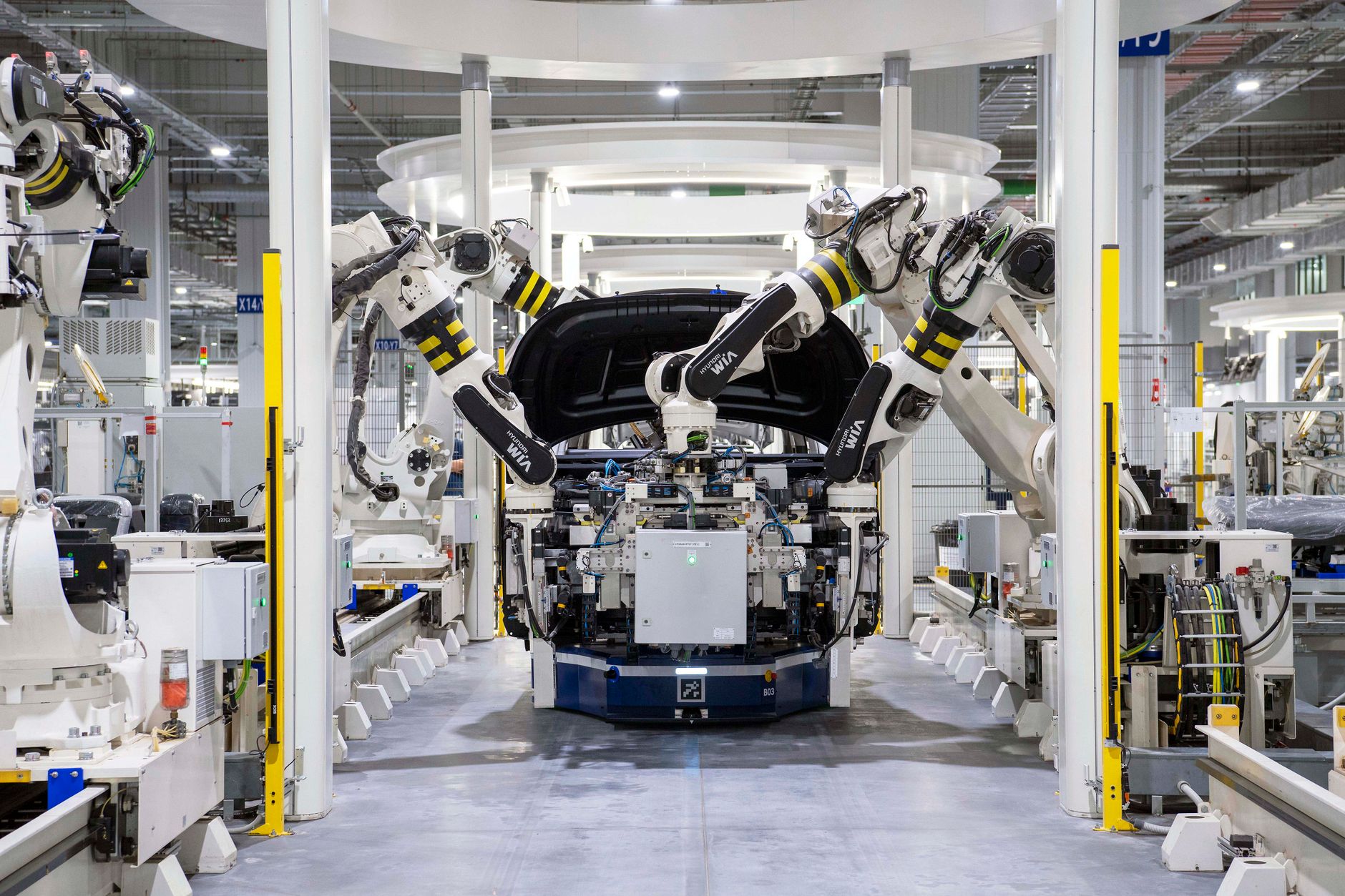
Lucid Motors reported building 2,954 electric vehicles in the third quarter of this year, marking a 54% drop from the same period a year earlier. The decline represents the third consecutive quarter of lower production and the lowest output since the first quarter of 2025, when the company began manufacturing its second model, the Gravity SUV.
Delivery numbers and inventory balance
Despite the production dip, Lucid delivered 3,806 EVs in the quarter, a figure that is roughly unchanged from the second quarter and about 200 units fewer than the third quarter of 2025. The company has repeatedly built more cars than it has shipped; in five of the last six quarters, production outpaced deliveries, highlighting a persistent inventory mismatch.
Cost‑reduction push under new leadership
New CEO Silvio Napoli has framed the slowdown as part of a broader effort to “simplify the company.” Over recent months, Lucid has laid off approximately 1,500 employees, streamlined its leadership structure, and eliminated a second shift at its Arizona factory. Napoli has said these steps are intended to generate $1.4 billion in cost savings.
In addition to staffing cuts, the company postponed the launch of its third vehicle, the Cosmos, which is slated to start at under $50,000. Napoli warned shareholders that accelerating the Cosmos to market before it is ready could repeat past missteps, emphasizing a disciplined rollout over speed.
Industry context and outlook
The Q3 figures arrived shortly after rival EV maker Rivian posted its strongest quarter on record, shipping nearly 20,000 vehicles – the first full quarter with its new, more affordable R2 SUV in production – up from 12,194 in the prior quarter. Rivian’s surge underscores the competitive pressure on Lucid as it struggles to attract buyers for its two luxury models.
When Lucid went public in 2021 through a special‑purpose acquisition company, it projected shipping as many as 90,000 EVs in 2024 and raised $4 billion in the transaction. Napoli, speaking on the second‑quarter earnings call, acknowledged that the company has fallen short of those ambitions, citing missed commitments, premature product launches, underinvestment in service, slow responses to quality issues, and excessive complexity that hampered decision‑making.
Looking ahead, Lucid hopes the lower‑priced Cosmos will open a broader market segment, but the firm appears committed to avoiding the rushed launches that Napoli criticized. The company’s immediate focus remains on trimming costs, stabilizing production, and aligning output more closely with realistic demand forecasts.

Helene Elliott is the Lead Science & Space Reporter at News Raise. She reports on aerospace missions, astrophysics discoveries, quantum research, and environmental technology.