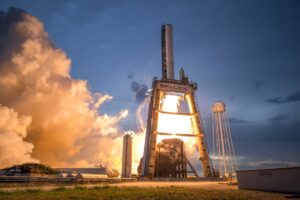
Japan is set to launch the Martian Moons eXploration (MMX) spacecraft on Monday, Oct. 19, at 3:41 p.m. EDT (1941 GMT; 4:41 a.m. local time in Japan on Oct. 20). The mission, built around a three‑module spacecraft and a small rover, seeks to become the first to return material from the Mars system by landing on Phobos, collecting samples, and delivering them to Earth.
Mission timeline and trajectory
After a ten‑month cruise, MMX will reach Mars orbit in August 2027. The propulsion module will be jettisoned and the probe will enter a quasi‑satellite orbit (QSO) around Phobos, allowing it to fly in formation with the moon. Over the next several months the spacecraft will map Phobos using cameras, a laser altimeter and a mass‑spectrometer to select landing sites.
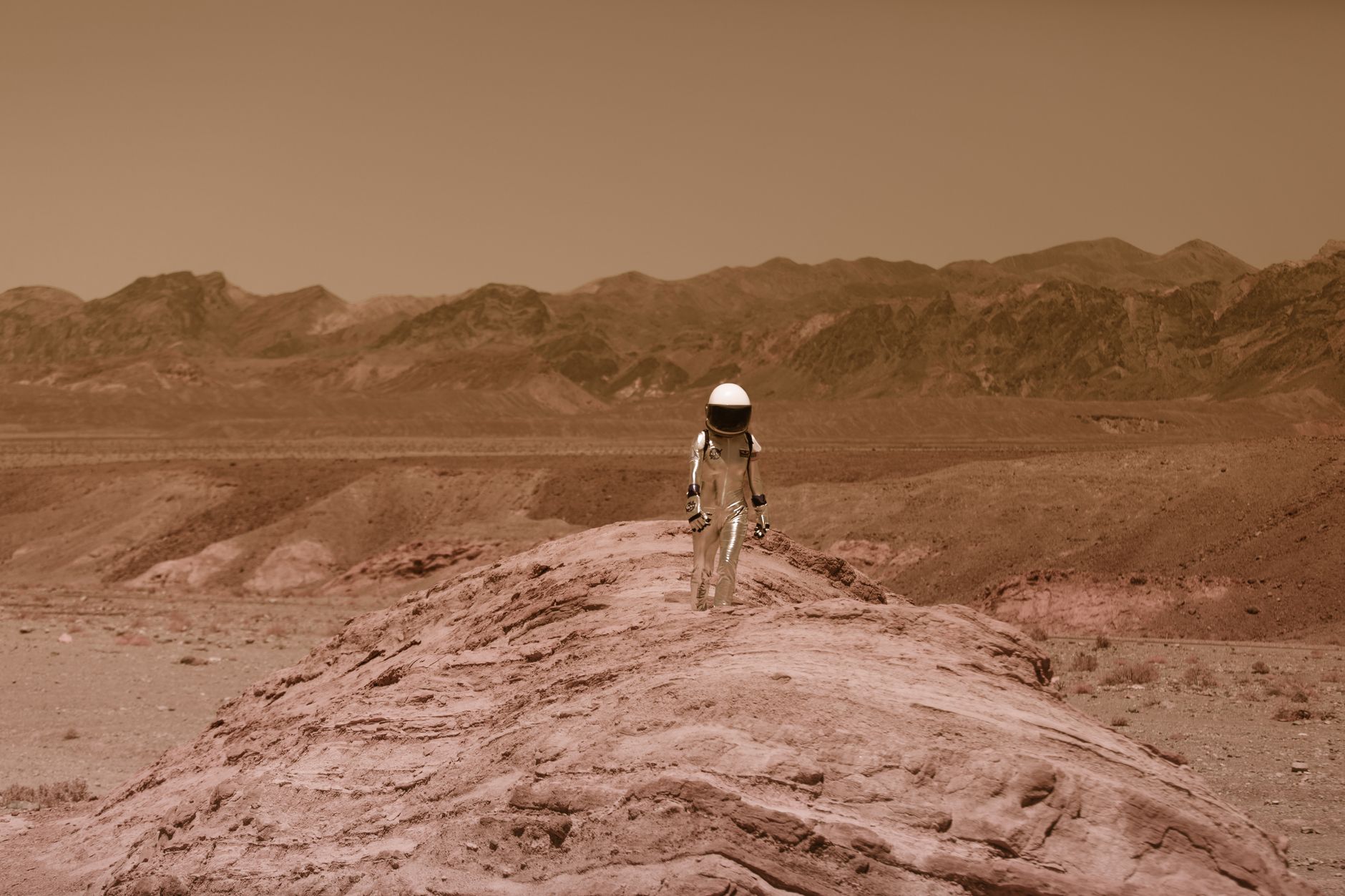
The microwave‑size IDEFIX rover, named after a French comic‑book dog, is slated for release in late 2028 or early 2029 at roughly 40 meters (130 feet) above Phobos. Because the moon’s gravity is extremely weak, the rover will free‑fall, bounce a few times and then begin surface investigations.
Sample collection could begin as early as Dec. 2028, according to Lindsay Hays, acting director of NASA’s Planetary Science Division, who briefed the mission on Oct. 15. MMX plans two separate landings, each using a corer sampling mechanism (C‑sampler) and a pneumatic sampling mechanism (P‑sampler) to gather at least 10 grams (0.35 ounces) of regolith. After each touchdown the spacecraft will return to orbit, relocate, and repeat the process.
Following roughly three years of Phobos work, MMX will shift to a higher resonant orbit around Mars in 2030 and conduct a series of flybys of Deimos, gathering comparative data. Late in 2030 the exploration module will separate, leaving the return module to fire its engine out of Mars’ gravity well. An eight‑month cruise will bring the sample‑return capsule to Earth, where it will parachute into Australia’s Woomera region in 2031 for recovery.
Spacecraft design and scientific payload
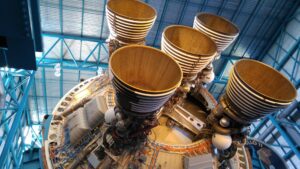
The spacecraft consists of a propulsion module, an exploration module and a return module. Mitsubishi Electric built the three main modules, while France’s CNES and Germany’s DLR co‑developed the IDEFIX rover.
Key instruments include the Raman Spectrometer for MMX (RAX) and a miniaturized radiometer (miniRAD) on the rover, as well as NASA’s MEGANE gamma‑ray and neutron spectrometer, France’s MIRS infrared spectrometer, and Japan’s TENGOO tight‑zoom camera, OROCHI multispectral camera, LIDAR, and Mass Spectrum Analyzer on the exploration module. The return module carries a Circum‑Martian Dust Monitor (CMDM) and an Interplanetary Radiation Environment Monitor (IREM).
Scientific objectives and the moon‑origin puzzle
Phobos and Deimos are small, irregular bodies that share spectral characteristics with primitive D‑type asteroids, suggesting a possible capture from elsewhere in the solar system. Their near‑circular, equatorial orbits, however, are more consistent with formation from a debris disk created by a massive impact on ancient Mars, analogous to Earth’s Moon‑forming event.
“Phobos and Deimos are interesting, but not just in their own right. Their presence is a key piece of the larger story of the Mars system,” said Tom Statler, MMX program executive and NASA planetary scientist, during the Oct. 15 briefing. “By uncovering the moons’ origin, we’ll gain new insights into the history of both Mars and Earth.”
Each origin hypothesis predicts distinct chemical signatures. Captured asteroids would retain volatile‑rich material from the outer solar system, while impact‑formed moons would contain a mixture of Martian and impactor material altered by high‑temperature processes. By analyzing at least 10 grams of regolith with instruments such as RAX, MEGANE and MIRS, scientists hope to determine which scenario better matches the moons’ composition.
Statler noted that the evidence points in “two totally different lines” and that hybrid models combining capture and impact processes have also been proposed. The MMX mission therefore aims to resolve this long‑standing puzzle and, in doing so, illuminate events that shaped the terrestrial planets billions of years ago.

Norman Pearlstine is the Executive Editor and Co-Founder at News Raise. With over two decades of experience across financial journalism, corporate governance, and market analysis, Norman leads the editorial direction and ensures strict adherence to journalistic accuracy and ethics.