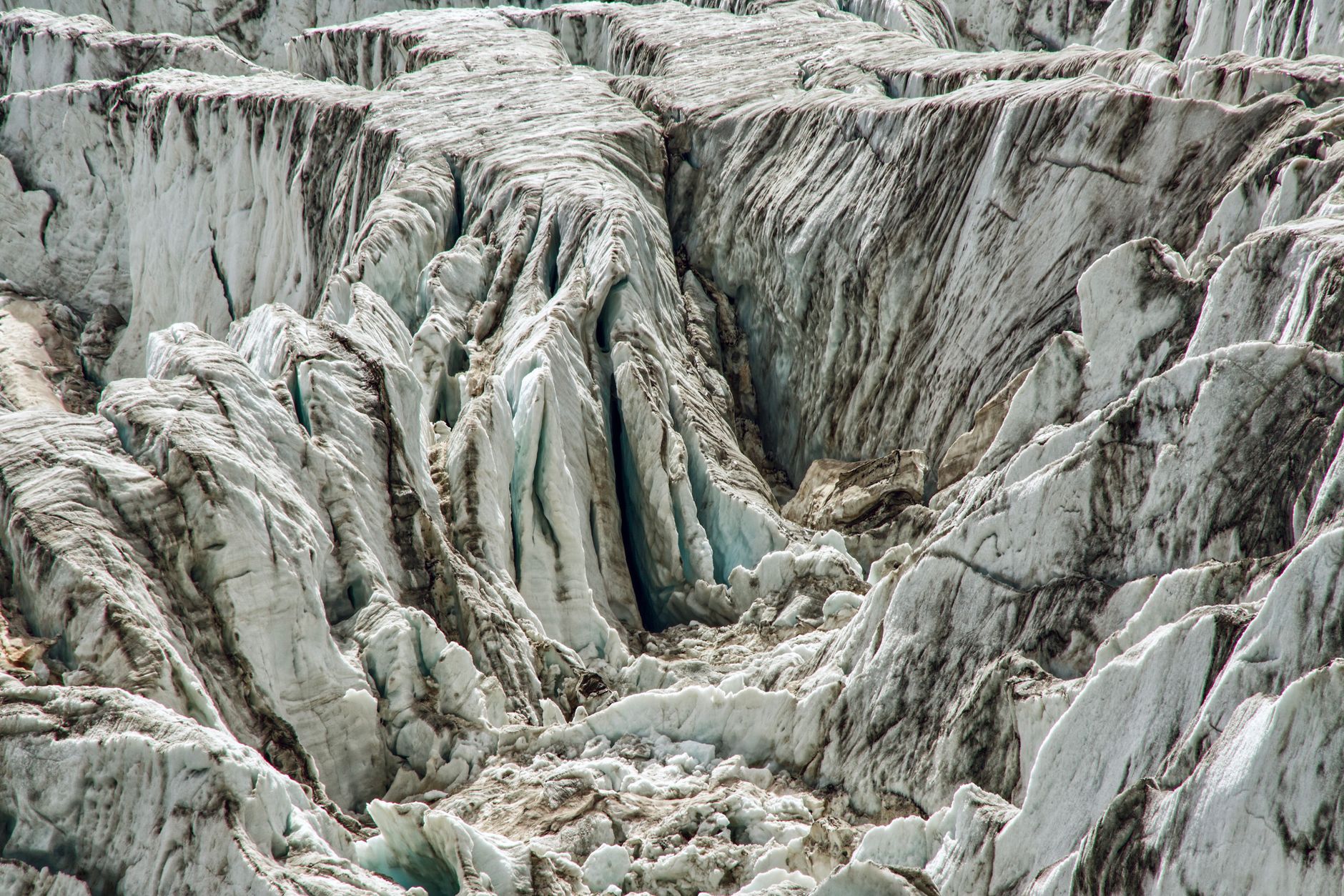
Glaciers that once dotted the peaks of the western United States are disappearing at an unprecedented rate. Researchers report that roughly 300 glaciers have vanished since the 1960s and that the overall glacial surface in the region has contracted by about one‑third. The findings, published in the Proceedings of the National Academy of Sciences, illustrate a rapid acceleration of ice loss linked to rising temperatures.
Study details and key findings
The inventory, led by geographer Andrew Fountain of Portland State University, employed a combination of satellite observations and aerial photographs to map glacier change across six western states. At the midpoint of the 20th century, more than 1,450 glaciers—ranging from ancient ice remnants of the last ice age to younger formations a few thousand years old—were identified throughout the Sierra Nevada, Cascades and other mountain ranges.
Since the 1960s, about 300 of those ice bodies have become “functionally disappeared,” meaning they have shrunk to a size comparable to two football fields and no longer exhibit movement. Smaller, south‑facing glaciers have suffered the greatest losses, especially those situated below 9,000 feet in the Sierra Nevada and under 6,000 feet in the Cascades. Even many of the larger glaciers are projected to disappear within the next fifty years, with only the highest summits—such as Mount Hood and Mount Rainier—expected to retain reduced ice by the end of the century.
“When I realized this it was like, ‘Yikes – that’s a lot more than I thought,’” Fountain said, emphasizing the speed of the transformation.
Implications for water and ecosystems
Glaciers serve as critical reservoirs of cool meltwater that support alpine ecosystems, agricultural irrigation and hydroelectric generation. Their retreat threatens the stability of regional water supplies, particularly as shrinking snowpacks reduce the amount of drinking water available during drought periods. Local residents, Fountain noted, feel a personal loss when iconic ice formations disappear, describing the phenomenon as “a tangible evidence of a shrinking snowpack.”
Seasonal dynamics are also shifting: warmer summers accelerate melting, while milder winters bring rain instead of snow, depriving glaciers of the replenishment they need. This “double whammy” leaves the ice in a vulnerable state, according to Fountain.
Global context and future risks
The western U.S. trend mirrors glacier decline observed in Europe, the Himalayas and other mountain ranges worldwide, where warming temperatures jeopardize crops, wildlife and downstream communities. Experts warn that disappearing glaciers can destabilize surrounding terrain, raising the risk of sudden landslides or ice‑rock collapses similar to the August disaster along the Tibet‑Nepal border that killed at least 1,400 people.
Glaciologist Eric Rignot of the University of California, Irvine, highlighted that the broader melting of polar ice sheets adds another layer of concern. A separate study released last month documented the loss of 12.5 trillion tons of ice from Greenland and Antarctica since 1979—enough water to cover the continental United States under five feet of ice and to raise global sea levels by roughly one inch over four decades. Even modest sea‑level rise amplifies storm surge impacts on coastal cities, a point Rignot stressed while noting that incremental actions to curb emissions can still make a difference.
Collectively, the evidence underscores an accelerating climate crisis that is reshaping the western landscape, threatening water security and increasing geological hazards. While halting or reversing glacier loss may take centuries, scientists agree that immediate emission reductions are essential to slow the trajectory.

Helene Elliott is the Lead Science & Space Reporter at News Raise. She reports on aerospace missions, astrophysics discoveries, quantum research, and environmental technology.