Lancaster County in central Pennsylvania, home to the nation’s largest Amish population, has become the focal point of the worst measles outbreak in the United States in 35 years. State health officials report more than 1,350 cases statewide this year, with over a third occurring in Lancaster County alone. Three measles‑related deaths have been recorded in the county and two additional deaths in other Pennsylvania counties.
Outbreak Overview and Impact
The virus, declared eliminated in the United States in 2000, is finding fertile ground where vaccination coverage has slipped. While the general public’s immunization rates have been declining, the Amish and conservative Mennonite “Plain” communities have historically maintained lower vaccination levels, driven more by cultural habit than doctrinal opposition. Health experts note that the interconnectedness of Plain and non‑Plain residents means the outbreak cannot be contained within a single community.
Measles spreads through respiratory droplets and contaminated surfaces, and while most cases are mild, complications such as pneumonia and encephalitis can be fatal. Michael Osterholm, director of the University of Minnesota’s Center for Infectious Disease Research and Policy, warned that measles remains the most transmissible infectious disease in the United States.
Community Response and Shifting Attitudes
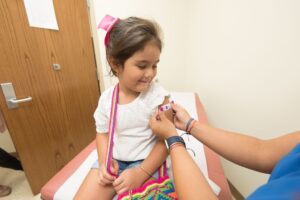
Amid the surge, a noticeable shift toward vaccine acceptance is emerging among some Amish and Mennonite families. Lauren and Mason Spence, who identify as “English” (non‑Plain), recently took their 10‑month‑old son Bowen to receive his first measles, mumps and rubella (MMR) shot, reflecting heightened concern about rapid spread.
Conversely, some individuals remain opposed. Amish farmer Ephraim Zook, whose twins recovered from measles, expressed a belief that the illness is “a natural thing.” A Mennonite market vendor reported that his largely vaccinated community has avoided infections entirely.
Allen Hoover, an Old Order Mennonite and former administrator of the Parochial Medical Center in New Holland, emphasized that vaccine hesitancy in Plain communities is rarely ideological. “It was simply, ‘Well, we never did before, and we came through all right,’” he said, noting that building trust can take up to two decades.
Vaccination Efforts and Public Health Challenges
Union Community Care, a nonprofit serving Lancaster and surrounding towns, has launched a “Plain Healthy” outreach program that includes a mobile clinic. The organization reports administering roughly 450 measles vaccinations to Plain residents, an effort it hopes will make a significant impact. Clinics are also offering earlier‑than‑scheduled infant vaccinations, a strategy recommended by health experts during active outbreaks.
Statewide, kindergarten MMR coverage has slipped to 93.2% last year, down from 95.2% in 2019‑20. Lancaster County’s rate sits at 88%, with private and religious schools lagging behind public schools. The rise in religious or philosophical exemptions for vaccinations has been documented across the county.
Public health officials underscore that herd immunity against measles typically requires about 95% coverage. Declining rates, compounded by lingering vaccine hesitancy from the COVID‑19 pandemic, have eroded that protective buffer.
Efforts to address misinformation have been complicated by anti‑vaccine activism targeting the Amish. In 2021, Robert F. Kennedy Jr. spoke at a Lancaster County fair, alleging government pressure to vaccinate the community. More recently, the U.S. health secretary, also named Kennedy, debated the outbreak’s scope with Pennsylvania Governor Josh Shapiro.
Experts caution against blaming any single group. Berwood Yost, director of the Center for Opinion Research at Franklin & Marshall College, noted that vaccine skepticism is widespread and that “every one of us is susceptible to misinformation.” He urged a collective focus on improving vaccination rates across all populations.
As winter approaches and indoor gatherings increase, physicians anticipate a potential rise in cases. Continued collaboration between Plain communities, health providers, and public officials will be essential to contain the outbreak and restore higher immunization levels.

Steve Lopez is a Senior Editorial Columnist and Health & Public Policy reporter for News Raise. Steve focuses on healthcare advancements, medical technologies, and public health policies.