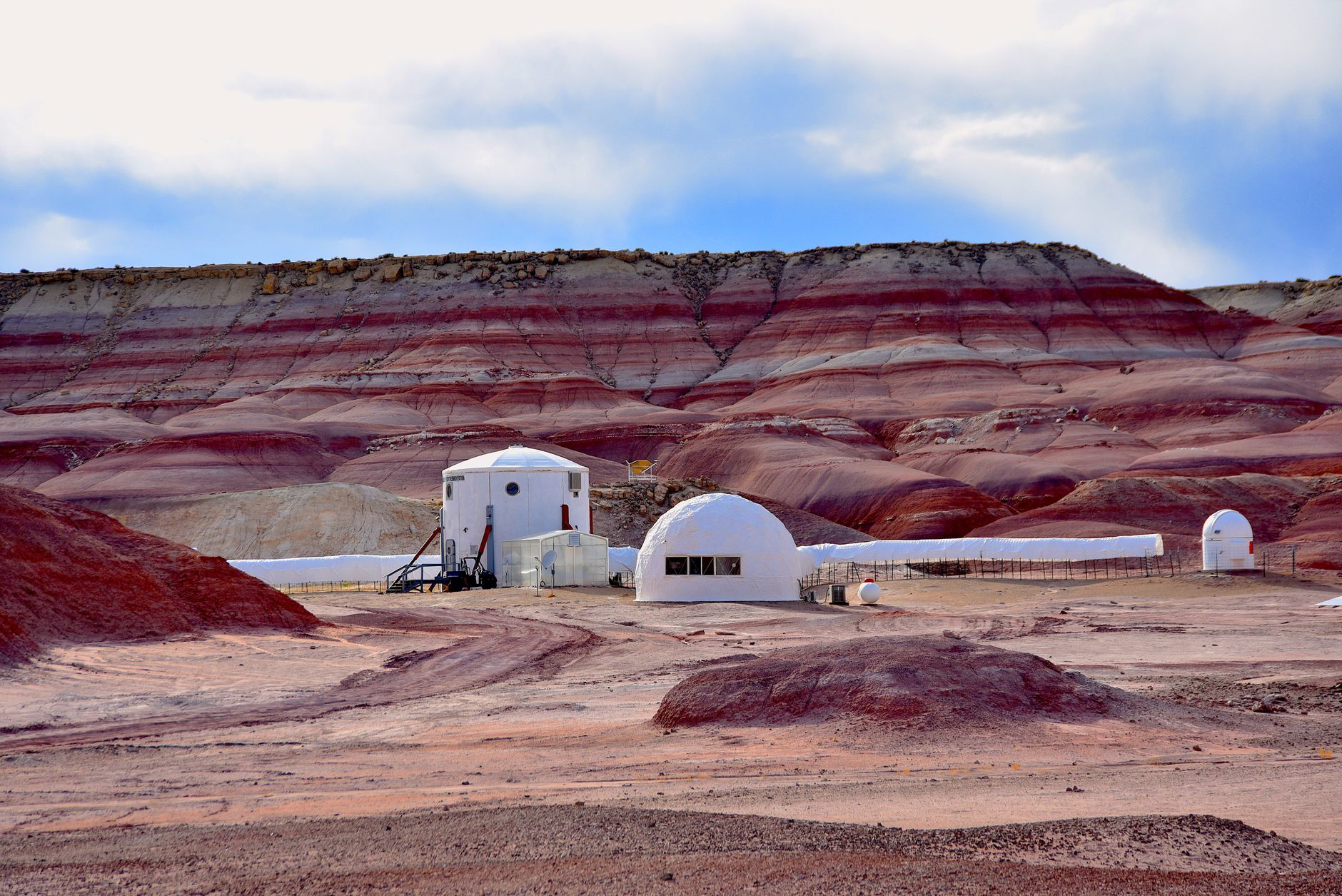
On 31 October, four engineers stepped out of a 158‑square‑metre, 3D‑printed habitat at NASA’s Johnson Space Center in Houston after spending 378 days inside a simulated Martian environment. The mission, the second in a series of extended NASA analog simulations, was designed to evaluate how long‑duration space travel might affect crew health, performance and teamwork.
Mission objectives and daily life
During the year‑long isolation, the crew performed a range of activities that mirror those expected on a real Mars expedition. They cultivated leafy greens, peppers and tomatoes, replicating controlled‑environment agriculture techniques that could supply food and psychological benefits to future astronauts. The team also conducted geological work, collecting rock samples, identifying minerals and carrying out simulated core analyses to reconstruct the planet’s history.
To approximate the communication lag between Earth and Mars, every message exchanged with mission control required a delay of 13 to 22 minutes each way, varying with the imagined distance between the two planets. The crew also faced a planned two‑week blackout, during which no radio contact was possible—a scenario that could occur when the Sun blocks transmissions between the two worlds.
Science officer’s role
Matthew Montgomery, a hardware engineering design consultant and co‑owner of a film production company, served as the mission’s science officer. Prior to the analog, Montgomery worked in controlled‑environment agriculture, focusing on optimal LED lighting for plant growth. In the habitat, he led the crop‑growing program, applying his expertise to maintain the health of the lettuce, peppers and tomatoes that the crew tended.
Montgomery also oversaw the geological component of the experiment. He explained that rock collection is “incredibly important in a real mission to Mars,” and the team practiced mineral identification and core‑sample analysis to simulate the scientific workflow astronauts would use to study Martian geology.
Team dynamics and blackout preparation
Team cohesion was a priority before isolation began. The engineers spent five weeks together in pre‑mission training, which included a winter camping expedition in Wyoming that exposed them to a blizzard. Montgomery said these high‑pressure scenarios helped build a solid foundation for teamwork, resulting in “very minimal” conflict during the year inside the habitat.
Preparing for the two‑week communication blackout took roughly a month. The crew coordinated with ground teams to finalize procedures, schedules and safety protocols, ensuring they could operate autonomously if any issue arose. Montgomery noted that the thorough preparation allowed the crew to maintain safety and mission objectives despite the loss of real‑time contact with Earth.
When the blackout period arrived, the crew relied on the pre‑established plans, conducting experiments and maintaining daily routines without external guidance. The experience offered valuable data on how future Martian crews might manage extended periods of isolation and radio silence.
Implications for future Mars missions
The successful completion of the 378‑day analog provides NASA with concrete observations on several critical aspects of interplanetary travel. Crop cultivation demonstrated that fresh produce can be grown in confined habitats, supporting both nutrition and mental health. Geological exercises validated protocols for in‑situ resource analysis, while the communication delay and blackout simulations highlighted the need for robust autonomous operations.
As NASA prepares for upcoming Artemis missions and eventual crewed journeys to Mars, the lessons learned from this habitat‑based experiment will inform habitat design, crew selection, training regimens and contingency planning. The four engineers, now back on Earth, have contributed a year’s worth of data that will help shape the next generation of deep‑space exploration.

Steve Lopez is a Senior Editorial Columnist and Health & Public Policy reporter for News Raise. Steve focuses on healthcare advancements, medical technologies, and public health policies.