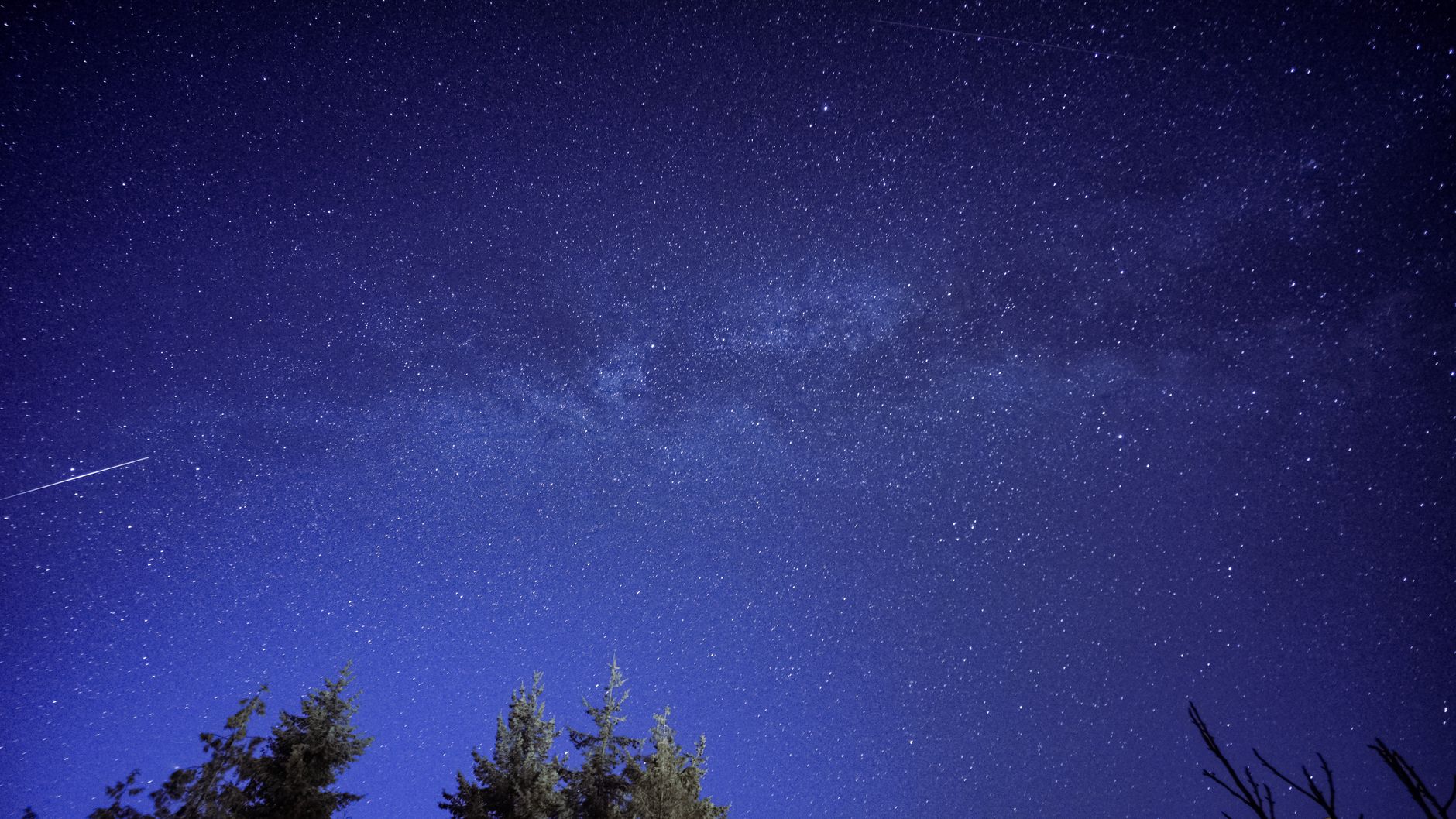
Tonight’s sky will not host the spectacular firework display that made headlines 60 years ago. The 2026 Leonid meteor shower is forecast to produce only a handful of meteors per hour, a sharp contrast to the 144,000 per hour seen during the 1966 storm.
Background
The Leonids are named for their radiant point in the constellation Leo, the lion. The meteors are produced when Earth passes through the dusty trail left by Comet Tempel‑Tuttle, which completes an orbit every 33⅓ years. Each perihelion passage leaves a dense stream of debris; a meteor storm can occur if the Earth intersects a fresh trail from the last few centuries.
After the comet’s 1998 perihelion, the 1999, 2001 and 2002 displays were modest, with a few thousand meteors per hour at most. By contrast, the 1966 shower produced an extraordinary rate of 40 meteors per second – 144,000 per hour – from clear skies across the central and western United States.
Historic 1966 Storm
Dr. Kenneth L. Franklin of the Hayden Planetarium had predicted that the 1966 shower could rival the 1833 event, based on the comet’s orbital position. New Yorkers gathered on the Great Lawn in Central Park to watch the predicted “meteor party,” but clouds obscured the sky. Across the country, observers reported a “gigantic umbrella” of meteors. At the Table Mountain Observatory in California, a rain of meteors turned into a storm, while at Kitt Peak in Arizona, 13 amateur astronomers counted 40 meteors per second.
2026 Expectations
According to the International Meteor Organization’s 2026 calendar, the Leonids will reach their regular maximum at 23:45 UTC (6:45 p.m. EST) on November 17, with around 15 meteors per hour possible under ideal viewing conditions. Meteor experts Margaret Campbell‑Brown and Peter Brown of the Royal Astronomical Society of Canada place the peak at 00:00 UTC on November 18, while Russian meteorologist Mikhail Maslov predicts a slightly earlier peak at 16:00 UTC on November 17. Several weaker encounters with older debris trails are also expected between November 17 and 19, but no major storm is anticipated.
At the time of the 2026 encounter, Comet Tempel‑Tuttle is still 1.11 billion miles (1.79 billion km) from the Sun, well beyond Saturn’s orbit. The section of the comet’s orbit that Earth will traverse contains only scattered particles that were shed a millennium or two ago, leaving the shower with an expected rate of 10–15 meteors per hour, and more likely fewer. The first‑quarter Moon will set before 11 p.m. local time, leaving the night dark and free of lunar glare.
Observers should look for the radiant in Leo after midnight, when the constellation climbs above the horizon. The Leonids move opposite Earth’s orbit, producing the fastest meteor velocities of about 45 miles (72 km) per second. These high speeds can create bright meteors with long persistent trains, but such fireballs are expected to be rare this year.
Future Outlook
French meteor expert Jeremie Vaubaillon and colleagues published a forecast that extends to 2100. They predict that the next major Leonid outburst will occur in 2034, when rates could reach up to 2,000 per hour. However, in 2029 Jupiter is expected to alter Comet Tempel‑Tuttle’s orbit, making a repeat of the 1966 storm unlikely through the early 22nd century.
For skywatchers, 2026 offers a gentle reminder of the Leonids’ potential. While the shower will be modest, it still provides an opportunity to observe the faint glow of a comet’s dust trail and to compare this year’s activity with the historic 1966 storm.

Norman Pearlstine is the Executive Editor and Co-Founder at News Raise. With over two decades of experience across financial journalism, corporate governance, and market analysis, Norman leads the editorial direction and ensures strict adherence to journalistic accuracy and ethics.