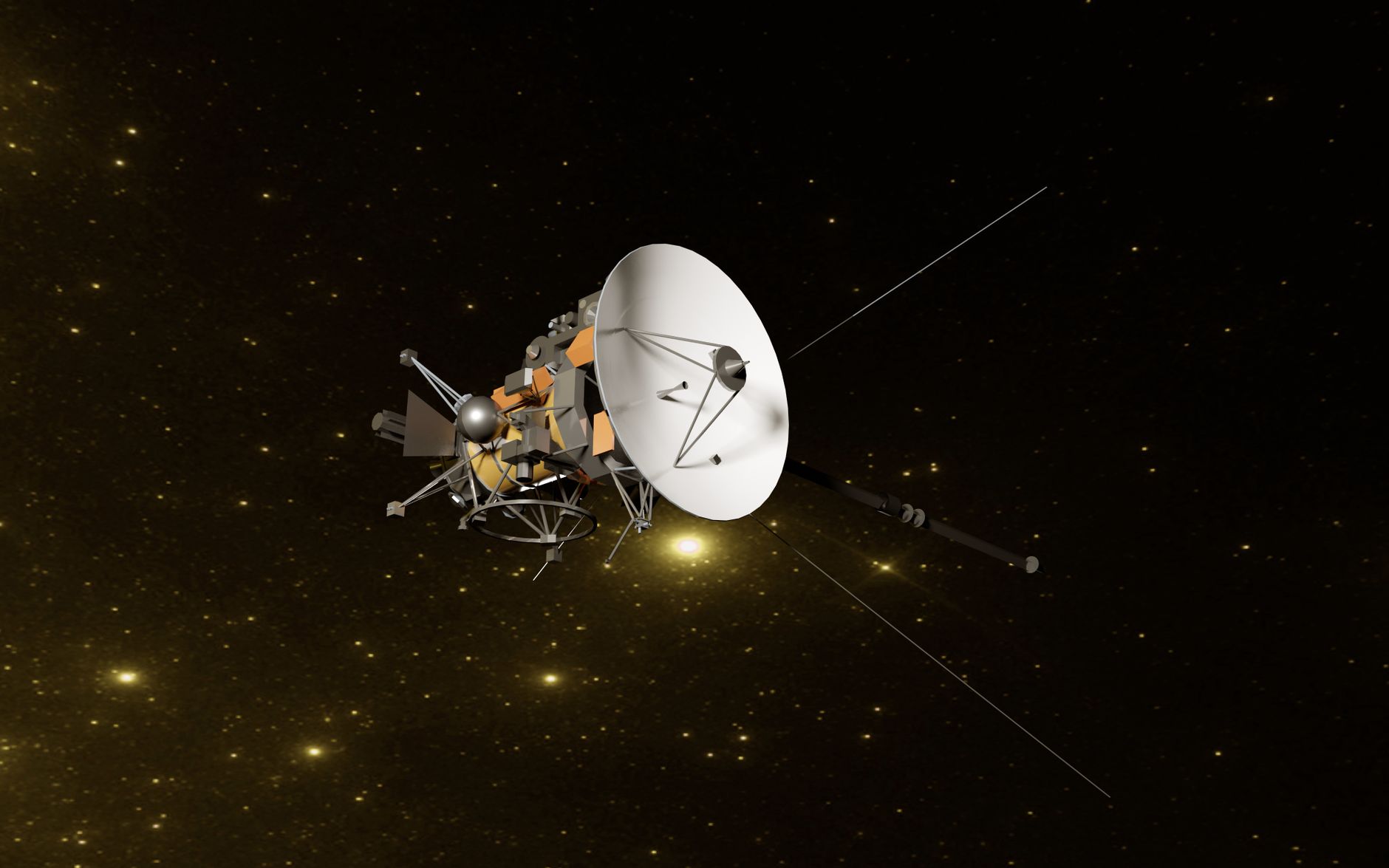
On 18 November 2026 at 11:16 a.m. Central European Time, NASA’s Voyager 1 spacecraft crossed the one‑light‑day threshold, becoming the first human‑made object to travel the distance light covers in a single day—about 26 billion kilometres (roughly 16 billion miles) from Earth. Launched in 1977, the probe took 49 years, two months and 11 days to achieve this milestone while maintaining a velocity of approximately 61,000 km/h (38,000 mph).
Journey to a Light‑Day
The spacecraft’s path was made possible by a rare planetary alignment that occurs only once every 176 years. In 1977, Jupiter, Saturn, Uranus and Neptune lined up, allowing mission planners to use the massive gravity of Jupiter and Saturn for a series of slingshot maneuvers. These gravity assists accelerated Voyager 1, enabling it to escape the solar system’s planetary region.
After completing its primary mission, the probe continued outward. On Valentine’s Day 1990, from beyond Neptune, Voyager 1 captured the only photograph of the solar system taken from outside its borders. In 2012, it entered interstellar space, becoming the first human‑made object to do so, and it has been sending data back ever since.
Continuing Scientific Mission
Even at a distance of one light‑day, the probe remains an active scientific instrument. Suzanne Dodd, the mission’s project manager at NASA’s Jet Propulsion Laboratory, explains that communication now involves a two‑day round‑trip: “If you want to say ‘hello’ to Voyager, you send your message and then you go home and you wait two days before you finally get a response.” Mission manager Kareem Badaruddin adds that the spacecraft is “still working great, sending back data from a region of space no other human‑made craft has ever explored.”
NASA projects that Voyager 1 will continue to drift through the Milky Way for tens of thousands of years. In roughly 40,000 years, it is expected to pass the star Gliese 445, located more than 17 light‑years from Earth. Reaching a full light‑year— the distance light travels in a year—will require about 18,000 more years of travel.
Golden Record and Controversy
Among Voyager 1’s payload is the Golden Record, a phonographic disc containing sounds, music and spoken greetings intended for any extraterrestrial intelligence that might encounter the probe. The record also includes spoken messages from notable Earth figures. One of the first voices heard is that of Kurt Waldheim, former United Nations Secretary‑General (1972‑81) and Austrian President (1986‑92). Waldheim’s inclusion is controversial because, a decade after Voyager’s launch, his concealed service as a German army officer during World War II was revealed, leading to allegations of involvement in Nazi crimes. While the likelihood of the record ever being played by an alien civilization is considered very low, its presence underscores the mission’s symbolic intent to represent humanity.
NASA describes Voyager 1’s future as a wander through the galaxy “perhaps eternally,” a testament to the durability of its plutonium power source and the ingenuity of its design. The probe’s achievement of a one‑light‑day distance not only marks a technical milestone but also serves as a reminder of humanity’s long‑term presence beyond the confines of the solar system.

Helene Elliott is the Lead Science & Space Reporter at News Raise. She reports on aerospace missions, astrophysics discoveries, quantum research, and environmental technology.