Pennsylvania health officials announced Monday that an unvaccinated resident of Centre County died after testing positive for measles, marking the state’s ninth measles‑related fatality this year.
The death was confirmed less than a week after the Pan American Health Organization revoked the United States’ measles elimination status, ending a public‑health achievement that had been maintained since 2000.
Statewide, the Pennsylvania Department of Health reports 1,638 confirmed measles cases across 46 counties, with 49 new infections added on Monday. Hospitalizations have risen from 315 to 330, according to the department’s measles dashboard. Only five of the confirmed infections involved individuals who had received the measles, mumps and rubella (MMR) vaccine.
The latest fatality follows last week’s eighth measles death, which involved an unvaccinated resident of Clinton County. Both deaths occurred amid an outbreak that began in April and has propelled Pennsylvania to the top of the national ranking, accounting for more than a quarter of all U.S. measles infections.
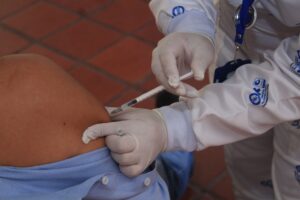
The surge is concentrated in rural and Amish communities where vaccination rates have historically been low. In response, the state health department has administered more than 7,400 doses of MMR vaccine through nearly 300 pop‑up clinics and plans to establish dozens more temporary immunization sites in the coming weeks.
Outbreak toll and vaccination gaps
While the overall case count continues to climb, the data underscore a stark vaccination gap. Of the 1,638 confirmed infections, just five patients were known to be vaccinated, highlighting the protective effect of the MMR series. Hospitalizations have also increased, reflecting the seriousness of the disease even among otherwise healthy individuals.
Public‑health officials emphasize that the majority of new cases are emerging in communities with historically low uptake of routine immunizations. The state’s effort to deploy pop‑up clinics aims to bring the vaccine directly to these underserved areas, reducing barriers such as travel distance and appointment availability.
Political tensions over response
The outbreak has intensified a public dispute between Governor Josh Shapiro and U.S. Health and Human Services Secretary Robert F. Kennedy Jr. Governor Shapiro has accused Secretary Kennedy of spreading misinformation about the MMR vaccine, a charge the secretary denies. Kennedy has, in turn, accused the governor of politicizing the crisis and suggested that some reported measles deaths may have been “fabricated.”
Kennedy’s own stance on vaccination has shifted in public statements. When testifying before the House in May 2025, he said he would “probably” vaccinate his children against measles, whereas in August 2024, prior to his appointment as HHS secretary, he said he would not give his kids the MMR vaccine. The contrasting remarks have added a layer of complexity to the public dialogue surrounding the outbreak.
Public health implications
The revocation of the United States’ measles elimination status means the virus is now considered endemic, circulating at predictable levels similar to seasonal flu or chickenpox. However, measles is roughly twelve times more contagious than influenza and twice as contagious as chickenpox, according to UNICEF data.
Beyond its high transmissibility, measles can lead to severe complications, especially in infants and young children. Complications include a weakened immune system and encephalitis—a swelling of the brain that can cause seizures and long‑term intellectual disabilities. These risks reinforce the call from state and federal health authorities for residents to receive the MMR vaccine as the most effective defense against the disease.
As Pennsylvania continues to lead the nation in measles cases, health officials stress that expanding vaccination coverage remains the cornerstone of controlling the outbreak and preventing further fatalities.

Steve Lopez is a Senior Editorial Columnist and Health & Public Policy reporter for News Raise. Steve focuses on healthcare advancements, medical technologies, and public health policies.