The United States no longer meets the criteria for measles elimination, an assessment confirmed by an independent commission of experts reporting to the Pan American Health Organization. 2026 has already produced more measles cases than any year since the disease was declared eliminated in 2000, surpassing the previous high and marking the worst year for the illness since 1991.
Record Outbreaks Across Multiple States
State health agencies have documented several large and deadly outbreaks. Pennsylvania is experiencing the nation’s largest outbreak in more than three decades, with the state health department reporting seven measles‑associated deaths in 2026. Wisconsin has recorded two deaths and New York one death this year. By comparison, 2025 saw three measles deaths, the first reported in the United States since 2015.
In 2025, a major outbreak in West Texas accounted for at least one‑third of all national cases, and multiple other states reported cases linked back to Texas. Although Texas officials declared that particular outbreak over, other clusters continue to expand.
South Carolina also faced a significant surge after an outbreak spread through Spartanburg County from October 2025 through April 2026. That event produced nearly 1,000 cases, placing it among the largest U.S. measles outbreaks in decades.
National data compiled by the Centers for Disease Control and Prevention (CDC) trails state reports, but the emerging picture is clear: measles cases are rising sharply, and deaths are occurring primarily among unvaccinated individuals.
Vaccination Gaps Undermine Elimination
Measles is an extremely contagious airborne virus that can lead to severe complications, especially for children and other unvaccinated persons. Most reported cases involve people younger than 20. Typical symptoms include fever, cough, runny nose, watery eyes, and a red‑spot rash. According to CDC data, one in five unvaccinated patients who contract measles requires hospitalization. About one in twenty children develop pneumonia, and some experience encephalitis, a dangerous brain swelling. Mortality can reach up to three per 1,000 infected children due to respiratory and neurologic complications.
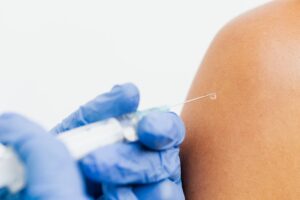
The disease is preventable with the measles, mumps and rubella (MMR) vaccine. Health experts advise two doses: the first between 12 and 15 months of age and the second between four and six years old. A single dose provides roughly 93 % protection, while the two‑dose series raises effectiveness to about 97 %. The CDC notes that the overwhelming majority of U.S. cases occur in unvaccinated people.
Measles was declared eliminated in the United States in 2000, a status that allowed for occasional imported cases but kept widespread transmission rare when vaccination coverage remained high. Prior outbreaks, such as those in 2019 among under‑immunized Orthodox Jewish communities in New York, already threatened that status.
Current vaccination coverage falls short of the 95 % target needed to sustain herd immunity. Among kindergarteners, the MMR series completion rate dropped from 95.2 % in the 2019‑20 school year to 92.4 % in the 2025‑26 school year, leaving an estimated 280,000 children at risk. Coverage varies widely by state, contributing to the uneven spread of the disease.
As the United States confronts a resurgence of measles, public‑health officials stress that restoring high vaccination rates is essential to prevent further outbreaks and to regain elimination status.

Steve Lopez is a Senior Editorial Columnist and Health & Public Policy reporter for News Raise. Steve focuses on healthcare advancements, medical technologies, and public health policies.