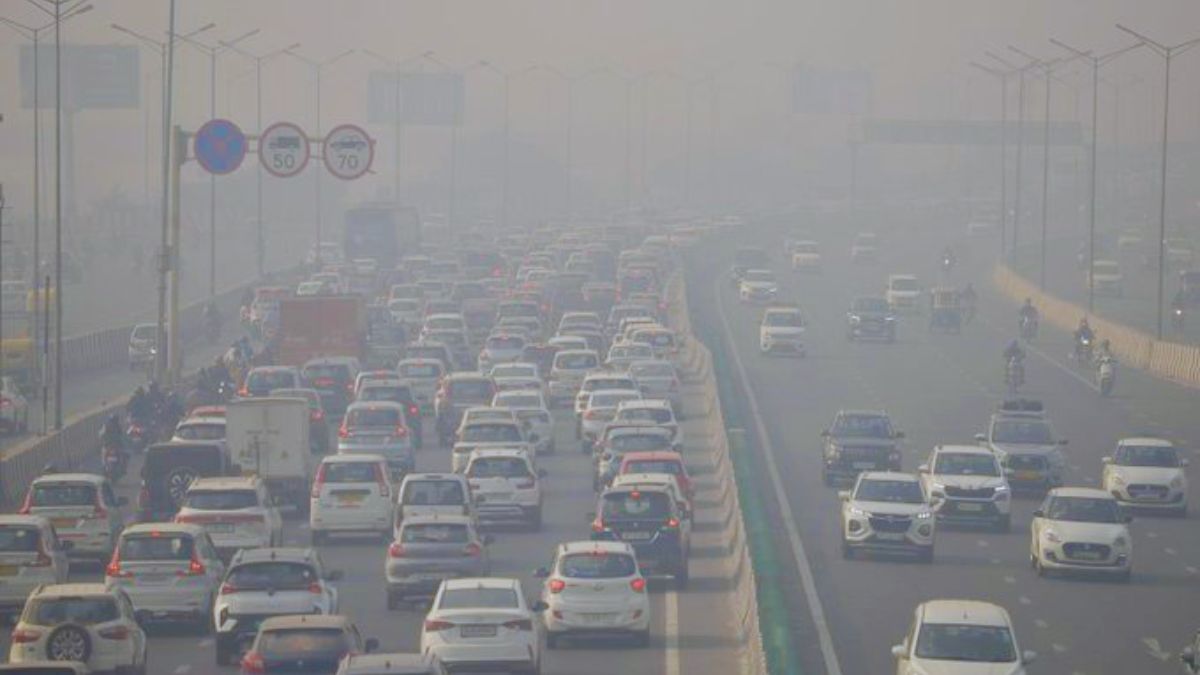
Delhi Chokes Under Dense Fog and Severe Smog, Flights Disrupted and Emergency Curbs Enforced
The capital city woke up to a thick blanket of dense fog and toxic smog on December 15 morning, severely reducing visibility across the national capital and surrounding NCR regions. The sudden drop in visibility marked the first major winter fog spell of the season, slowing traffic on major roads and disrupting air travel. Several parts of the city reported near-zero visibility during early morning hours, creating hazardous commuting conditions for residents.
IGI Airport Operations Affected, Airlines Issue Advisories
Flight operations at Indira Gandhi International (IGI) Airport were impacted as dense fog hampered safe take-offs and landings. Multiple departures and arrivals were delayed as airlines recalibrated schedules in response to the challenging weather conditions. Delhi International Airport Limited (DIAL) issued a passenger advisory, warning travellers of possible disruptions due to poor visibility.
“Due to dense fog, flight operations may experience disruptions. We are working closely with all stakeholders to minimize inconvenience to passengers,” the airport operator stated, urging passengers to check flight status directly with airlines. Air India also released a travel advisory, noting that poor visibility was affecting flights in Delhi and parts of northern India.
Air Quality Slips into ‘Severe’ Category
Alongside fog, Delhi continued to reel under dangerously high pollution levels. A thick layer of smog engulfed the city as air quality remained in the ‘severe’ category throughout the National Capital Region. According to the Air Quality Early Warning System for Delhi, the overall Air Quality Index (AQI) stood at 457, raising serious public health concerns.
Pollution levels showed a worsening trend through the day, driven by slow wind speeds, stable atmospheric conditions, and unfavourable meteorological factors that prevented the dispersion of pollutants.
GRAP Stage IV Implemented Amid Rising Pollution
- In response to the deteriorating air quality, the Commission for Air Quality Management (CAQM) invoked Stage IV of the Graded Response Action Plan (GRAP) with immediate effect.
- The AQI crossed the critical 450-mark, entering the ‘Severe Plus’ range.
- As part of the emergency measures, all construction activities were banned, and the entry of non-essential polluting trucks into Delhi was prohibited.
Only trucks carrying essential goods or running on cleaner fuels such as LNG, CNG, electricity, or BS-VI diesel have been allowed to enter the city.
Schools Shift to Hybrid Mode
The worsening pollution also prompted the Directorate of Education to revise school operations. Schools across Delhi have been instructed to conduct classes in a hybrid mode for students up to Classes IX and XI. Government, government-aided, and recognised private schools under various civic bodies have been directed to offer both online and offline classes wherever feasible until further notice.
However, Classes 10 and 12 will continue to attend physical classes in schools, given the importance of board examinations. Authorities have urged residents to limit outdoor exposure, especially children, elderly individuals, and those with respiratory conditions, as Delhi battles one of its most severe pollution episodes of the season.





Be First to Comment