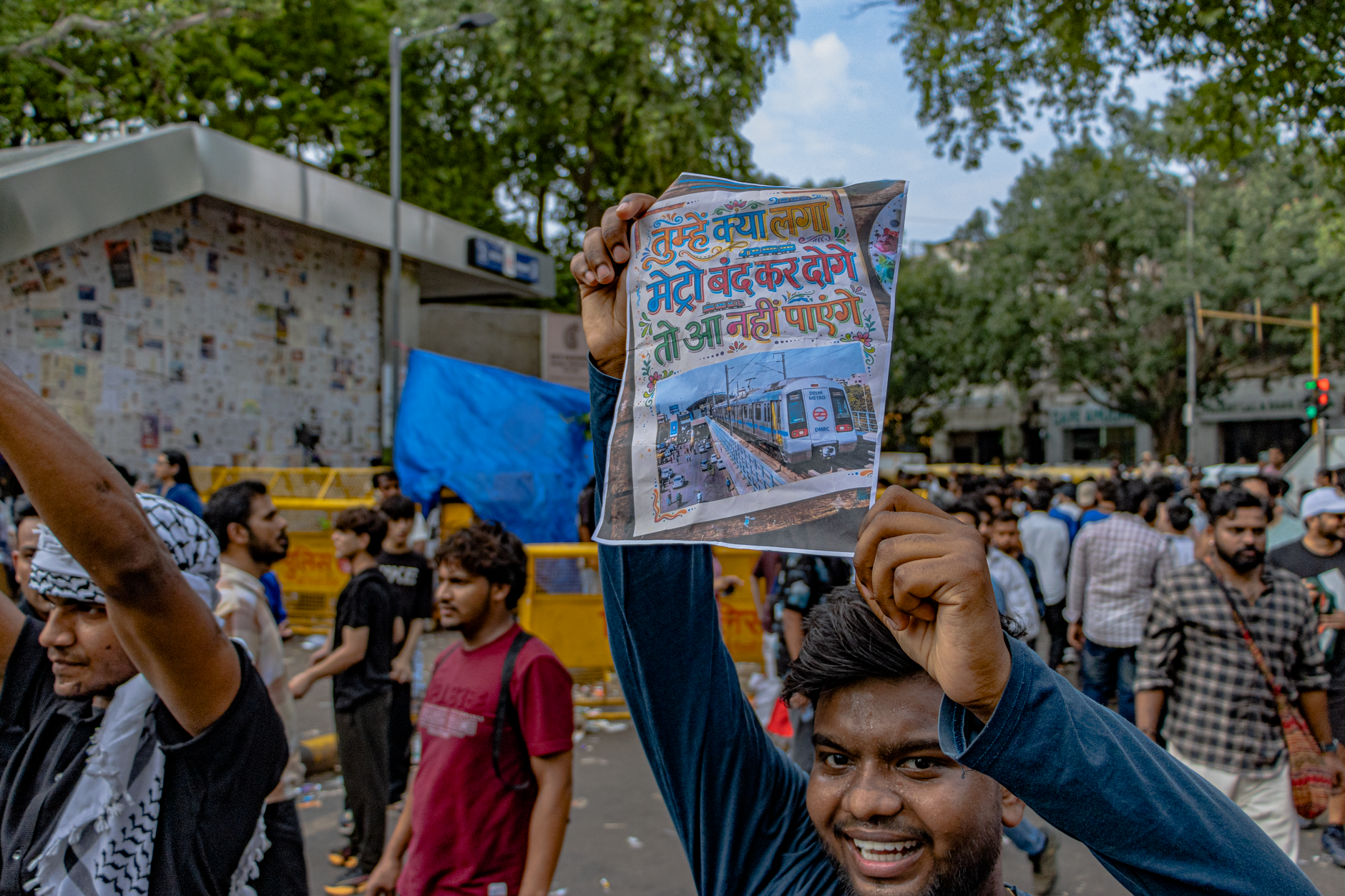
India’s Gen Z is taking a stand against their parents’ political views, leading to a generational conflict at home. Kunal Choudhary, a 19-year-old law student, left his home in Ludhiana to join the protests in New Delhi, demanding education reforms after a key medical entrance test was leaked. This move was a significant departure from his family’s political leanings, as his father is a member of the Bharatiya Janata Party (BJP) and the Rashtriya Swayamsevak Sangh (RSS), a far-right ideological mentor of the BJP.
Choudhary’s decision to join the protests was motivated by his disillusionment with the government’s handling of the exam leak, which led to the deaths of over 20 aspirants and widespread anger across the country. He believes that the RSS, which was founded in 1925, teaches its members to hate Muslims and Dalits, India’s most marginalized caste group. Choudhary’s family has been associated with the RSS for generations, but he has distanced himself from the organization, citing its divisive ideology.
Protests and Confrontations
The protests in New Delhi, led by the satirical online group Cockroach Janata Party (CJP), forced the resignation of Education Minister Dharmendra Pradhan and led to an overhaul of entrance exams. However, the protests have also led to confrontations between young people and their parents, who often hold different political views. Priya Singh, a 24-year-old postgraduate student, joined the protests despite her father’s threats of physical violence. Her father, a staunch BJP loyalist, defended the police’s actions against the protesters, saying that they deserved to be injured for participating in the demonstrations.
Anjali, a 25-year-old postgraduate student, has also faced opposition from her parents, who are RSS members and BJP supporters. She has been involved in leftist activism and was the presidential candidate for a leftist alliance in the Delhi University Students Union election. Anjali’s parents have tried to shame and guilt her into abandoning her political views, but she remains committed to her cause.
Generational Conflict
The conflicts between young people and their parents reflect a deeper generational divide in India. Many young people are disillusioned with the government’s handling of issues such as education, employment, and social justice. They are seeking change and are willing to challenge their parents’ views to achieve it. Choudhary, Singh, and Anjali are examples of this trend, as they navigate the complexities of family, politics, and social activism.
The protests in India have highlighted the need for a more nuanced understanding of the country’s political landscape. The involvement of young people in politics and social activism is a significant development, as it reflects a desire for change and a willingness to challenge established power structures. As India continues to evolve and grow, it is likely that the generational conflict between young people and their parents will remain a significant issue, shaping the country’s politics and social dynamics for years to come.
Conclusion
In conclusion, the story of India’s Gen Z confronting their parents over politics is a complex and multifaceted one. It reflects the deeper social and economic changes that are taking place in India, as well as the desire for change and social justice among young people. As the country continues to navigate its political and social landscape, it is likely that the voices of young people will play an increasingly important role in shaping its future.






Be First to Comment