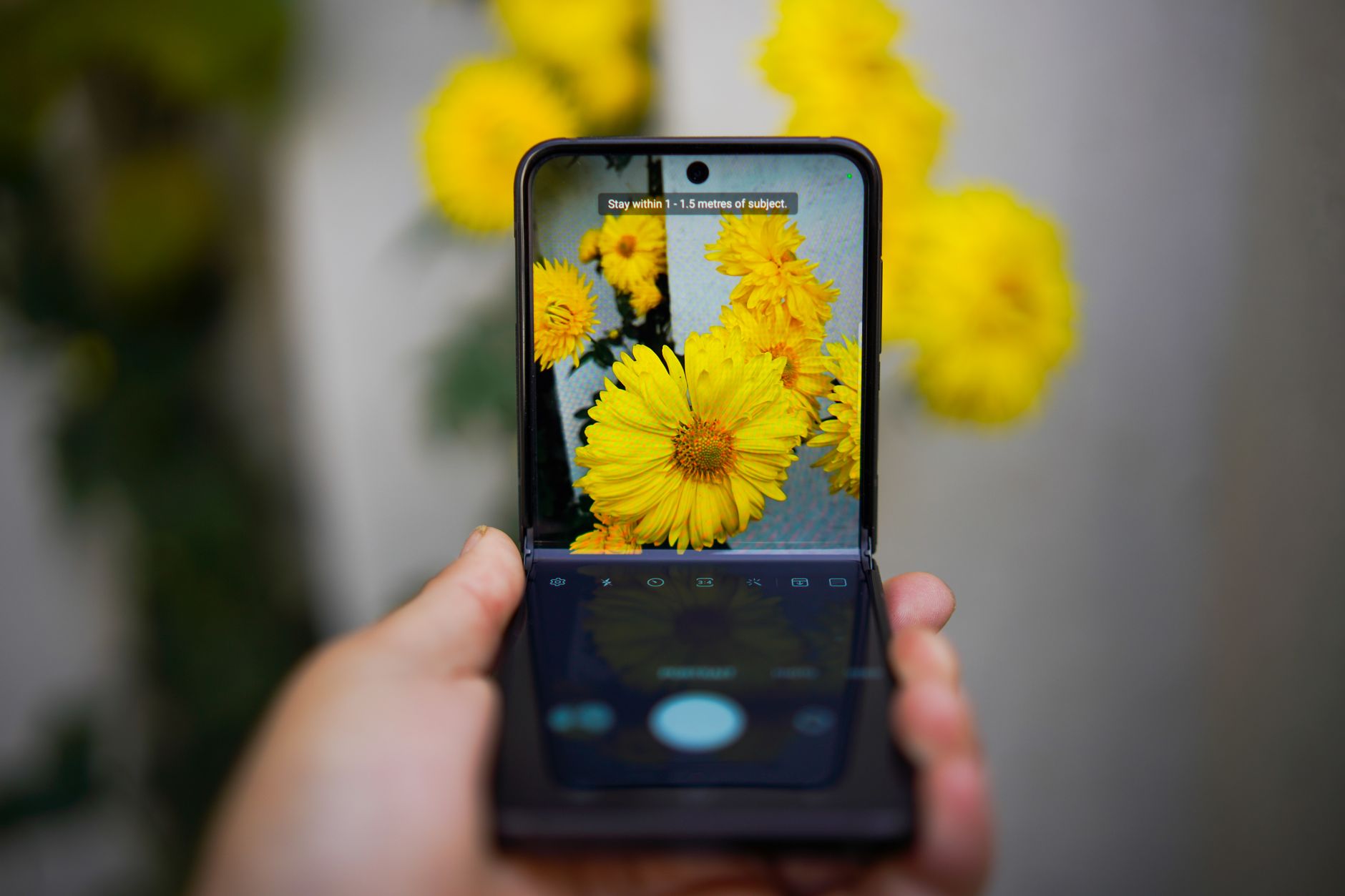
Samsung’s latest foldable, the Galaxy Z Fold 8, arrives with a broader 7.6‑inch folding display and a reshaped chassis that changes how its cameras interact with daily tasks. Early hands‑on reports from Android Authority on August 25 and SamMobile on August 22 highlight two practical quirks that stem from the new geometry, rather than from faulty hardware.
Selfie‑camera cutout can obscure content in portrait mode
The Fold 8’s inner screen adopts a 4:3 aspect ratio, making portrait orientation more natural than on previous, squarer Fold models. When the device is unfolded and then rotated to portrait, the 10‑megapixel front‑facing camera sits in a cutout that can slide directly over text, images or video playing on the screen. Android Authority documented the situation in its August 25 hands‑on review, noting that the cutout may unintentionally hide important visual information as the user switches orientation.
Rear‑camera layout invites accidental finger coverage
Samsung also repositioned the rear lenses vertically along the shorter body of the Fold 8. SamMobile staff testing on August 22 observed that the new arrangement makes it easy for a photographer’s finger to partially cover a rear lens while framing a shot. In addition, a nearby finger can reflect flash light, producing a reddish haze in the resulting image. SamMobile linked the behavior to the device’s compact height and the vertical stacking of the cameras, but Samsung has not classified either issue as a hardware defect.
Both reports point to ergonomic consequences of the Fold 8’s redesign rather than to any manufacturing flaw. The company has not issued a formal statement identifying the placement concerns as defects, and it appears the issues are considered inherent to the device’s new shape.
Camera specifications differ sharply between Fold 8 and Fold 8 Ultra
The standard Fold 8 relies on a dual‑camera system composed of a 50‑megapixel wide sensor and a 50‑megapixel ultrawide sensor. The wide sensor offers 2× optical‑quality zoom through Adaptive Pixel technology, with digital zoom extending to 10×. By contrast, the Fold 8 Ultra adds a 200‑megapixel primary sensor and a dedicated 10‑megapixel telephoto lens that provides true 3× optical zoom, according to Samsung’s own camera comparison chart.
Samsung’s two‑tier strategy makes optical zoom a price‑driven decision: consumers who require a dedicated telephoto lens must opt for the Ultra. The company describes the original Fold model as having evolved into the Fold 8 Ultra, while the standard Fold 8 received an all‑new shape and camera layout.
Independent testing supports the notion that the standard Fold 8’s zoom performance tapers off at longer distances. Tech Advisor reported a noticeable decline in image quality beyond roughly 4× zoom, and HotHardware reached a similar conclusion in its August 14 evaluation. The limitation is most evident in scenarios such as concerts, sporting events, or distant travel photography, where higher optical reach is valuable.
By comparison, Google’s Pixel 11 Pro Fold includes a dedicated 5× telephoto lens, a distinction highlighted in a recent side‑by‑side comparison with the Galaxy Z Fold 8.
Market response and practical implications
Despite the ergonomic quirks and the lack of a dedicated telephoto lens on the standard model, early demand for the Fold 8 remains strong. The base version accounted for nearly half of U.S. reservations, helping Samsung’s latest foldables surpass the previous Galaxy Z preorder record.
For prospective buyers, the choice between the Fold 8 and the Fold 8 Ultra hinges on intended usage. The wider, more versatile folding display benefits multitasking and media consumption, while the Ultra’s enhanced camera suite caters to users who prioritize photography. Samsung also plans to introduce a tap‑to‑share Quick Share feature, adding a proximity‑based sharing option for both personal and managed Android devices.
In summary, the Galaxy Z Fold 8’s redesign brings a broader screen and a slimmer body, but these changes also introduce new user‑experience considerations around camera placement. While the standard model lacks a dedicated telephoto lens, its dual‑camera system still offers respectable zoom capabilities for many scenarios. Consumers seeking higher optical zoom and dedicated telephoto performance will need to look to the Fold 8 Ultra, which carries a higher price tag but delivers the additional hardware.





Be First to Comment