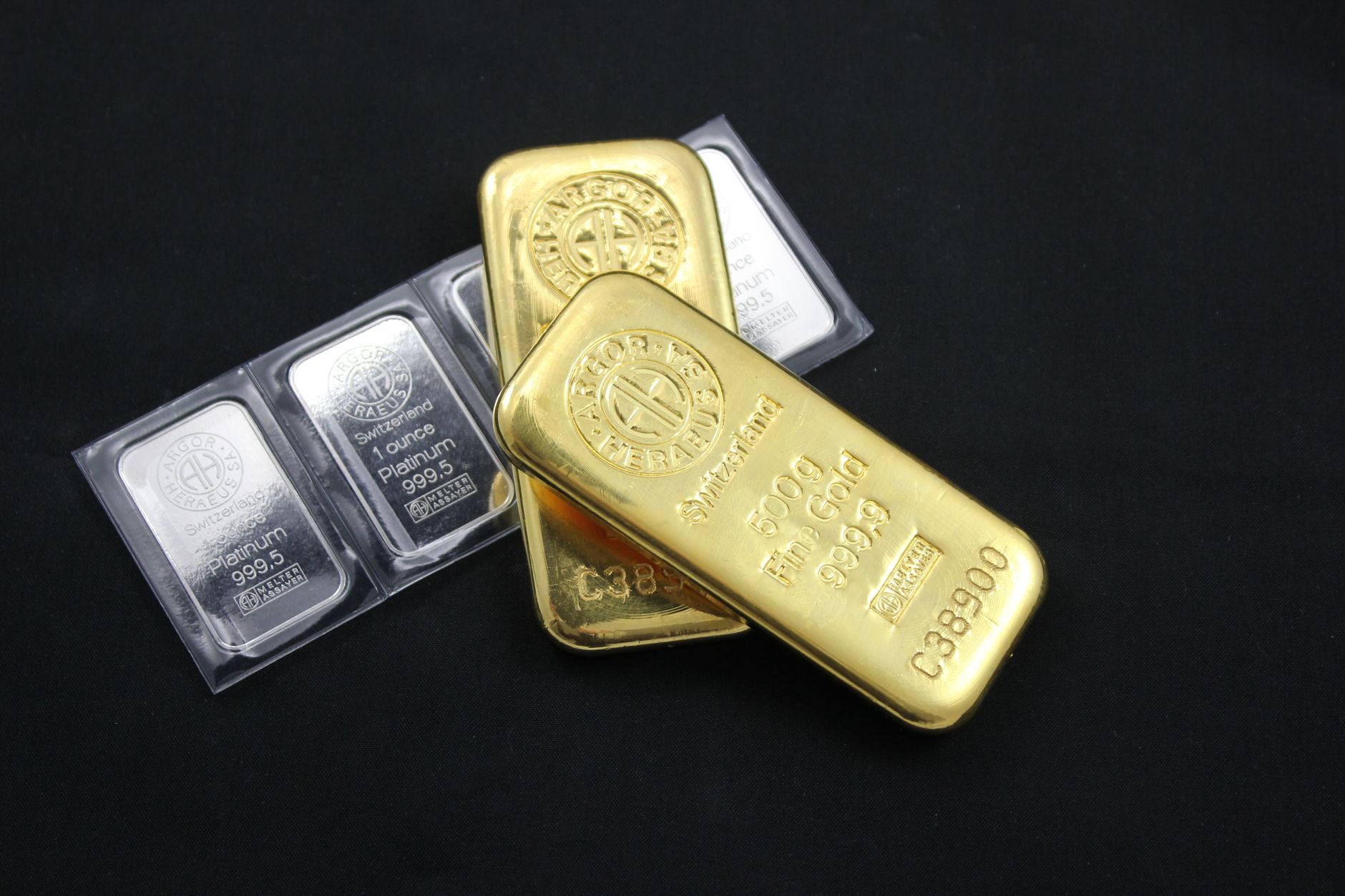
Gold and silver prices retreated on September 2 after a fresh round of U.S.-Iran confrontation heightened concerns over energy‑related inflation and revived market expectations of a more hawkish Federal Open Market Committee (FOMC) stance. The U.S. carried out its most significant strikes on Iran in weeks, targeting Iranian air‑defence, radar, maritime and communications infrastructure. Iran answered with retaliatory strikes on U.S. positions in Jordan, Iraq and Bahrain, stoking fears of disruptions in the Strait of Hormuz and a further rise in oil prices.
Geopolitical Tensions and Energy Inflation
The escalation has injected fresh inflationary pressure into commodities markets. Higher oil prices, driven by worries over the strategic chokepoint of the Hormuz Strait, have added to the broader inflation narrative that already dominates market sentiment. In this environment, safe‑haven demand for gold is being tested by competing forces.
Market Indicators and Fed Rate Outlook
U.S. Treasury yields have surged in tandem with the geopolitical shock. The 10‑year Treasury yield climbed to 4.81%, a stark rise from the 2.04% level recorded just two months earlier. Futures on the fed funds rate now price a 67 % probability that the Federal Reserve will raise rates at its September policy meeting. Higher yields increase the opportunity cost of holding non‑yielding assets such as gold and silver, while a stronger U.S. dollar adds an additional macro‑headwind.
Investors are also watching upcoming labor‑market data for clues about the Fed’s next move. The ADP private‑employment survey, due on Wednesday, is expected to shape equity‑market expectations. A weaker report could dampen the probability of a rate hike, whereas strong hiring numbers would reinforce the hawkish tone expressed by Fed Chair Kevin Warsh in his recent Jackson Hole remarks.
Gold Price Dynamics
At the time of writing, spot gold was quoted around $4,307 per ounce, having broken sharply from the $4,420‑$4,450 range on the four‑hour chart. The price fell through a rising trendline and the $4,422 support zone, suggesting a significant breach of short‑term bullish structure. The market now eyes a demand zone between $4,263 and $4,221, a region that also coincides with an RSI reading in the low 20s, indicating oversold conditions.
Resistance levels that could cap any rebound are identified at $4,422, $4,487 and $4,573. As long as gold remains below the $4,422 threshold, the prevailing bias stays bearish, though a decisive close above that level on the four‑hour timeframe could soften the negative outlook.
Silver Market Movements
Silver was trading at $63.77 per ounce on the two‑hour chart after a clear break below the $65.37 support level and the rising trendline that had underpinned the prior advance. The breakout was accompanied by weak follow‑through buying, allowing the metal to slide deeper into a zone that now functions as resistance.
Key support levels are projected at $62.57 and, if pressure persists, $60.92. The RSI has also entered oversold territory, reinforcing the down‑trend bias. Immediate resistance is seen at $65.37, with higher hurdles at $67.21 and $68.74. Analysts note that a decisive break above $65.37, especially a move through $67.21, could signal a shift toward a buying opportunity, but until such a breakout materialises, the momentum remains firmly to the downside.
Analyst Perspective
Arslan, a finance MBA holder with an MPhil in behavioural finance, interprets the current price action through the lens of market sentiment. He stresses that while geopolitical uncertainty can spur safe‑haven demand, the simultaneous rise in energy costs and bond yields is creating a stronger pull away from non‑yielding metals. Arslan’s behavioural‑finance background leads him to monitor overbought and oversold readings closely, noting that both gold’s and silver’s RSI levels are deep in oversold territory, a condition that could set the stage for short‑term corrective moves if broader macro pressures ease.
Long‑term fundamentals for gold remain supportive, with central banks continuing to diversify reserves and institutional investors maintaining exposure. However, the short‑term outlook is challenged by the confluence of higher yields, a firm dollar and the inflationary shock from oil markets. Silver faces an additional layer of risk from its industrial exposure to sectors such as electronics, artificial intelligence and power‑grid infrastructure, which can amplify the impact of broader economic trends.
In summary, the latest U.S.-Iran escalation has amplified inflation expectations, lifted Treasury yields and revived speculation of a September Fed rate hike. Those dynamics have pressured gold and silver lower, pushing both metals into oversold zones and setting the stage for a test of key support levels in the days ahead.






Be First to Comment