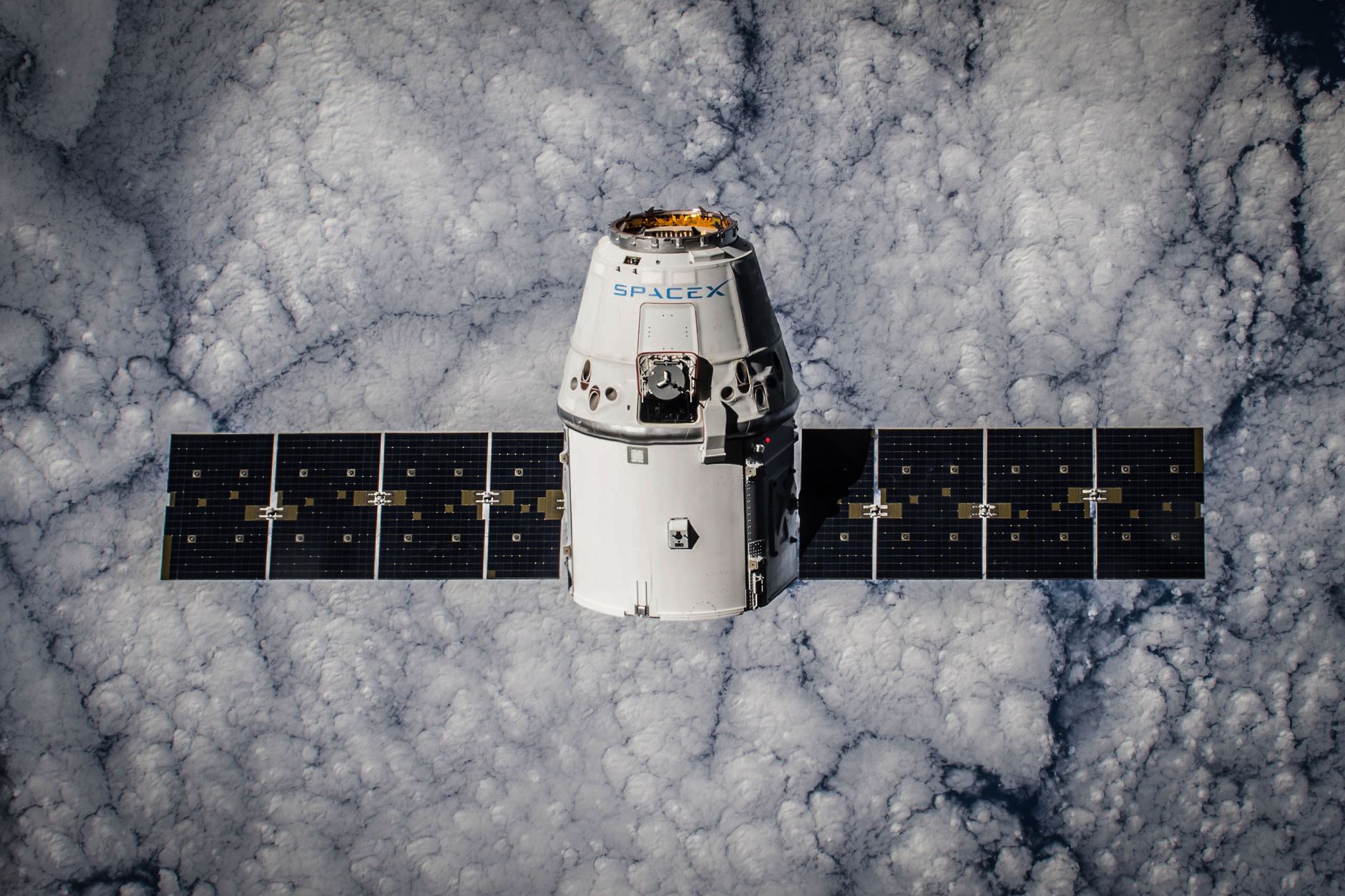
The Indian Space Research Organisation (ISRO) achieved a major milestone on September 4, 2026, when its Geosynchronous Satellite Launch Vehicle (GSLV‑F17) successfully delivered the Earth observation spacecraft EOS‑05 into a sub‑geosynchronous transfer orbit. The launch took place at 2:55 a.m. local time from the second launch pad of the Satish Dhawan Space Centre in Sriharikota.
Mission details and vehicle performance
GSLV‑F17, on its 19th flight, lifted off and, after 18 minutes, injected EOS‑05 into the intended orbit. The mission marked the 107th launch from Sriharikota and the 19th flight of the GSLV family. According to ISRO Chairman Dr. V. Narayanan, the vehicle precisely placed the satellite in the required orbit, confirming the health of the spacecraft’s valves and solar panel deployment.
EOS‑05, weighing 2,367 kg, is the heaviest payload ever launched by the GSLV series. Dr. Narayanan highlighted the evolution of the launch vehicle, noting that the first GSLV‑D1 mission carried a 1,536 kg payload. Incremental improvements in structural mass optimisation and propulsion systems have enabled the current capability to lift the heavier EOS‑05.
Significance of EOS‑05
EOS‑05, also dubbed “Eye in the Sky,” is India’s first dedicated imaging satellite positioned in geosynchronous orbit, roughly 36,000 km above the Earth. Once fully operational, the satellite will provide real‑time imagery across visible, infrared, multispectral and hyperspectral bands. The data is expected to support a range of national activities, including agriculture monitoring, environmental assessment, disaster management and other strategic applications.
Following the initial orbit insertion, ISRO plans to raise EOS‑05 to its final geosynchronous slot, where it will join the national constellation of Earth observation assets. The chairman emphasized that the satellite’s health is “perfectly alright” and that upcoming orbit‑raising maneuvers will place it on the intended geo‑platform for national use.
Prime Minister Narendra Modi praised the launch on the social platform X, describing it as “yet another outstanding achievement by ISRO and a proud moment for our nation.” He linked the success to the broader growth of India’s space sector, noting the expanding partnership between ISRO and Indian industry. Minister of State for Space Jitendra Singh also congratulated the team, highlighting EOS‑05’s advanced imaging capabilities and its role in cementing India’s status as a global space power.
The launch arrives after a period of heightened caution for ISRO. The agency’s last launch before EOS‑05 had been the failed PSLV‑C62 mission on January 12, 2026, which attempted to place the EOS‑N1 Earth observation satellite into orbit. Earlier failures of PSLV‑C61 on May 18, 2025, and the GSLV‑F10/EOS‑03 mission in August 2021 had also underscored technical challenges. In response, ISRO refrained from any launches during the first quarter of 2026, despite having seven missions scheduled, including the EOS‑05 flight.
By successfully delivering EOS‑05, ISRO not only demonstrates the restored reliability of its launch vehicles but also replaces the earlier, unsuccessful EOS‑03 mission. The achievement restores confidence in the GSLV platform after the 2021 cryogenic upper‑stage anomaly that prevented the EOS‑03 launch from proceeding beyond the second stage.
EOS‑05’s real‑time imaging will enhance India’s capacity to monitor crop health, track environmental changes, and respond swiftly to natural disasters. The satellite’s multi‑spectral and hyperspectral sensors are expected to provide detailed data that can be leveraged by both government agencies and private sector partners for decision‑making and research.
Overall, the successful launch underscores ISRO’s resilience and its continued progress toward expanding India’s space capabilities. The mission’s success is viewed as a testament to the agency’s engineering advancements, strategic planning and the collaborative effort between the space organization and the nation’s broader industrial ecosystem.





Be First to Comment